Cichorium spinosum
L.
Spiny chicory
iNaturalist· cc-by
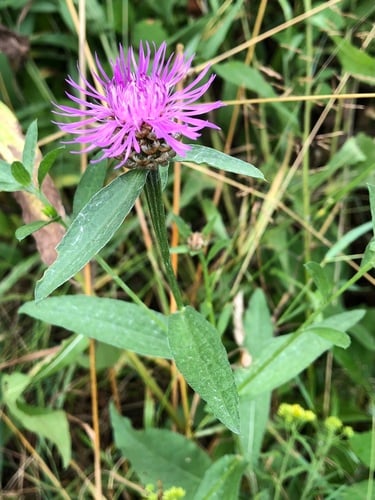
(c) Don Loarie, some rights reserved (CC BY), uploaded by Don Loarie
iNaturalist· cc-by-nc
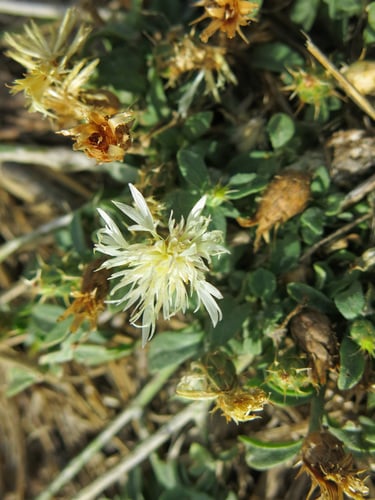
(c) Steve Daniels, some rights reserved (CC BY-NC), uploaded by Steve Daniels
iNaturalist· cc-by-nc
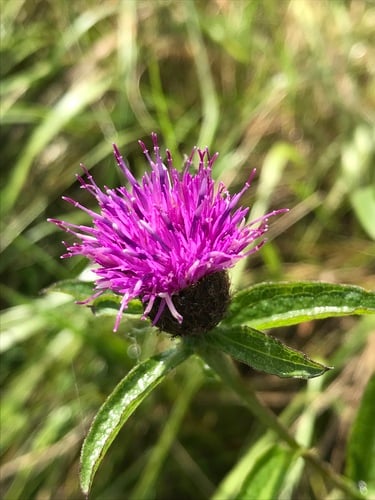
(c) aulax, some rights reserved (CC BY-NC), uploaded by aulax
Summary
Source: WikipediaCichorium spinosum, the spiny chicory, is a species of flowering plant in the family Asteraceae, native to the Mediterranean region. A biennial or perennial reaching 20 cm (8 in), is both collected in the wild and cultivated as a leafy green vegetable.
Description
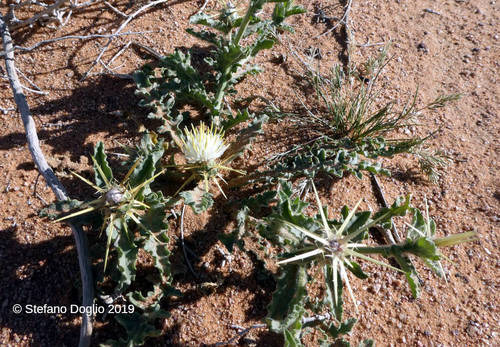
A small shrub. It is densely branched. It forms mounds. It can be 20 cm tall. The stems are branched from the base. The upper branches are non flowering and like spines. The leaves are fleshy and narrowly oval but broadest above the middle. They have teeth and lobes. The flower heads are blue and 10-15 mm across. They can occur singly or in clusters of 2-4. The outer flower bracts are oval and one third the length of the inner bracts. There are 5-6 florets in a flower head.
Edible Uses
The leaves are edible when boiled.
Medicinal Uses
None known.
Distribution
It is a Mediterranean climate plant. It grows in rocky crevices and sandy places. It is usually near the coast.
Where It Grows
Crete, Europe, Greece, Italy, Mediterranean, Spain,
Cultivation
Succeeds in any moderately fertile well-drained soil. Prefers a medium to light sandy or gravelly soil that is rich in humus. Prefers a sunny position but with light shade in the summer to prevent plants running to seed.
Propagation
Sow seed in spring in a cold frame. When seedlings are large enough to handle, prick them out into individual pots and grow on in a greenhouse for at least their first winter. Plant out into permanent positions in late spring or early summer, after the last expected frosts.
Other Uses
None known.
Notes
There are about 9 Cichorium species.
Also Known As
Stamnagathi, Yaloradiko
References (7)
- Blamey, M and Grey-Wilson, C., 2005, Wild flowers of the Mediterranean. A & C Black London. p 460
- Plants for a Future database, The Field, Penpol, Lostwithiel, Cornwall, PL22 0NG, UK. http://www.scs.leeds.ac.uk/pfaf/
- Psaroudaki, A., et al, 2012, Ten Indigenous Edible Plants: Contemporary Use in Eastern Crete, Greece. Culture, Agriculture, Food and Environment Vol. 34, Issue 2 pp. 172–177
- Psaroudaki, A., et al, 2015, Genetic structure and population diversity of eleven edible herbs of Eastern Crete. Journal of Biological Research-Thessaloniki, 22:7
- Rivera, D. et al, 2006, Gathered Mediterranean Food Plants - Ethnobotanical Investigations and Historical Development, in Heinrich M, Müller WE, Galli C (eds): Local Mediterranean Food Plants and Nutraceuticals. Forum Nutr. Basel, Karger, 2006, vol 59, pp 18–74
Show all 7 references Hide references
- Skoula, M & Sarpaki, A., 2005, Traditional knowledge on the uses of wild plants in Crete, Greece.
- Vardavas, C. I., et al, 2006, Lipid concentrations of wild greens in Crete. Food Chemistry 99: 822-834