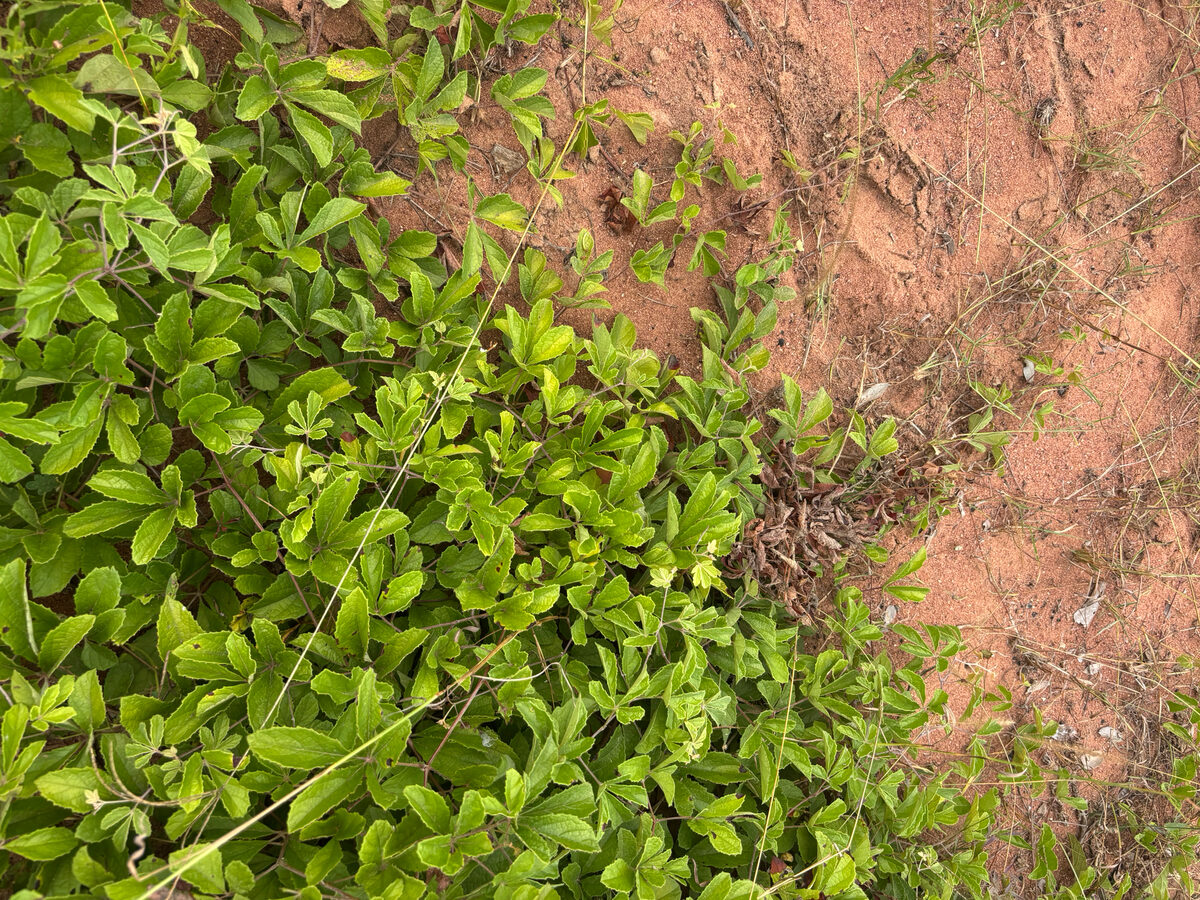
Cyphostemma cyphopetalum
(Fresen.) Wild & Drummond
gbif· cc-by
Royal Botanic Gardens, Kew
gbif· cc-by
Royal Botanic Gardens, Kew
gbif· cc0
Conveyor Belt
Description
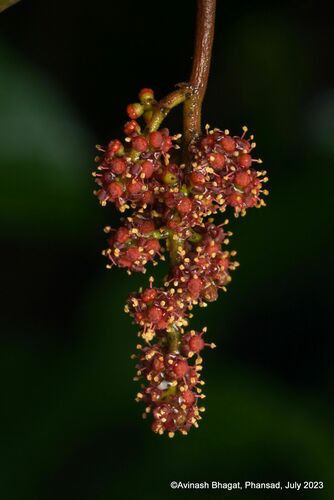
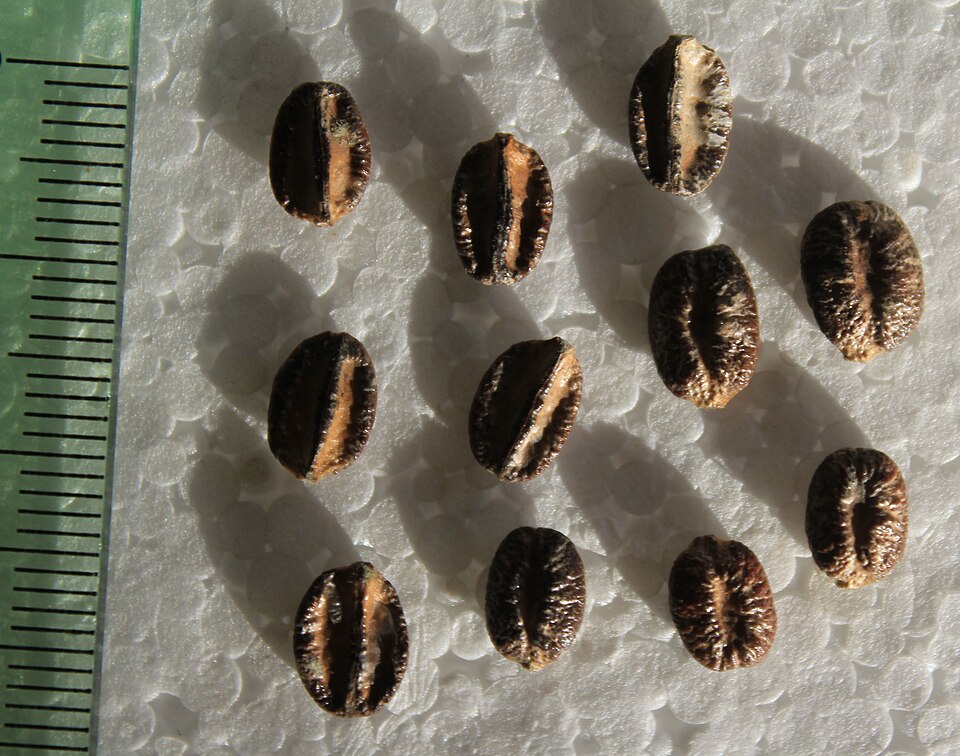
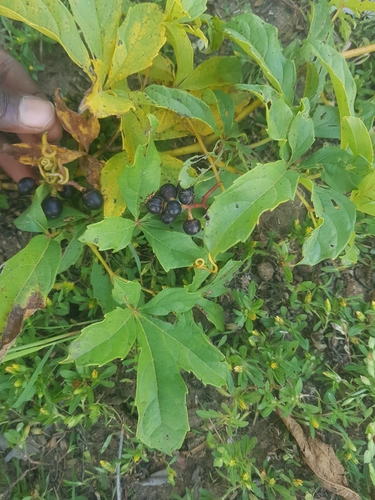
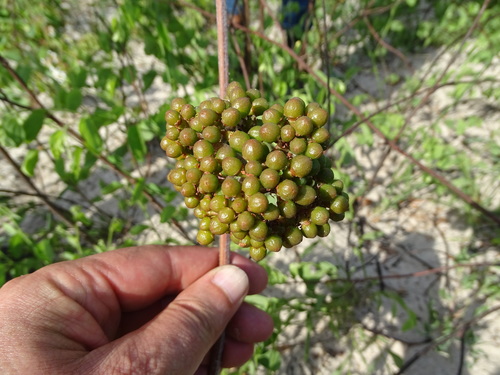
A climbing herb. It has a tuberous root. The stems have lines along them. They are hairy. There are tendrils. The leaves have 3-5 leaflets. They are hairy. The leaflets are 8 cm long by 6 cm wide. They are broadly oval. There are coarse rounded teeth along the edge. The flowers are in loose groups on branched stalks. The petals are creamy-green. The fruit is 1 cm long by 0.5 cm wide. They are oval and hairy. There is one seed 7 mm long by 5 mm wide.
Edible Uses
Both the leaves and fruit are edible.
Distribution
It is a tropical plant. It grows along the side of rivers.
Where It Grows
Africa, Burundi, Cameroon, Central Africa, Central African Republic, CAR, Chad, Congo DR, Djibouti, East Africa, Eritrea, Ethiopia, Kenya, Rwanda, Somalia, Sudan, Tanzania, Uganda, Zambia,
Synonyms
Also Known As
Emoross
References (8)
- East African Herbarium records, 1981, (Also as Cyphostemma nieriense)
- Flora Zambesiaca. http://apps.kew.org/efloras
- Fowler, D. G., 2007, Zambian Plants: Their Vernacular Names and Uses. Kew. p 85
- Goode, P., 1989, Edible Plants of Uganda. FAO p 30
- Morgan, W. T. W., 1981, Ethnobotany of the Turkana: Use of plants by a Pastoral People and Their Livestock in Kenya. Economic Botany 35(1):96-130 (As Cyphostemma nieriense)
Show all 8 references Hide references
- Mutie, F. M., et al, 2023, Important Medicinal and Food Taxa (Orders and Families) in Kenya, Based on Three Quantitative Approaches. Plants 2023, 12, 1145
- Ojelel, S., et al, 2019, Wild edible plants used by communities in and around selected forest reserves of Teso-Karamoja region, Uganda. Journal of Ethnobiology and Ethnomedicine (2019) 15:3
- Peters, C. R., O'Brien, E. M., and Drummond, R.B., 1992, Edible Wild plants of Sub-saharan Africa. Kew. p 202 (Also as Cyphostemma nieriense)