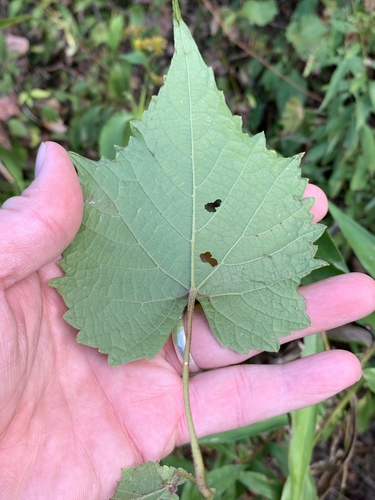
Cyphostemma junceum
(Webb) Descoings
Purplebloom wild grape
iNaturalist· cc-by-nc-sa
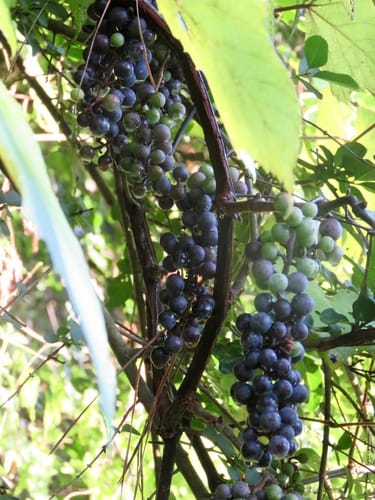
(c) Rob Palmer, some rights reserved (CC BY-NC-SA), uploaded by Rob Palmer
iNaturalist· cc-by-nc
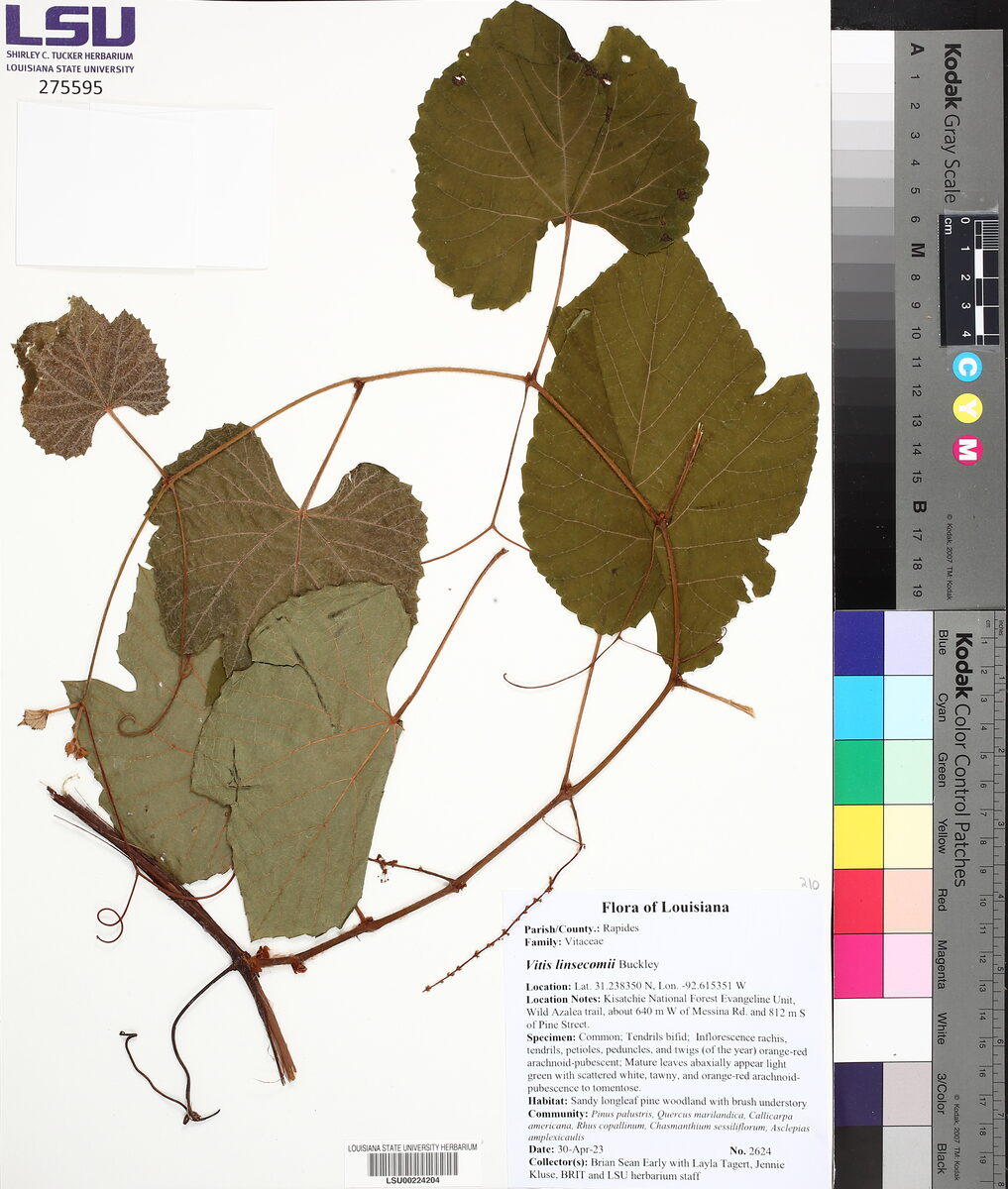
(c) Nicholas Wightman, some rights reserved (CC BY-NC), uploaded by Nicholas Wightman
iNaturalist· cc-by-nc
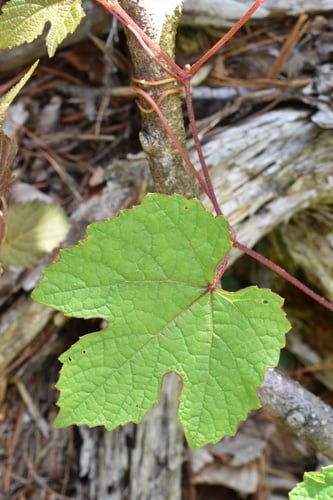
(c) ONG OeBenin, some rights reserved (CC BY-NC), uploaded by ONG OeBenin
Description
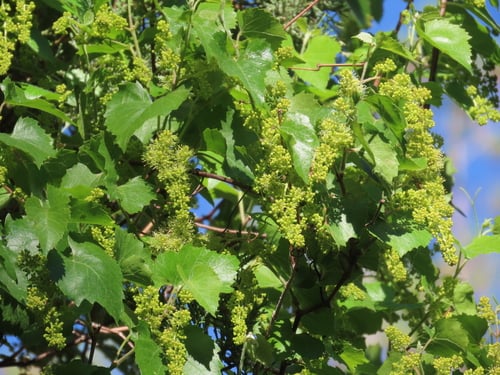
A herb that keeps growing from year to year. It is fleshy and grows 1.3 m high. It has a tuberous rootstock. The leaves have 3-5 leaflets. The leaflets are 30 cm long by 5 cm wide. There are teeth along the edges. The flowers are in 25 cm long groups at the top of the plant. The petals are greenish-red. The fruit is reddish-purple. It is 1 cm long by 0.6 cm wide. There is one seed 7 mm long by 4 mm wide. It has ridges along it.
Edible Uses
The ripe fruit can be eaten.
Traditional Uses
The ripe fruit can be eaten.
This uses section is brief — help expand it
Distribution
It is a tropical plant. It grows in woodland.
Where It Grows
Africa, Angola, Burkina Faso, Cameroon, Central Africa, Congo, Côte d'Ivoire, East Africa, Ethiopia, Ghana, Guinea, Guinée, Ivory Coast, Kenya, Malawi, Mozambique, Nigeria, Southern Africa, Sudan, Tanzania, Togo, Uganda, West Africa, Zambia, Zimbabwe,
Synonyms
Also Known As
Mnuwake-munda, Mupassa, Zindakubaya
References (9)
- Flora Zambesiaca. http://apps.kew.org/efloras
- Fowler, D. G., 2007, Zambian Plants: Their Vernacular Names and Uses. Kew. p 63
- Fox, F. W. & Young, M. E. N., 1982, Food from the Veld. Delta Books. p 368
- Peters, C. R., O'Brien, E. M., and Drummond, R.B., 1992, Edible Wild plants of Sub-saharan Africa. Kew. p 202
- Tredgold, M.H., 1986, Food Plants of Zimbabwe. Mambo Press. p 7
Show all 9 references Hide references
- Wild, 1975,
- Williamson, 1972,
- World Checklist of Useful Plant Species 2020. Royal Botanic Gardens, Kew
- www.zimbabweflora.co.zw 2011