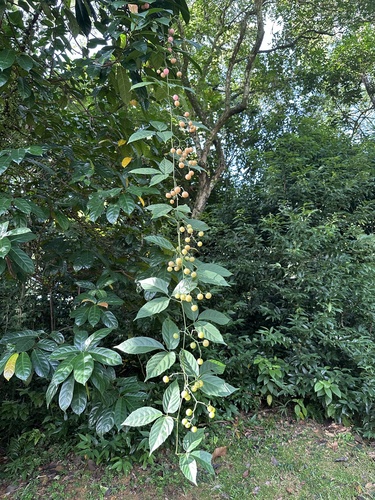
Cyphostemma juttae
(Dinter & Gilg.) Desc.
Jutta’s botterboom, Butter bush, Tree grape
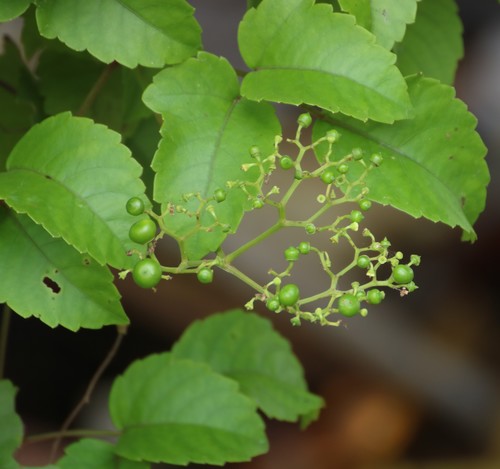
iNaturalist· cc-by-nc
(c) Catherine Kaye, some rights reserved (CC BY-NC), uploaded by Catherine Kaye
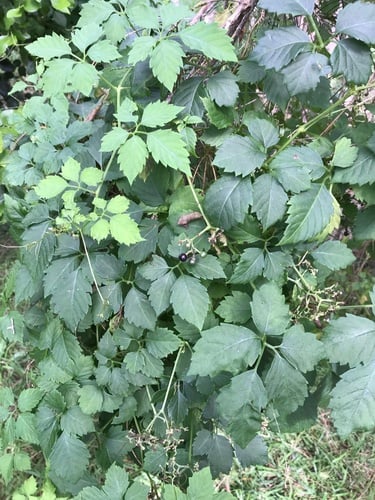
iNaturalist· cc-by-nc
(c) birgittheyer, some rights reserved (CC BY-NC)
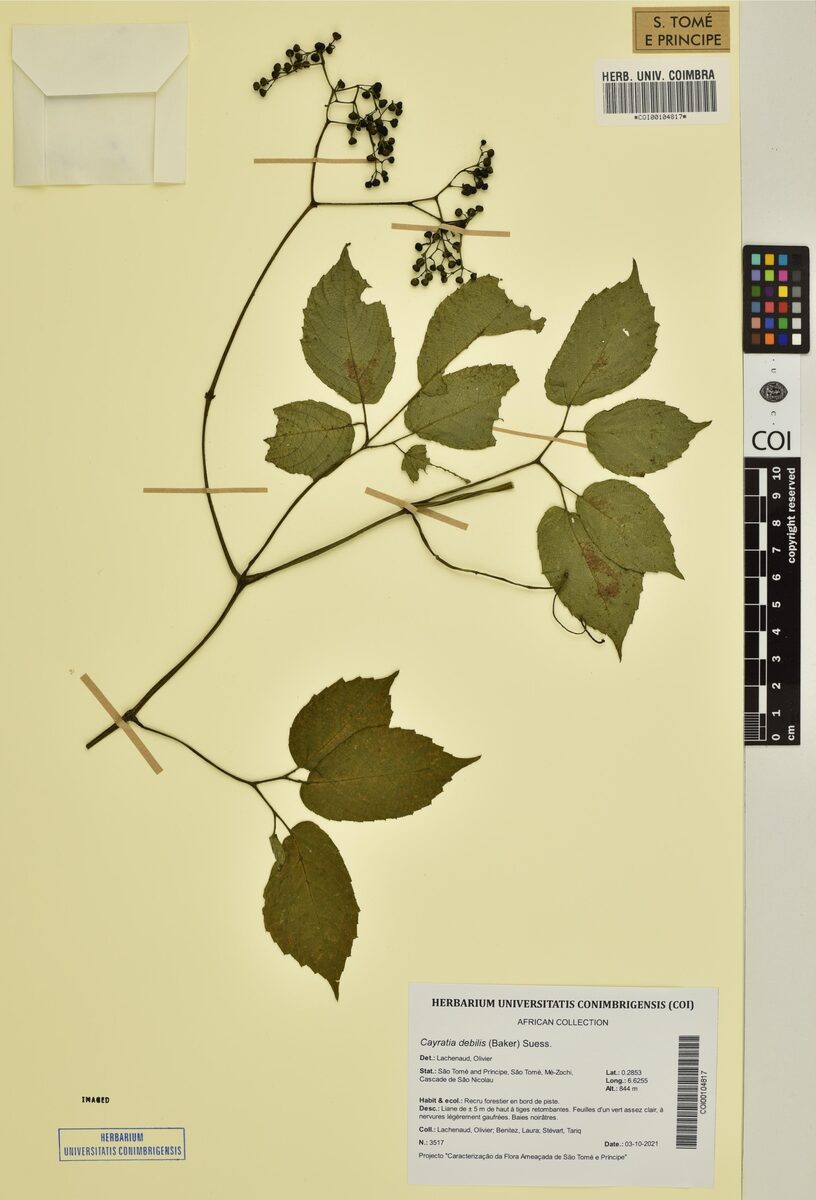
iNaturalist· cc-by-nc-nd
(c) James Gaither, some rights reserved (CC BY-NC-ND)
Summary
Source: WikipediaCyphostemma juttae is a species of flowering plant in the genus Cyphostemma. It is a slow-growing succulent caudex shrub native to northwestern and north-central Namibia. It is well known as an ornamental plant. The plant is also known as wild grape, tree grape, Namibian grape, droog-my-keel, Jutta's botterboom, and bastard cobas. The name "tree grape" comes from the grape-like fruits produced by the plant. These fruits are extremely poisonous, and should be avoided. This species can reach 6 feet (1.8 metres) tall and has large shiny leaves. It is a deciduous plant. It grows in an arid region of summer-rainfall, and it loses its leaves in the dryer winter. The species was first described as Cissus juttae by Kurt Dinter and Ernest Friedrich Gilg in 1912. In 1967 Bernard Marie Descoings placed the species in genus Cyphostemma as C. juttae.
Description
A stocky succulent tree. It grows 2-3.6 m high. It often has a barrel like thick trunk. The branches are short and stubby. The young branches can have smooth spines. The bark is creamy and papery. It peels off showing a green colour underneath. The leaves are large and fleshy. Young leaves are simple but with lobes and older leaves are compound. The leaves are alternate. They are 30 cm long and roughly oblong in shape. The central leaflet of the 3 is the largest and the side ones are uneven-sided at the base. The edges are toothed. The flowers are carried in branched heads. They are on long thick stalks armed with prickles. They are at the ends of the main branches. The fruit are grape-like. They are green but become bright red. They are edible. They contain oxalates which burn the throat.
Edible Uses
The fruit are sweet and eaten fresh.
Traditional Uses
The fruit are sweet and eaten. They burn the throat due to oxalates.
This uses section is brief — help expand it
Known Hazards
The fruit contain oxalates which burn the throat.
Distribution
A tropical plant. A desert plant. It is damaged by frost. It needs full sun and dry air. It needs temperatures above 5°C. It suits hardiness zones 9-11. It can grow in arid places. In Brisbane Botanical Gardens.
Where It Grows
Africa, Australia, Namibia, South Africa, Southern Africa, USA,
Cultivation
Plants are grown from seed.
Notes
There are about 150 Cyphostemma species.
Synonyms
Also Known As
Bastard cobas, Blue kobas
References (8)
- Anderson, M., 2002, The World Encyclopedia of Cacti and Succulents. Hermes House, New York. p 147
- Bodkin, F., 1991, Encyclopedia Botanica. Cornstalk publishing, p 315
- Cundall, P., (ed.), 2004, Gardening Australia: flora: the gardener's bible. ABC Books. p 458
- Etherington, K., & Imwold, D., (Eds), 2001, Botanica's Trees & Shrubs. The illustrated A-Z of over 8500 trees and shrubs. Random House, Australia. p 249
- Marinelli, J. (Ed), 2004, Plant. DK. p 338
Show all 8 references Hide references
- Naturalia Monspel., Ser. Bot. 18:222. 1968
- Palgrave, K.C., 1996, Trees of Southern Africa. Struik Publishers. p 565
- Palmer, E and Pitman, N., 1972, Trees of Southern Africa. Vol. 2. A.A. Balkema, Cape Town p 1426