Pentace burmanica
Kurz
wikimedia· cc-by-sa
Wikimedia Commons - Bibamwen
Description
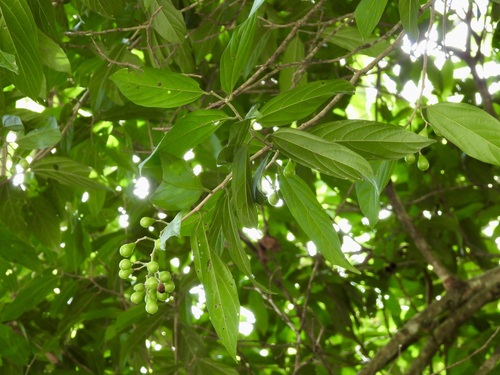
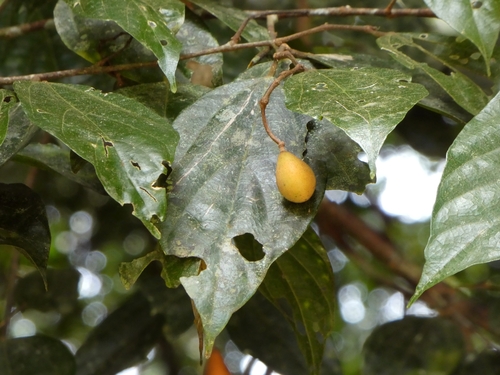
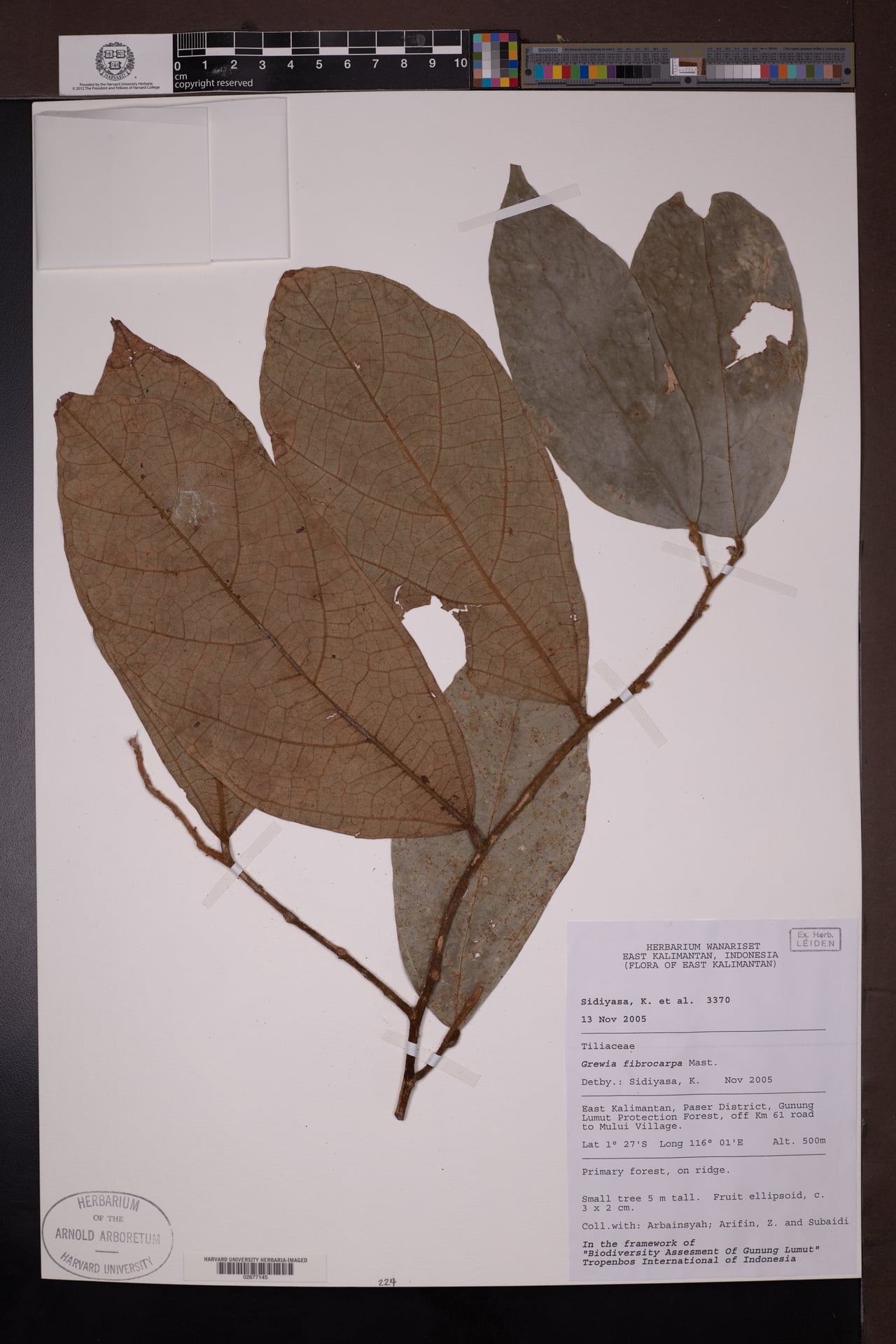
A large tree. It grows up to 30 m high. The branches and young plant parts are hairy. They are reddish-brown. The leaves are oval. They are heart shaped at the base. They are 10-15 cm long by 5-8 cm wide. The leaf stalk is 1-2 cm long. The flower panicles can be at the ends of branches or in the axils of leaves. They are 5-8 cm long. The flowers have a bell shaped ring of sepals. The fruit is a capsule which is oblong. There are 5 wings along it. They are 4-5 cm long by 5-5.5 cm wide. There is one seed.
Edible Uses
The tannin-rich bak is used as a masticatory and is said to improve the health of the teeth and gums.
Traditional Uses
The bark is used in a betel quid.
This uses section is brief — help expand it
Distribution
A tropical plant. They are found in evergreen forests.
Where It Grows
Asia, Indochina, Laos, Myanmar, SE Asia, Thailand,
Cultivation
A fast-growing tree.
Other Uses
The bark is a rich source of tannins. A resin is obtained from the tree. The wood is of a light brownish-yellow colour, similar to that of Cuba mahogany when first cut, and possessing as great transverse and tensile strength. It has a close, fine, hard grain; stands well under all conditions, and takes a very fine surface from the moulding machine or the machine plane; so much so, that a wood-worker reported that he had used all kinds of mahogany for fifty years, and preferred the Burma to all other sorts. It is a splendid wood for chairs, decorative woodwork, ships' furniture generally, mainly on account of its exceptional strength. It has been well received also for railway carriage work. It is sometimes cut up into thin planking and exported to Assam to make tea-boxes.
Notes
Also put in the family Brownlowiaceae.
Also Known As
Kashit, Kathi-ka, Pan-thitya, Saitka, Seesiat plueak, Sisiat, Takothet, Thethet, Thitk, Thitka
References (3)
- Burkill, I.H., 1966, A Dictionary of the Economic Products of the Malay Peninsula. Ministry of Agriculture and Cooperatives, Kuala Lumpur, Malaysia. Vol 2 (I-Z) p 1717
- Jacquat, C., 1990, Plants from the Markets of Thailand. D.K. Book House p 70
- J. Asiat. Soc. Bengal, Pt. 2, Nat. Hist. 40(2):47. 1871