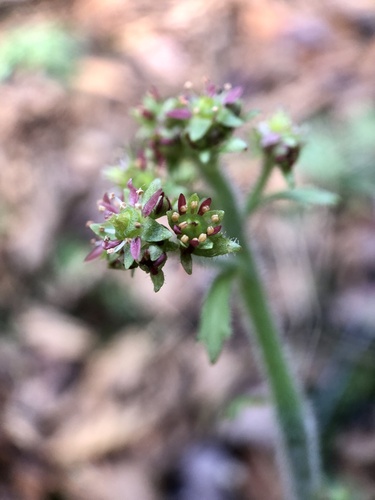
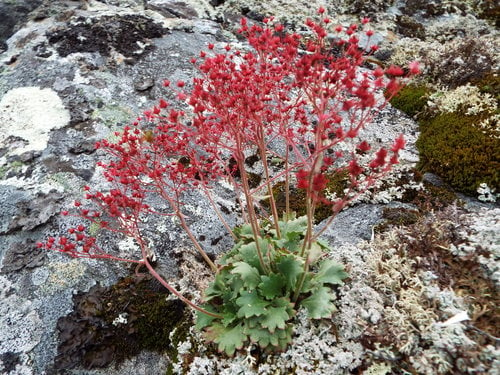
Saxifraga japonica
H.Boiss.
wikimedia· cc-by-sa
Wikimedia Commons - Qwert1234
wikimedia· cc-by-sa
Wikimedia Commons - Qwert1234
Summary
Hardy perennial reaching 30 cm tall with hermaphroditic flowers. Grows in sandy, loamy, and clay soils with good drainage preferred. Tolerates mildly acidic to mildly alkaline pH. Establishes in partial to full sun and prefers moist or wet soil conditions.
Description
Hardy perennial reaching 30 cm tall with hermaphroditic flowers. Grows in sandy, loamy, and clay soils with good drainage preferred. Tolerates mildly acidic to mildly alkaline pH. Establishes in partial to full sun and prefers moist or wet soil conditions.
Edible Uses
The leaves are edible, though no further details are recorded.
Medicinal Uses
None known.
Distribution
It is a temperate plant.
Where It Grows
Asia, Japan,
Cultivation
We have almost no information for this species and do not know if it will be hardy in Britain, though judging by its native range it is likely to succeed outdoors in most parts of this country. The following notes are based on the general needs of the genus. Prefers an open soil surrounded by stones. Grows well in a rock garden.
Propagation
No specific information is available for this species, but sowing seed in a cold frame in spring is recommended. Surface sow or barely cover the seed, keeping the compost consistently moist. Prick out seedlings into individual pots once large enough to handle and grow them on in a greenhouse or cold frame through their first winter. Plant out in late spring after the last expected frosts. Division in spring is also an option — larger divisions can go directly into their permanent positions, while smaller ones are best potted up and grown on in a lightly shaded cold frame until well established, then planted out in summer.
Other Uses
None known.
Notes
There are about 440 Saxifraga species.
References (1)
- Plants for a Future database, The Field, Penpol, Lostwithiel, Cornwall, PL22 0NG, UK. http://www.scs.leeds.ac.uk/pfaf/
More from Saxifragaceae
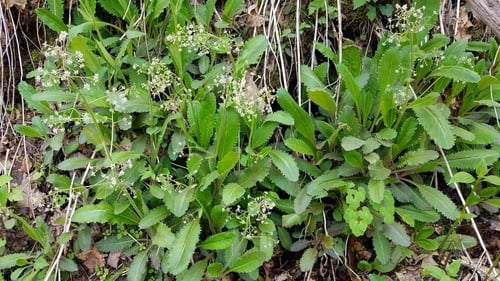
Saxifraga micranthidifolia
Mountain lettuce
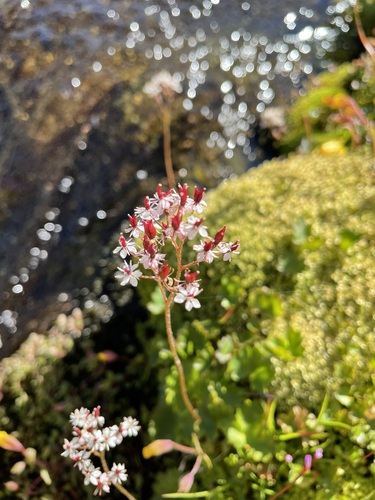
Saxifraga nelsoniana
Brook saxifrage, Heartleaf saxifrage
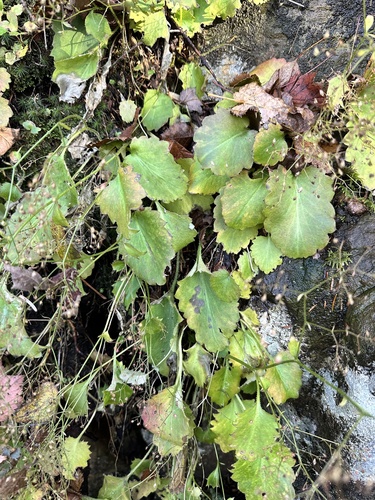
Saxifraga oblongifolia
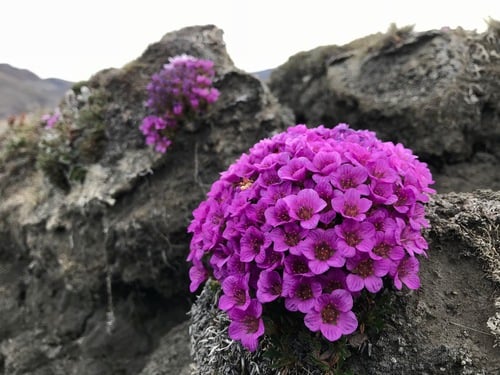
Saxifraga oppositifolia
Purple saxifrage
Saxifraga pensylvanica
Swamp saxifrage
Saxifraga punctata
Dotted saxifrage, Brook Saxifrage, Heart-leaf Saxifrage, Heartleaf Saxifrage