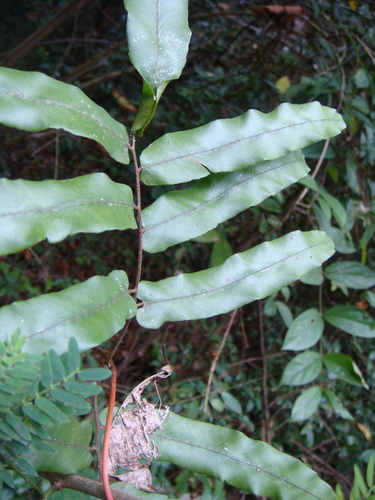
Lygodium scandens
(L.) Sw.
iNaturalist· cc-by-nc-nd
(c) Sunnetchan, some rights reserved (CC BY-NC-ND), uploaded by Sunnetchan
iNaturalist· cc-by-nc
(c) amygoog, some rights reserved (CC BY-NC)
iNaturalist· cc-by-nc
(c) amygoog, some rights reserved (CC BY-NC)
Description
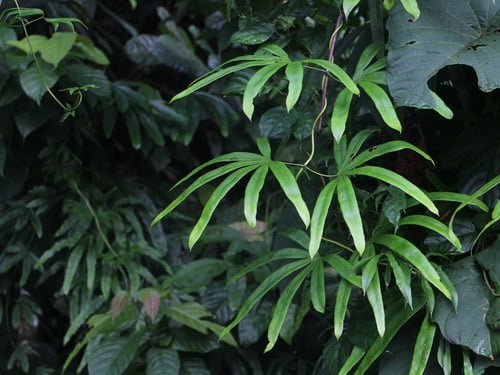
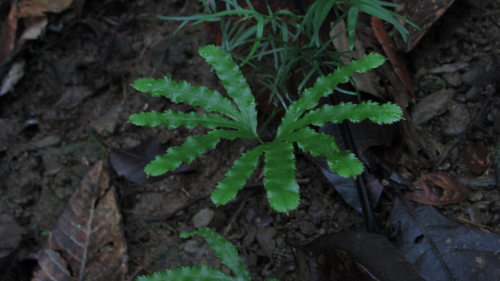
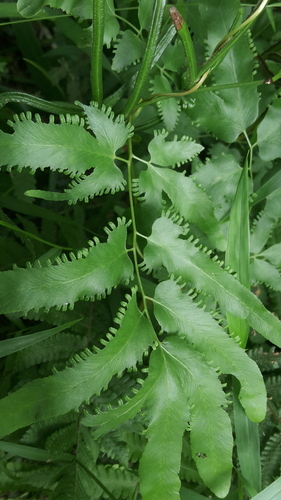
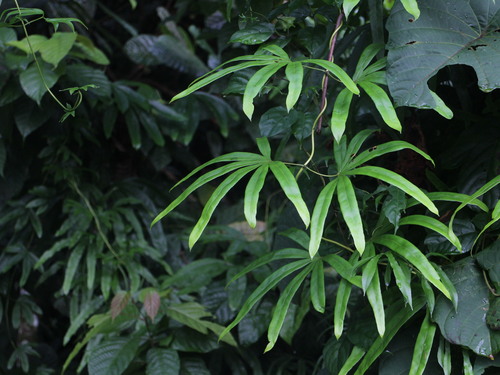
A small climbing fern. It grows 1-3 m long. The leaves are 1-3 m long. The stalk is thin and flexible and tough. The leaves are towards the ends. They have opposite pairs of leaflets with an uneven number of smaller leaflets (pinnae) along them. They are oval to triangle shaped and 2-4 cm long by 1.5 cm wide. The sterile ones are entire or with slight lobes and the fertile ones are shorter.
Edible Uses
The young still-coiled leaves are steamed and eaten, and can be mixed with other vegetables.
Traditional Uses
The young still curled up leaves are steamed and eaten. They are also mixed with other vegetables.
This uses section is brief — help expand it
Distribution
It is a tropical plant. It grows from the lowlands to 1,200 m above sea level in Indonesia. It grows in humid and swampy locations.
Where It Grows
Asia, Fiji, Guam, Indonesia, Pacific, SE Asia,
Notes
Also put in the family Schizaeaceae.
Synonyms
Also Known As
Nauva, Paku hata beas, Paku hata letik, Ribu-ribu
References (2)
- Ochse, J. J. et al, 1931, Vegetables of the Dutch East Indies. Asher reprint. p 656
- Stone, B.,