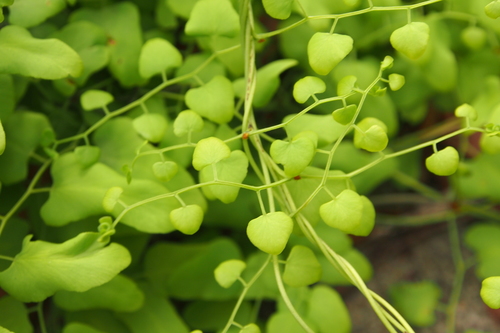
Lygodium pedatum
(Burm.f.) Sw.
iNaturalist· cc-by-nc
(c) 羅元甫, some rights reserved (CC BY-NC)
iNaturalist· cc-by-nc
(c) 羅元甫, some rights reserved (CC BY-NC)
iNaturalist· cc-by-nc
(c) 羅元甫, some rights reserved (CC BY-NC)
Description
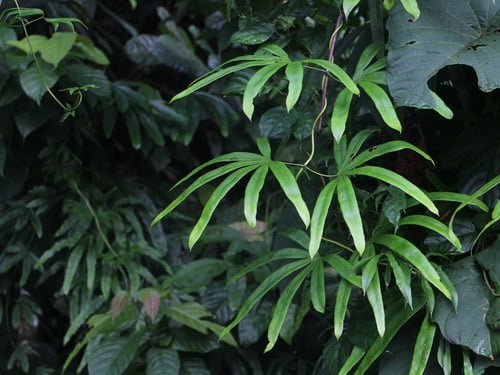
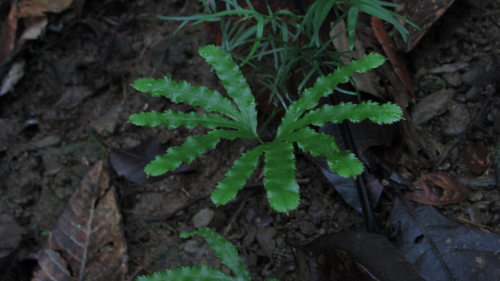
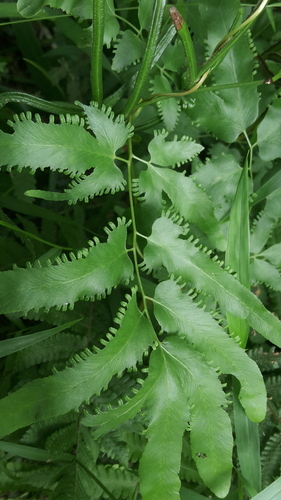
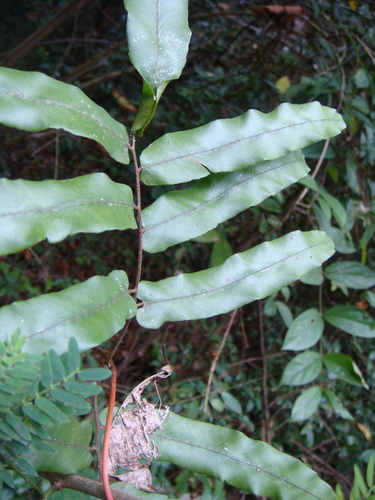
A climbing fern. It grows in the soil. The leaves are 2-10 m long. The stalk is thin, flexible and tough. The leaflets are towards the end. They are deeply divided like fingers on a hand. There are 5-6 segments. They are long and narrow. The sterile leaflets are entire and 10-30 cm long by 1-4 cm wide. The higher fertile leaflets are more narrow.
Edible Uses
The very young still-curled shoots are steamed and eaten.
Traditional Uses
The very young still curled shoots are steamed and eaten.
This uses section is brief — help expand it
Distribution
It is a tropical plant. In Indonesia it grows up to 1,500 m above sea level. It is usually in shady places in forests. It is often on poor, damp soils.
Where It Grows
Asia, Indonesia, SE Asia,
Notes
Also put in the family Schizaeaceae.
Also Known As
Hata, Hata arej, hata gede, Hata paku, Pakis ata, Pakis rambat, Paku hata, Reribu, Ribu-ribu
References (1)
- Ochse, J. J. et al, 1931, Vegetables of the Dutch East Indies. Asher reprint. p 655