Cavendishia melastomoides
(Klotzsch) Hemsl.
iNaturalist· cc-by
(c) Eduardo Chacón Madrigal, some rights reserved (CC BY)
iNaturalist· cc-by
(c) Eduardo Chacón Madrigal, some rights reserved (CC BY)
iNaturalist· cc-by
(c) Eduardo Chacón Madrigal, some rights reserved (CC BY)
Description
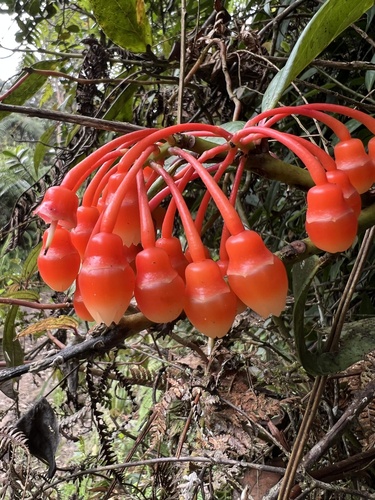
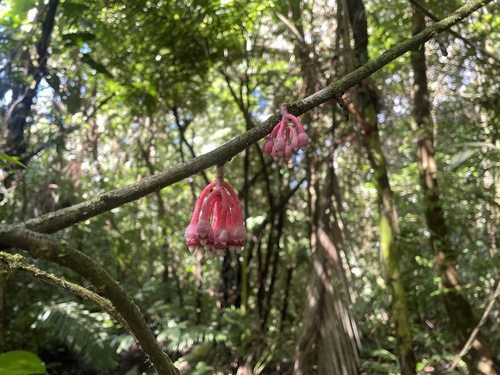
A shrub. It often grows attached to other plants. It can grow 3 m tall. The branches often hang down. The stem at the base can be 1-7 cm across. It usually has some reddish colouring. The twigs are angled and have lines along them. The leaves are narrowly oval to sword shaped and 3-9 cm long by 2-4 cm wide. They are rounded to wedge shaped at the base and taper to the tip. The flowering shoots usually have 6-10 flowers. The fruit is a berry 11-14 mm across. There are some varieties.
Edible Uses
The fruit is edible.
Known Hazards
This is a rare and at-risk species.
Distribution
It is a tropical plant. It grows between 950-2,800 m above sea level.
Where It Grows
Central America, Costa Rica, Panama,
Notes
var. not in The Plant List but in NYBG flora. It is a rare and at risk species.
Synonyms
References (1)
- Reis, S. V. and Lipp, F. L., 1982, New Plant Sources for Drugs and Foods from the New York Botanical Garden herbarium. Harvard. p 225 (As Cavendishia melastomoides var. albiflora)