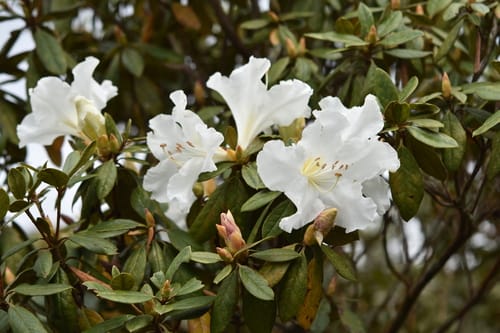
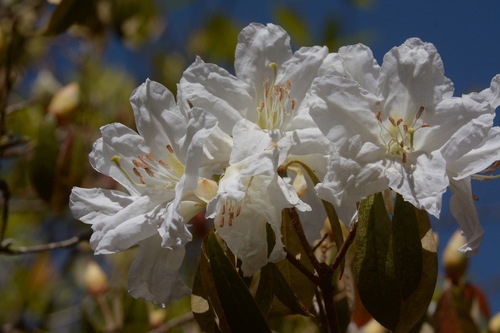
Vaccinium fragile
Franch.
iNaturalist· cc-by-nc
(c) 刘光裕 Liu Guangyu, some rights reserved (CC BY-NC), uploaded by 刘光裕 Liu Guangyu
iNaturalist· cc-by-nc
(c) Ran Dai, some rights reserved (CC BY-NC)
Description
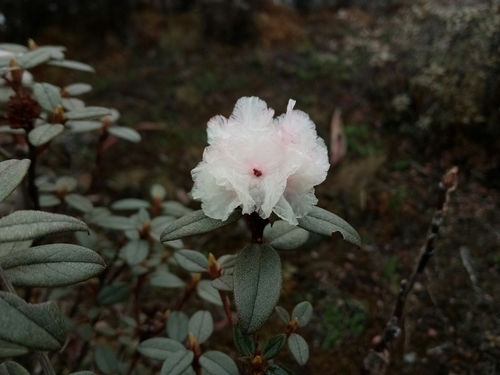
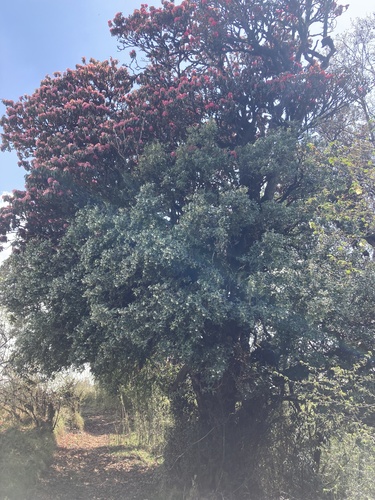
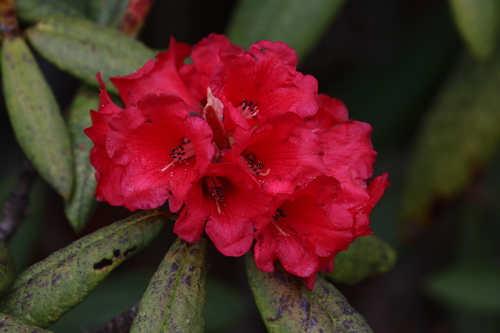
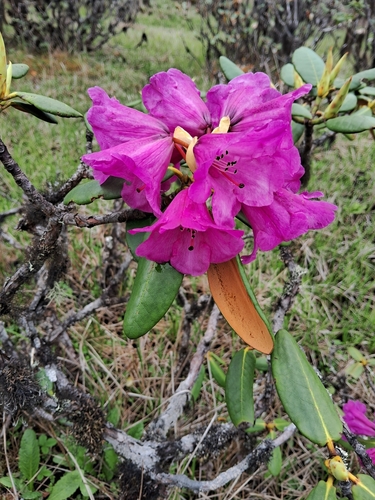
A small shrub. It grows 20-50 cm tall. The base of the stem is thick and woody and the twigs are angled. The leaves are dense and 1-5 cm long by 1-3 cm wide. There are many flowers in a group 2-6 cm across. The fruit is red and turns dark purple. They are 4-5 mm across.
Edible Uses
The fruit is eaten raw as a snack, and the leaves are brewed into tea.
Traditional Uses
The leaves are used for tea. The fruit are eaten raw as a snack.
This uses section is brief — help expand it
Distribution
It is a subtropical plant. It grows in pine and oak forests and on grassy slopes between 1,100-3,400 m above sea level in southern China. It grows in acid soils.
Where It Grows
Asia, China, Himalayas, Tibet,
Dangerous Lookalikes
This plant can be confused with the following toxic species. Always verify identification carefully before consuming any wild plant.
Deadly Nightshade
Atropa belladonna
Joan Simon from Barcelona, España
Vaccinium fragile
Vaccinium fragile
(c) 刘光裕 Liu Guangyu, some rights reserved (CC BY-NC), uploaded by 刘光裕 Liu Guangyu
Deadly Nightshade: Tall herbaceous plant (1-2m), single shiny black cherry-sized berries, star-shaped calyx, large oval leaves, sweet but dangerous taste.
Vaccinium fragile: Low woody shrub, berries in clusters with crown/remnant calyx ring, sweet taste.
Also Known As
Anmiximi, Spa-do
References (5)
- Ding, X., 2021, Collection calendar: the diversity and local knowledge of wild edible plants used by Chenthang Sherpa people to treat seasonal food shortages in Tibet, China. Journal of Ethnobiology and Ethnomedicine 17:40
- Geng, Y., et al, 2016, Traditional knowledge and its transmission of wild edibles used by the Naxi in Baidi Village, northwest Yunnan province. Journal of Ethnobiology and Ethnomedicine. 12:10
- Wang, J., et al, 2020, An ethnobotanical survey of wild edible plants used by the Yi people of Liangshan Prefecture, Sichuan Province, China. Journal of Ethnobiology and Ethnomedicine 16:10 p 7
- Weckerle, C. S., et al, 2006, Plant Knowledge of the Shuhi in the Hengduan Mountains, Southwest China. Economic Botany 60(1):2-23
- Zhang, L., et al, 2016, Ethnobotanical study of traditional edible plants used by the Naxi people during droughts. Journal of Ethnobiology and Ethnomedicine. 12:39