Vaccinium floribundum
Kunth
Colombian blueberry, Andean blueberry
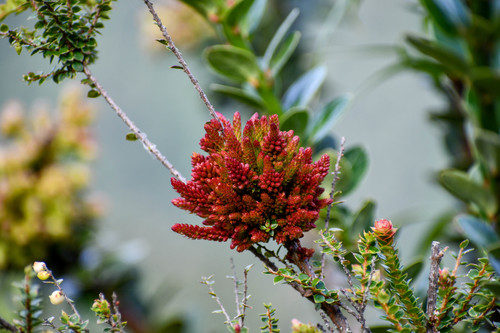
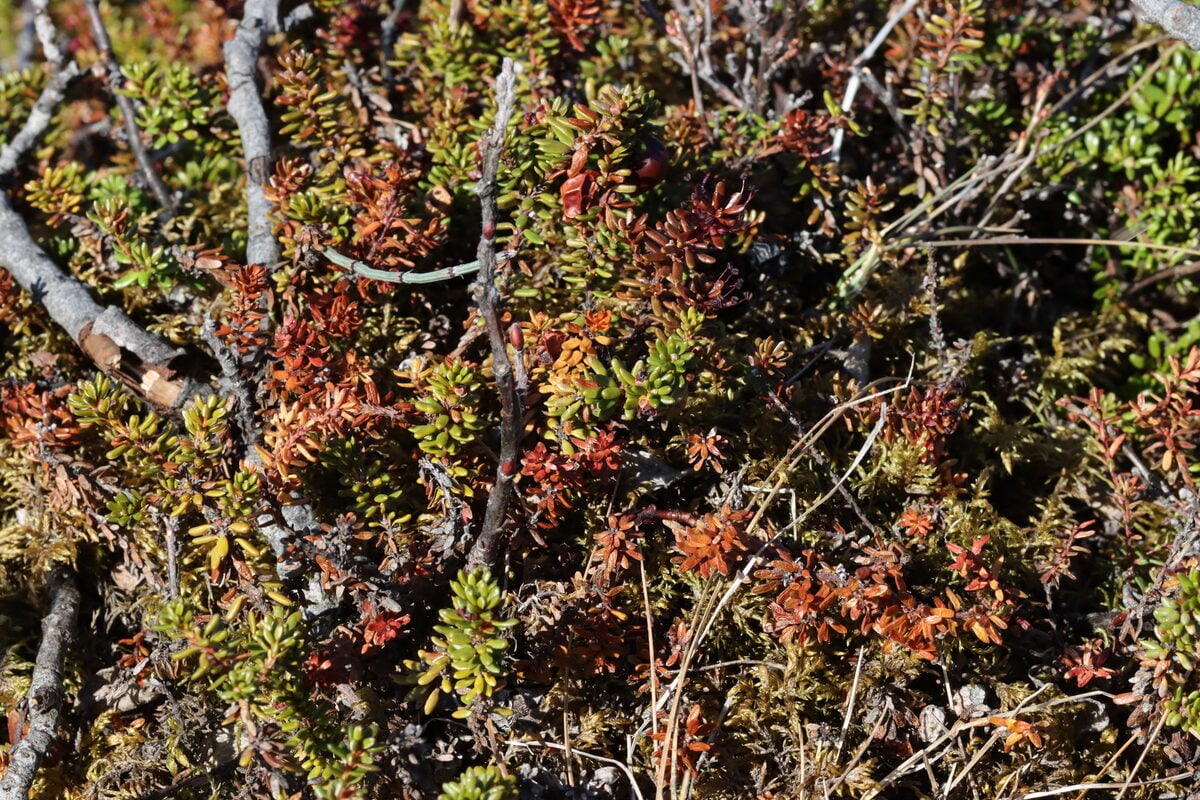
iNaturalist· cc-by-nc
(c) danplant, some rights reserved (CC BY-NC)
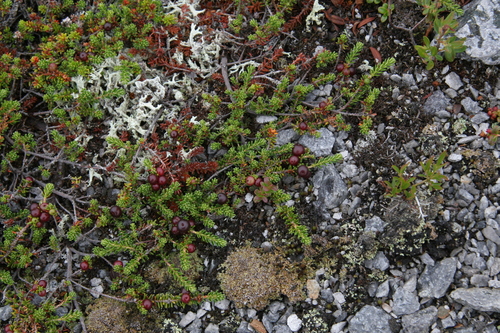
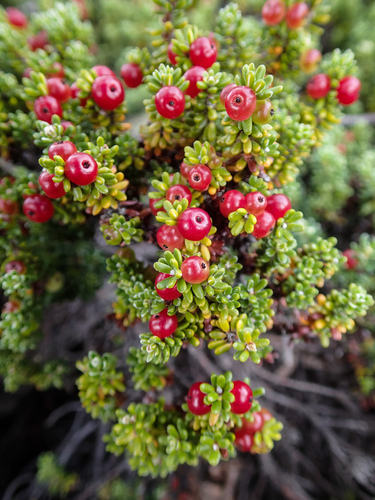
iNaturalist· cc-by-nc
(c) danplant, some rights reserved (CC BY-NC)
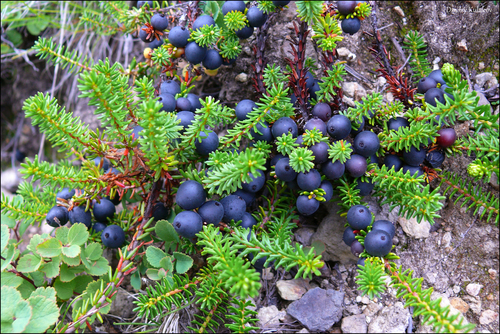
iNaturalist· cc-by-sa
(c) Thibaud Aronson, some rights reserved (CC BY-SA)
Summary
Source: WikipediaVaccinium floribundum, commonly known as mortiño or Andean blueberry, is a slender shrub that grows in the northern Andes in Bolivia, Colombia, Ecuador, Peru and Venezuela at elevations from 1,800 to 3,800 metres (5,900 to 12,500 ft). It can reach 2–3 m (6 ft 7 in – 9 ft 10 in) high or it can be dwarf and prostrate. The plant produces an edible fruit, a round berry that is bluish black and glaucous, that is collected and eaten raw and used in preserves. It is sold at some markets and is used for Colada Morada celebrating the Day of the Dead.
Description
An evergreen shrub. It grows 1-2 m high. It spreads twice as wide. It produces long arching growths. The leaves are oval and dark green. They have shallow teeth. The leaves are 1.3 cm long and they are crowded along the stems. The young stems are purple-red. The flowers are rose pink and cylinder shaped. They grow along the stems of the previous year's growth. They are in tightly packed groups 5 cm long. The fruit are red berries they turn blue-black with maturity. They are 5 mm across. They are edible.
Edible Uses
The blue-black fruit are edible and made into jams, drinks, and pies. Fruit are sold in local markets.
Traditional Uses
The fruit are made into jams, drinks and pies.
This uses section is brief — help expand it
Distribution
A tropical plant. It grows in the mountain in tropical South America between 2,800 m and 4,300 m in forest areas. It suits USDA hardiness zones 8-11.
Where It Grows
Andes, Bolivia, Britain, Colombia, Ecuador, Europe, Peru, South America, Venezuela,
Cultivation
It can be grown from seed or cuttings. The long arching branches should be pruned to give better fruiting. It benefits by being burnt to remove excessive old growth and weeds.
Propagation
Seed - sow in containers in a lime-free potting mix and only just cover the seed. Stored seed might require a period of up to 3 months cold stratification. Another report says that it is best to sow the seed as soon as it is ripe. Once they are about 5cm tall, prick the seedlings out into individual pots and grow them on in a lightly shaded position until they are large enough to plant out. Cuttings of half-ripe wood, 5 - 8cm with a heel, August in a frame. Slow and difficult. Layering in late summer or early autumn. Another report says that spring is the best time to layer. Takes 18 months. Division of suckers in spring or early autumn.
Other Uses
The species is of special interest for its potential in breeding programmes where it could endow frost resistance to the flowers. The wood is used for fuel.
Other Information
Fruit are sold in markets.
Dangerous Lookalikes
This plant can be confused with the following toxic species. Always verify identification carefully before consuming any wild plant.
Deadly Nightshade
Atropa belladonna
Joan Simon from Barcelona, España
Colombian blueberry
Vaccinium floribundum
(c) danplant, some rights reserved (CC BY-NC)
Deadly Nightshade: Tall herbaceous plant (1-2m), single shiny black cherry-sized berries, star-shaped calyx, large oval leaves, sweet but dangerous taste.
Colombian blueberry: Low woody shrub, berries in clusters with crown/remnant calyx ring, sweet taste.
Synonyms
Also Known As
Agraz, Arando, Congama, Joyapa chiquito, Macha-macha, Manzana, Manzanilla, Mortiña, Mortiño
References (19)
- Castillo, R. O., 1995, Plant Genetic Resources in the Andes: Impact, Conservation, and Management. Crop Science 35:355-360
- Facciola, S., 1998, Cornucopia 2: a Source Book of Edible Plants. Kampong Publications, p 97
- Hedrick, U.P., 1919, (Ed.), Sturtevant's edible plants of the world. p 667 (As Vaccinium mortinia)
- Kermath, B. M., et al, 2014, Food Plants in the Americas: A survey of the domesticated, cultivated and wild plants used for Human food in North, Central and South America and the Caribbean. On line draft. p 893
- Lopez-Diago, D. & Garcia, N., 2021, Wild edible fruits of Colombia. Biota ColomBiana 22 (2) p 37
Show all 19 references Hide references
- Martin, F. W., et al, 1987, Perennial Edible Fruits of the Tropics. USDA Handbook 642 p 94 (Also as Vaccinium mortinia)
- Plants for a Future database, The Field, Penpol, Lostwithiel, Cornwall, PL22 0NG, UK. http://www.scs.leeds.ac.uk/pfaf/ (As Vaccinium mortinia)
- Pl. hartw. 221. 1847 (As Vaccinium mortinia)
- Roa, J. A. G. & Boada, D. S. G., 2018, Fundación para el Fortalecimiento de la Fruticultura y Plantas Alimenticias no Convencionales en Colombia.
- Smith, N., Mori, S.A., et al, 2004, Flowering Plants of the Neotropics. Princeton. p 142
- Torre, de la, L., et al, 2008, Enciclopedia de las Plantas Útiles del Ecuador. Herbario QCA. Pontificia Universidad Católica del Ecuador. p 316
- Trehane, J., 2004, Blueberries, Cranberries and Other Vacciniums. Timber Press. p 226
- Ulian, T., et al, 2020, Unlocking plant resources to support food security and promote sustainable agriculture. Plants, People, Planet. 2020;2:421–445.
- USDA, ARS, National Genetic Resources Program. Germplasm Resources Information Network - (GRIN). [Online Database] National Germplasm Resources Laboratory, Beltsville, Maryland. Available: www.ars-grin.gov/cgi-bin/npgs/html/econ.pl (10 April 2000)
- F. W. H. A. von Humboldt et al., Nov. gen. sp. 3:208[folio]; 3:266[quarto], t. 251. 1819
- Van den Eynden, V., et al, 2003, Wild Foods from South Ecuador. Economic Botany 57(4): 576-603
- Van den Eynden, V., & Cueva, E., 2008, Las plantas en la alimentacion. Enciclopedia de las Plantas Utiles del Ecuador. Herbario QCA & Herbario AAU. Quito & Aarhus. 2008: 62–66
- Wiersema, J. H. & Leon, B., 2013, World Economic Plants. A Standard Reference CRC Press. 2nd Ed. p 709
- World Checklist of Useful Plant Species 2020. Royal Botanic Gardens, Kew