Acrotriche depressa
R. Br.
Wiry Ground-berry
iNaturalist· cc0
no rights reserved, uploaded by insiderelic
iNaturalist· cc-by-nc
(c) Dr Manfred Jusaitis, some rights reserved (CC BY-NC), uploaded by Dr Manfred Jusaitis
iNaturalist· cc-by-nc
(c) Tom Hunt, some rights reserved (CC BY-NC), uploaded by Tom Hunt
Summary
Source: WikipediaAcrotriche depressa, commonly known as wiry ground-berry or honeypots, is a flowering plant in the family Ericaceae. It is a small shrub with crowded greyish-green leaves and white or green flowers and grows in southern Australia.
Description
A much branched small shrub. It grows 0.2-0.5 m high and spreads 0.5-1 m across. The small branches are hairy. The leaves are 0.5 cm long and flat. They are broadest near the base. They taper to a long fine point. They are olive green. The veins are easy to see under the leaf. The flowers are like tubes. They are 0.3 cm long. The flowers occur in spikes 2-3 cm long. They are mostly on older wood. They are greenish. The fruit is round and 1 cm long. It is succulent and pink to dark purple.
Edible Uses
The fruit can be eaten raw. Flowers are a source of nectar.
Traditional Uses
The fruit are eaten. They can be used to make jams or jellies.
This uses section is brief — help expand it
Medicinal Uses
None known.
Distribution
It is a temperate plant. It occurs naturally in sandy soils but will grow on light to medium soils if they are well drained. It will grow in part shade or full sun. It will tolerate light frosts.
Where It Grows
Australia*,
Cultivation
It is grown by cuttings.
Other Uses
None known.
Production
The fruit are ripe September to October.
Other Information
It is now grown commercially.
Notes
There are 14 Acrotriche species. They are in Australia.
Also Known As
Native currants
References (10)
- Alice, L. & O'Quinn, T., Australian Bush Superfoods. Explore Australia p 42
- Bircher, A. G. & Bircher, W. H., 2000, Encyclopedia of Fruit Trees and Edible Flowering Plants in Egypt and the Subtropics. AUC Press. p 8
- Bonney, N., 1997, Economic Native Trees and Shrubs for South Australia. Greening Australia (SA) inc. Campbelltown SA 5074 p 168
- Bonney, N., 2012, Edible Wild Native Plants for Southern Australia. p 22
- Clarke, P. A., 2013, The Aboriginal Ethnobotany of the Adelaide Region, South Australia. Transactions of the Royal Society of South Australia. (2013), 137(1): 97-126
Show all 10 references Hide references
- Dashorst, G.R.M., and Jessop, J.P., 1998, Plants of the Adelaide Plains & Hills. Botanic Gardens of Adelaide and State Herbarium. p 116
- Elliot, W.R., & Jones, D.L., 1982, Encyclopedia of Australian Plants suitable for cultivation. Vol 2. Lothian. p 145
- Low, T., 1991, Wild Food Plants of Australia. Australian Nature FieldGuide, Angus & Robertson. p 128
- Paczkowska, G. & Chapman, A.R., 2000, The Western Australian Flora. A Descriptive Catalogue. Western Australian Herbarium. p 231
- Prodr. 548. 1810
More from Ericaceae
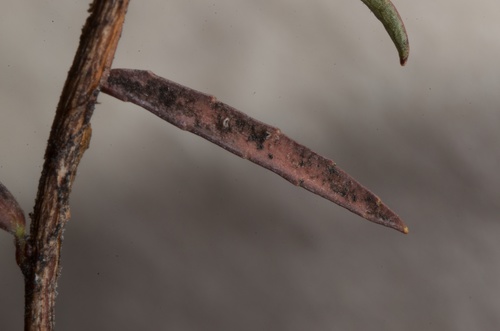
Gaultheria macrostigma
Prostrate snowberry, False snowberry
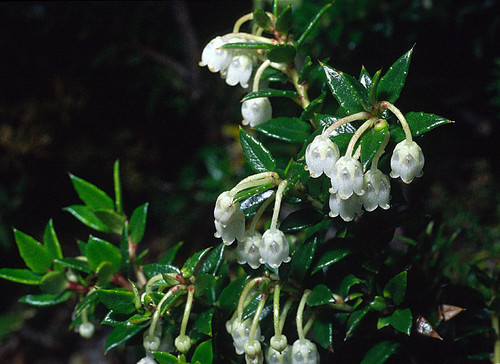
Gaultheria mucronata
Prickly heath
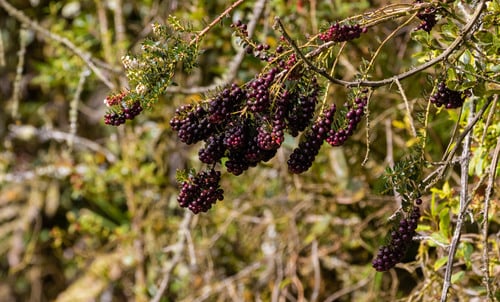
Gaultheria myrsinoides
Manzana
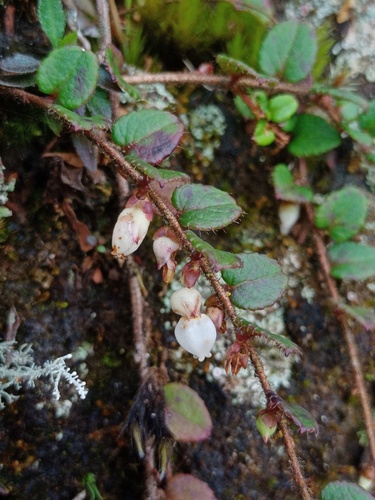
Gaultheria nummularioides
Coinwort snowberry
Gaultheria ovatifolia
Mountain checkerberry, Western Teaberry, Slender false-wintergreen
Gaultheria procumbens
Wintergreen, Checkerberry, Teaberry