Vaccinium caespitosum
Michx.
Dwarf Bilberry, Dwarf huckleberry
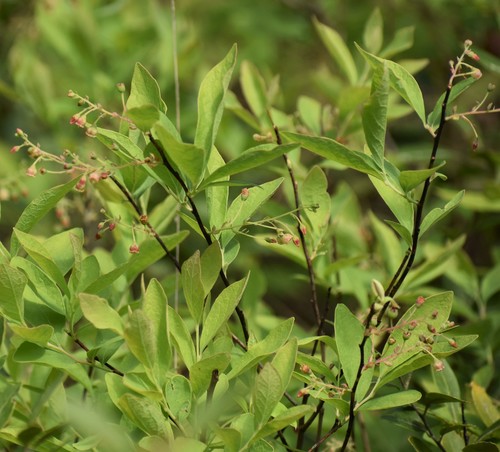
iNaturalist· cc-by-nc
(c) James Miskelly, some rights reserved (CC BY-NC)
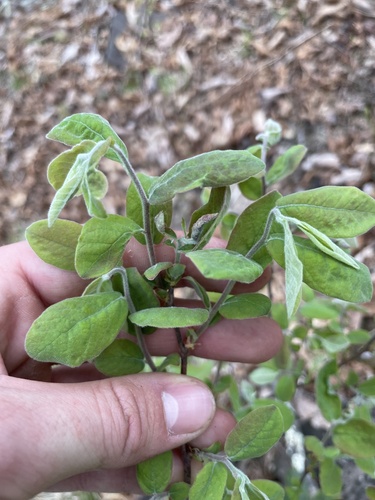
iNaturalist· cc-by-nc
(c) James Miskelly, some rights reserved (CC BY-NC)
iNaturalist· cc-by-nc
(c) James Miskelly, some rights reserved (CC BY-NC)
Summary
Source: WikipediaLow-growing deciduous shrub reaching 0.6 m with hermaphrodite flowers pollinated by insects. Thrives in light sandy or medium loamy, well-drained soils with mildly acid to very acid pH. Grows in semi-shade or full sun and prefers moist to wet soil conditions.
Description
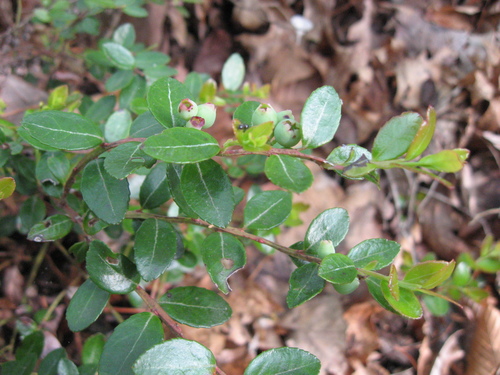
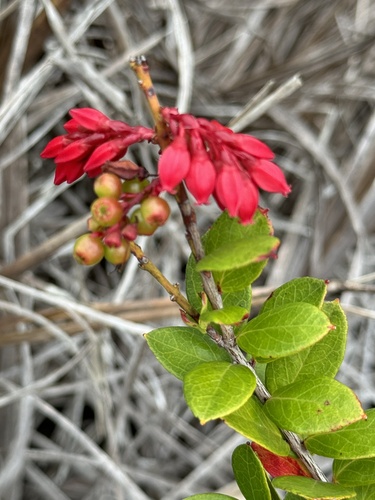
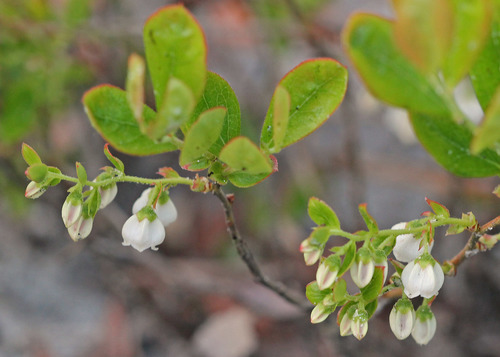
It is a small shrub. It grows 10-25 cm high and spreads 60 cm wide. The stems are finely branched and grow close to the ground. It loses its leaves during the year. The leaves are small and sometimes have teeth along the edge. The flowers are pink or cream. The fruit are bluish berries. They are 6 mm wide. They are edible.
Edible Uses
The fruit can be eaten raw or cooked. The leaves can also be used to make a tea.
Traditional Uses
The fruit are used for preserves and pies. The fruit are sweet and can be eaten fresh.
This uses section is brief — help expand it
Medicinal Uses
The plant has antiseptic, astringent, carminative, and hypoglycaemic properties and is a source of vitamin C.
Distribution
It is a cold temperate plant. It grows in alpine regions of NE United States. It grows on the dry needle-littered floor of pine forests. It suits hardiness zones 2-8.
Where It Grows
Alaska, Arctic, Australia, Britain, Canada, Europe, Mexico, North America, USA,
Cultivation
It is grown from runners that have uprights and roots.
Propagation
Sow seed in late winter in a greenhouse using a lime-free potting mix, barely covering the seed. Stored seed may need up to 3 months of cold stratification. Alternatively, sow fresh seed in a greenhouse as soon as it is ripe. Prick seedlings out into individual pots once they reach about 5cm tall, and grow them on in a lightly shaded greenhouse position for at least their first winter. Plant out in late spring or early summer after the last expected frosts. Half-ripe cuttings, 5–8cm with a heel, can be taken in August and rooted in a frame, though this is slow and difficult. Layering can be done in late summer or early autumn — or in spring according to some sources — and takes 18 months. Suckers can be divided in spring or early autumn.
Other Uses
None known.
Dangerous Lookalikes
This plant can be confused with the following toxic species. Always verify identification carefully before consuming any wild plant.
Deadly Nightshade
Atropa belladonna
Joan Simon from Barcelona, España
Dwarf Bilberry
Vaccinium caespitosum
(c) James Miskelly, some rights reserved (CC BY-NC)
Deadly Nightshade: Tall herbaceous plant (1-2m), single shiny black cherry-sized berries, star-shaped calyx, large oval leaves, sweet but dangerous taste.
Dwarf Bilberry: Low woody shrub, berries in clusters with crown/remnant calyx ring, sweet taste.
Also Known As
Arandano, Dwarf blueberry
References (17)
- Beckstrom-Sternberg, Stephen M., and James A. Duke. "The Foodplant Database." http://probe.nalusda.gov:8300/cgi-bin/browse/foodplantdb.(ACEDB version 4.0 - data version July 1994)
- Brickell, C. (Ed.), 1999, The Royal Horticultural Society A-Z Encyclopedia of Garden Plants. Convent Garden Books. p 1039
- Bowser, M., 2017, Handout on Edible Plants of the Kenai Peninsula. USFWS Kenai National Wildlife Refuge p 13
- Cormack, R. G. H., 1967, Wild Flowers of Alberta. Commercial Printers Edmonton, Canada. p 254
- Cundall, P., (ed.), 2004, Gardening Australia: flora: the gardener's bible. ABC Books. p 1453
Show all 17 references Hide references
- Fisk, J. R. & Hoover, E., 2015, Wild Fruits of Minnesota. A Field Guide. University of Minnesota p 32
- Hedrick, U.P., 1919, (Ed.), Sturtevant's edible plants of the world. p 666
- Heller, C. A., 1962, Wild Edible and Poisonous Plants of Alaska. Univ. of Alaska Extension Service. p 51
- Kermath, B. M., et al, 2014, Food Plants in the Americas: A survey of the domesticated, cultivated and wild plants used for Human food in North, Central and South America and the Caribbean. On line draft. p 891
- MacKinnon, A., et al, 2009, Edible & Medicinal Plants of Canada. Lone Pine. p 114
- Moerman, D. F., 2010, Native American Ethnobotany. Timber Press. p 582
- Plants for a Future database, The Field, Penpol, Lostwithiel, Cornwall, PL22 0NG, UK. http://www.scs.leeds.ac.uk/pfaf/
- Porsild, A.E., 1974, Rocky Mountain Wild Flowers. Natural History Series No. 2 National Museums of Canada. p 320
- Segura, S., et al, 2018, The edible fruit species in Mexico. Genet Resour Crop Evol (2018) 65:1767–1793
- Trehane, J., 2004, Blueberries, Cranberries and Other Vacciniums. Timber Press. p 219
- Turner, N., 1997, Food Plants of Interior First Peoples. Royal BC Museum Handbook p 113
- Turner, N., et al, 2011, "Up on the Mountain": Ethnobotanical Important of Montane Sites in Pacific Coastal North America. Journal of Ethnobiology 31(1): 4-43