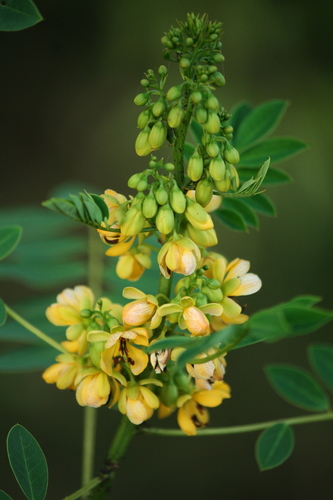
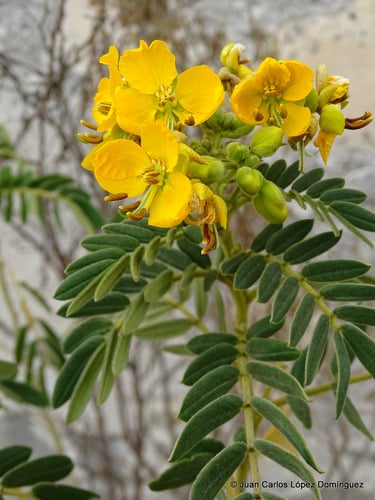
Desmodium uncinatum
(Jacq.) DC.
iNaturalist· cc-by
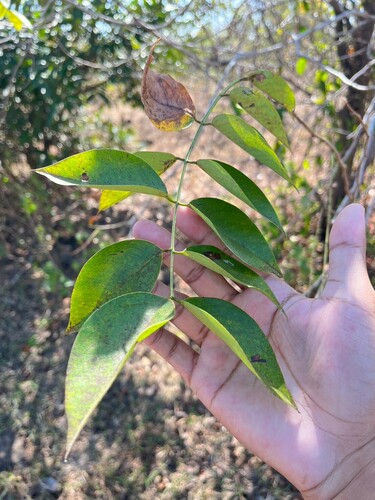
(c) aacocucci, some rights reserved (CC BY), uploaded by aacocucci
iNaturalist· cc-by-nc-sa
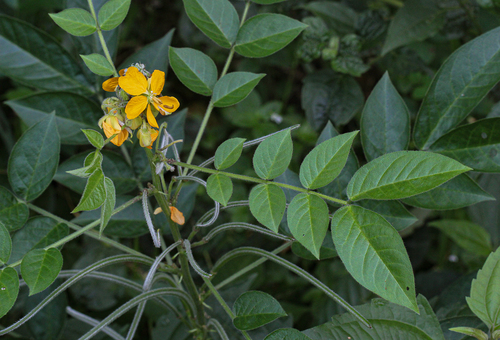
(c) Nick Lambert, some rights reserved (CC BY-NC-SA), uploaded by Nick Lambert
iNaturalist· cc-by-nc
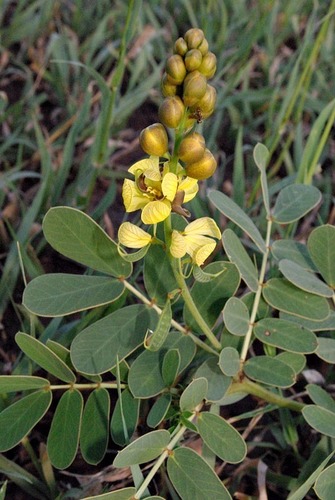
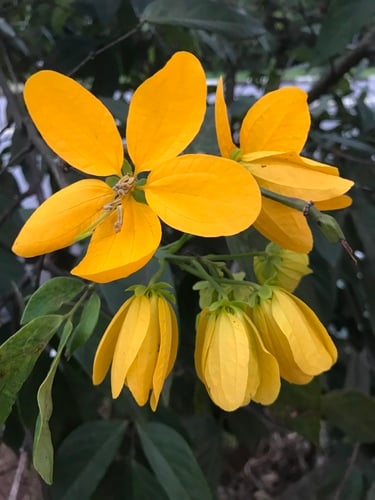
(c) Sandy, some rights reserved (CC BY-NC), uploaded by Sandy
Summary
Source: WikipediaDesmodium uncinatum, the silverleaf desmodium, is a species of flowering plant in the family Fabaceae, native to Latin America, and introduced as a fodder to various locales in Africa, India, New Guinea, Australia and Hawaii. Although chiefly a fodder, it can also be used for pasture, deferred feed, cut-and-carry, hay, ground cover, and mulch. It is considered invasive in Australia and Hawaii. This species of Desmodium has also found use in the push-pull technology for pest management where it is grown as an intercrop between rows of a cereal crop to control stem-boring insects and fall armyworms. Together with D. intortum (greenleaf desmodium) they are the most common two intercrops of push-pull technology.
Description
A legume. It is a herb or small shrub. It has rhizomes 1.5 m long. The side leaves are 16-50 mm long by 10-33 mm wide. The fruit is triangle shaped and 5-7 mm long by 3-4 mm wide.
Edible Uses
None known.
Medicinal Uses
None known.
Distribution
It is a subtropical plant. In Argentina it grows from sea level to 1,000 m above sea level.
Where It Grows
Argentina*, Asia, Brazil, Indonesia, Paraguay, SE Asia, South America, St Helena, Uruguay, West Papua,
Propagation
Seed germinates quickly in 3–4 days without scarification.
Other Uses
Grown in association with tussock and more open sward-forming grasses in permanent, semi-intensively managed pastures. Used for cut-and-carry, green or conserved feed, ground cover, and as an intercrop or mulch in cropping systems. Abundant leaf fall and runner decay build up a deep duff layer beneath the plants. Carbon Farming; Nitrogen Fixer; Fodder: pasture.
References (1)
- Milliken, W., Ethnobotany of the Yali of West Papua. Royal Botanical Garden, Edinburgh. p 10 (near Baliem)