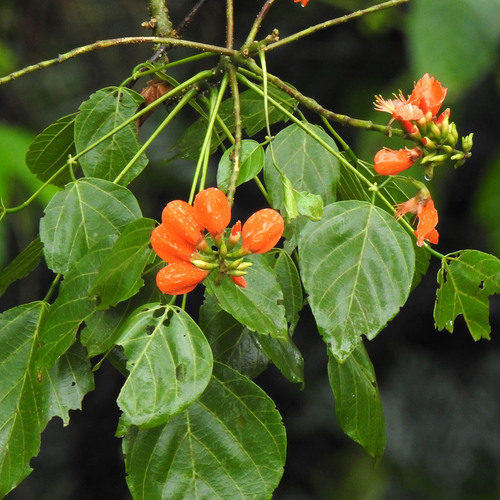
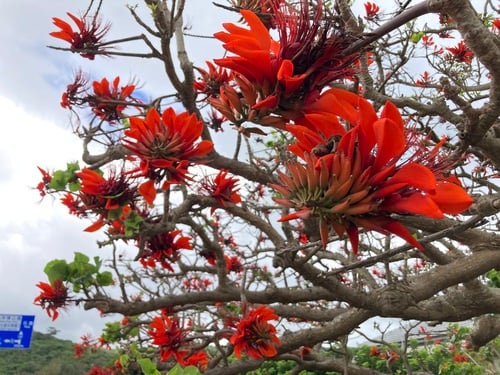
Dialium cochinchinense
Pierre
Velvet tamarind
iNaturalist· cc-by-sa
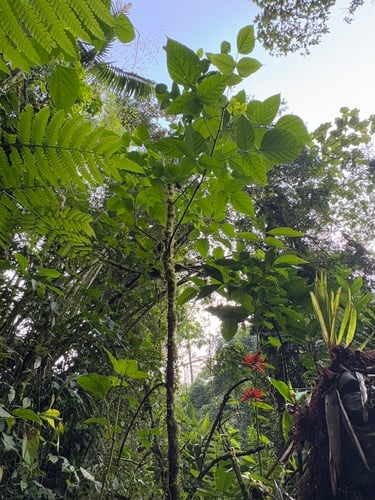
(c) Singhalawap, some rights reserved (CC BY-SA)
iNaturalist· cc-by
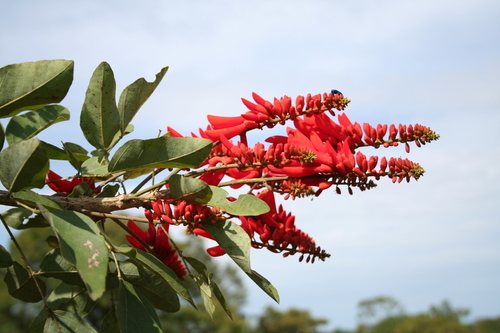
(c) Utain Pummarin, some rights reserved (CC BY)
Summary
Source: WikipediaDialium cochinchinense, the velvet tamarind, is a species of flowering plant in the family Fabaceae. It is native to Borneo and Indochina (Cambodia, Laos, Malaysia, Myanmar, Thailand, Vietnam), but may have been introduced to Sri Lanka, Ghana, Nigeria and other west African countries. (or may be confused with other species in the genus Dialium). In the wild, it is threatened by habitat loss.
Description
A tree 15-25 m tall. The leaves are compound. The leaf is 5-10 cm long and there are 5-9 leaflets. These are alternate and oval. They are 4-7 cm long by 1.5-4.5 cm wide. The flower panicles are on the ends of branches and have soft hairs. The flower arrangements are 10-30 cm long. The flowers are small and do not have petals. The fruit is a pod. It is velvety and 1.5 cm long by 8-9 mm wide. There is one seed inside. It is long an oval with furrows along it. The seed is 9 mm long by 6 mm wide. The ripe fruit is edible.
Edible Uses
The ripe fruit pulp around the seeds is eaten raw or cooked with a sweet-sour flavour. Mature fruit are boiled and eaten.
Traditional Uses
The ripe fruit are edible. The pulp around the seeds is eaten raw or cooked and has a sweet-sour flavour. The mature fruit are boiled and eaten.
This uses section is brief — help expand it
Distribution
A tropical plant. It grows in both dense and clear forests. It grows between sea level and 300 m above sea level. It can grow up to 800 m above sea level.
Where It Grows
Asia, Cambodia, India, Indochina, Indonesia, Laos, Malaysia, Myanmar, SE Asia, Sri Lanka, Thailand, Vietnam,
Cultivation
It is grow from seed.
Propagation
Seed - it probably has a long viability. The seeds have hard seed coat, which must be scarified before the seeds will imbibe water and germinate. Any method (manual nicking, filing or burning, hot water or sulphuric acid) used for pre-treatment of hard seed can be applied. There are presumably inhibitors in the fruit flesh, but these will naturally be removed by processing and cleaning the seed. However, attempts to sow the whole fruit in order to avoid the tedious pre-treatment will most likely give very low germination. The seed is usually sown in individual, deep containers. Germination is quick; at optimal conditions and after proper pre-treatment, germination commences 1 - 2 days after sowing, and seedlings with unfolded cotyledons and two persistent leaves have developed after 10 - 14 days.
Other Uses
A brown dye is obtained from the bark. The veins are dense and fine and easy to polish. The wood is used as timber for construction (doors, windows), boat-building and daily utensils. This tree is one of several species yielding a timber known as 'Keranji'. The general description of this wood is as follows:- The heartwood is golden-brown or red-brown; clearly demarcated from the white to yellowish sapwood. The texture is fine to moderately coarse and even; the grain interlocked or wavy. The wood is heavy; moderately durable but the sapwood is susceptible to insect and fungal attack. It can be easy to very difficult to resaw and cross-cut depending on the species; planing is easy to slightly difficult, and the planed surface is moderately smooth; nailing property is good. The wood is suitable for heavy construction, flooring, handles for striking tools and batons. The tree is used locally as a shade tree. A natural pioneer species within its native range.
Production
The fruit develop during the rainy season. In NE Thailand fruit are available August to November.
Other Information
It is sold in markets.
Notes
There are about 30-40 Dialium species. They grow in tropical SE Asia. They probably all have edible fruit. Also as Caesalpinaceae.
Also Known As
Bak keng, Gal siyambala, Kaa yee, Kallu pullium, Kanji, Keranji, Kheng, Khleng, Khlong, Krallanh, Kro lanh, La-met, Lralanh, Mai kheng, Naang dam, Pohon asam keranji, Xai met, Xay, Xay long, Xoay, Yee
References (19)
- Cengel, D. J. & Dany, C., (Eds), 2016, Integrating Forest Biodiversity Resource Management and Sustainable Community Livelihood Development in the Preah Vihear Protected Forest. International Tropical Timber Organization p 133
- Cruz-Garcia, G. S., & Price, L. L., 2011, Ethnobotanical investigation of 'wild' food plants used by rice farmers in Kalasin, Northeast Thailand. Journal of Ethnobiology and Ethnomedicine 7:33
- Eiadthong, W., et al, 2010, Management of the Emerald Triangle Protected Forests Complex. Botanical Consultant Technical Report. p 23
- Fl. forest. Cochinch. 4(fasc. 24): t. 384a. 1898
- Jacquat, C., 1990, Plants from the Markets of Thailand. D.K. Book House p 45
Show all 19 references Hide references
- Kachenchart, B., et al, 2008, Phenology of Edible Plants at Sakaerat Forest. In Proceedings of the FORTROP II: Tropical Forestry Change in a Changing World. Bangkok, Thailand.
- Khumgratok, S., Edible Plants in Cultural Forests of Northeastern Thailand. Mahasarakham University Thailand.
- Milow, P., et al, 2013, Malaysian species of plants with edible fruits or seeds and their evaluation. International Journal of Fruit Science. 14:1, 1-27
- Phon, P., 2000, Plants used in Cambodia. © Pauline Dy Phon, Phnom Penh, Cambodia. p 230
- Prixar, S., et al, 2006, Species composition, distribution and management of trees in paddy fields in central Laos. p 24
- Sam, H. V. et al, 2004, Trees of Laos and Vietnam: A Field Guide to 100 Economically or Ecologically Important Species. BLUMEA 49: 201-349
- Sang, D. T., & Mizoue, K. O. N., 2012, Use of Edible Forest Plants among Indigenous Ethnic Minorities in Cat Tien Biosphere Reserve, Vietnam. Asian Journal of Biodiversity Vol. 3 (1), p 23-49
- Soerianegara, I. & Lemmens, R. H. M. L., (Eds.) 1993, Timber trees: Major commercial timbers. Plant Resources of South-East Asia. Wageningen. No. 5(1). p 164
- Solomon, C., 2001, Encyclopedia of Asian Food. New Holland. p 398
- Sukarya, D. G., (Ed.) 2013, 3,500 Plant Species of the Botanic Gardens of Indonesia. LIPI p 227
- Suksri, S., et al, 2005, Ethnobotany in Bung Khong Long Non-Hunting Area, Northeast Thailand. Kasetsart J., (Nat. Sci) 39: 519-533
- Thorng, R., et al, 2015, Roles of Wild Food Plants in Ethnic Group Communities in Mondulkiri Province, Northeastern Cambodia. Journal of Mekong Societies Vol.11 No.2 May-August 2015 pp. 1-17
- Van Sam, H. et al, 2004, Trees of Laos and Vietnam: A Field Guide to 100 Economically or Ecologically Important Species. Blumea 29 (2004) 201-349
- www.worldagroforestrycentre.org/sea/products/afdbases/af