Chimonanthus praecox
(L.) Link
Winter sweet, Japanese allspice, Ice flower
iNaturalist· cc-by-nc-nd
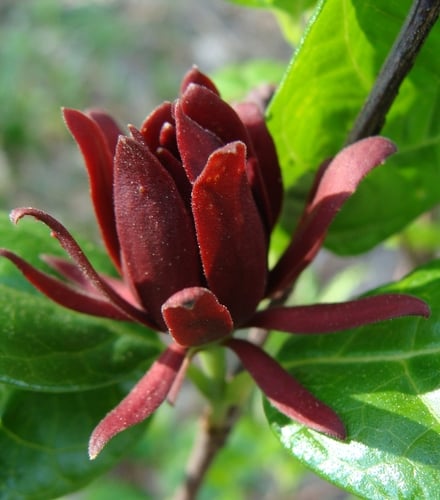
(c) Manuel Martín Vicente, some rights reserved (CC BY-NC-ND)
iNaturalist· cc-by-nc
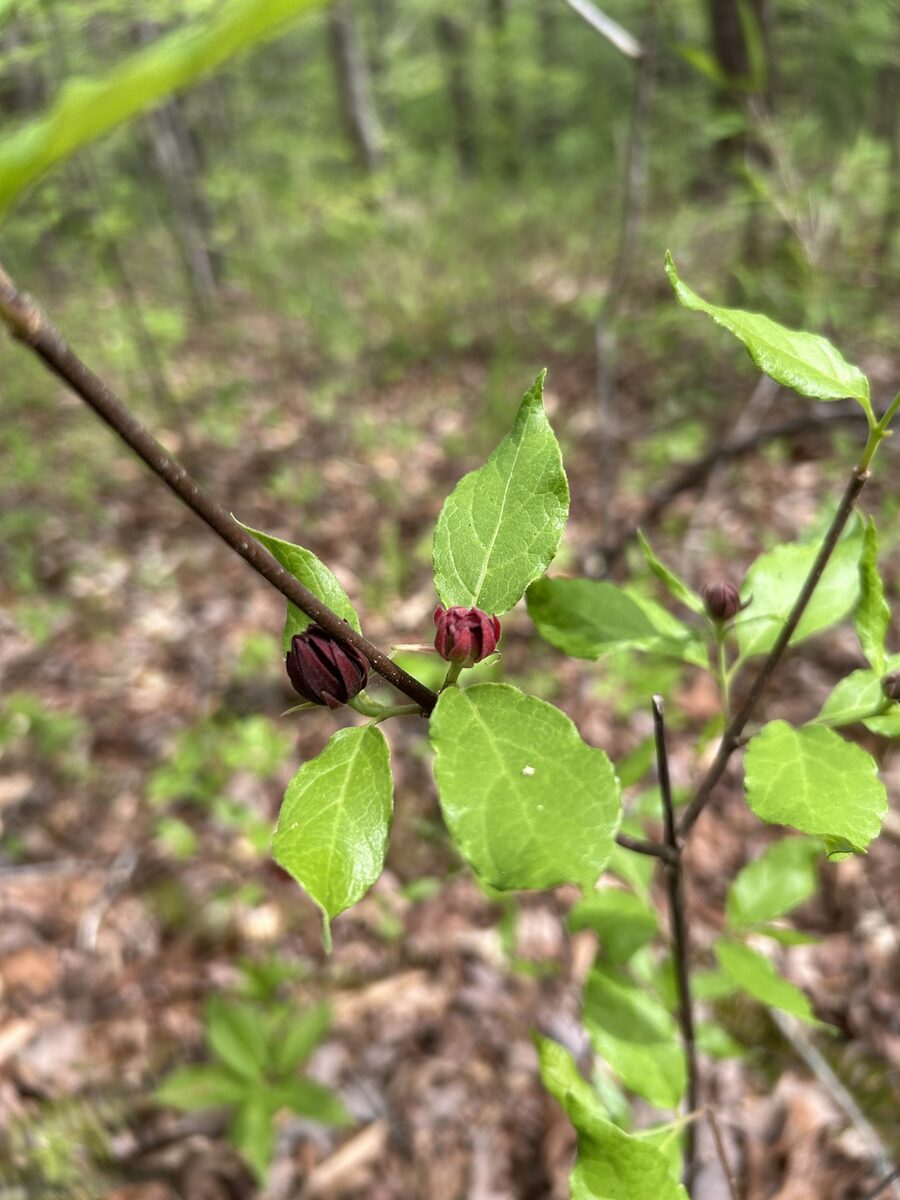
(c) Yu Gao, some rights reserved (CC BY-NC)
Summary
Source: WikipediaChimonanthus praecox, also known as wintersweet and Japanese allspice, is a species of flowering plant in the genus Chimonanthus of the family Calycanthaceae. The plant is native to China and is known as làméi (蠟梅) in Chinese. It is also grown in Iran, where it is called gol-e yakh (گلیخ) or "ice flower" in Persian. The plant is a vigorous deciduous shrub growing to 4 m (13 ft) tall with an erect trunk and leaves 5–29 cm (2–11 in) long and 2–12 cm (1–5 in) broad. Its strongly scented pendent flowers, produced in winter (between November and March in UK,) on bare stems, have 15-21 yellow or pale green-yellow tepals, the inner ones usually with purplish red pigments. This plant is cultivated in gardens, producing valued flower colour during dormant seasons. The cultivars C. praecox 'Grandiflorus' and C. praecox 'Luteus' have gained the Royal Horticultural Society's Award of Garden Merit. The plant is not closely related to allspice, Pimenta dioica.
Description
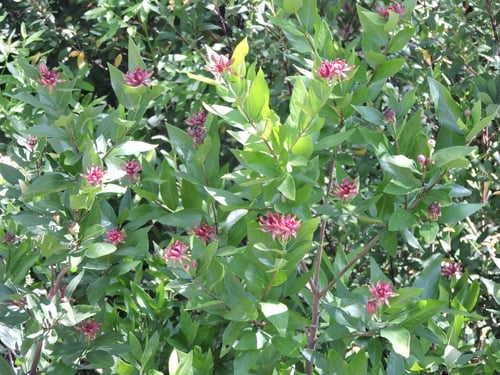
A deciduous shrub. It grows 3-3.7 m tall and spreads 2.5-3 m wide. The stems are thick and angular. The leaves are sword shaped and 20 cm long. The leaves are glossy and mid green. They have a rough surface. They turn pale yellow in autumn. The flowers are dull pale yellow and almost without stalks. There is a small maroon inner section. They have a sweet scent. The fruit are yellow-brown when ripe.
Edible Uses
The flowers must be thoroughly boiled and then washed before eating with oil and salt. The flower petals are also used to flavour and scent tea.
Traditional Uses
The flowers are thoroughly boiled, washed and eaten with oil and salt. The flower petals are used to flavour and scent tea.
This uses section is brief — help expand it
Medicinal Uses
The flowers and flower buds contain 0.5–0.6% essential oils comprising benzyl alcohol, benzyl acetate, linalool, terpineol, and indole, and are sialagogue in action. The flowers are used to treat thirst and depression, while the essential oil is used to treat colds. The leaves and roots can be used to treat contusions, cuts, haemorrhages, strains, lumbago, rheumatism, numbness, and colds.
Distribution
It is a temperate plant. Plants are frost hardy. It suits hardiness zones 6-10. Melbourne Botanical gardens. Geelong Botanical Gardens. In Sichuan and Yunnan. Arboretum Tasmania.
Where It Grows
Asia, Australia, China*, Indonesia, Japan, SE Asia, Slovenia, Tasmania,
Cultivation
Plants can be grown from seed or by layering the stems.
Propagation
Seed is best sown as soon as it is ripe in a cold frame. Stored seed should be pre-soaked in tepid water for two hours, kept warm and moist for 3 days, then chilled for 5–8 weeks before sowing in a cold frame. Germination is usually good but often slow and erratic, taking 2 months or more at 13°c. Prick seedlings into individual pots when large enough to handle and grow on in a greenhouse for at least their first winter before planting out in late spring or early summer. Cuttings of half-ripe wood taken in July or August in a frame are extremely difficult to root. Layering in spring or July/August takes 9 months and gives a fair to good percentage.
Other Uses
The flowers are very fragrant and are used in pot-pourri and to make perfumes. The wood, after soaking in water, polishes to a brilliant black finish.
Production
It may take 3 years before flowering.
Notes
There are 6 Chimonanthus species.
Synonyms
Also Known As
Bunga salju, Kara-ume, Lamei, Si salju manis, Twelfth-month tree, Zgodnji zimski cvet
References (17)
- Bodkin, F., 1991, Encyclopedia Botanica. Cornstalk publishing, p 251
- Brickell, C. (Ed.), 1999, The Royal Horticultural Society A-Z Encyclopedia of Garden Plants. Convent Garden Books. p 257
- Cundall, P., (ed.), 2004, Gardening Australia: flora: the gardener's bible. ABC Books. p 371
- Enum. hort. berol. alt. 2:66. 1822
- Etherington, K., & Imwold, D., (Eds), 2001, Botanica's Trees & Shrubs. The illustrated A-Z of over 8500 trees and shrubs. Random House, Australia. p 209
Show all 17 references Hide references
- Facciola, S., 1998, Cornucopia 2: a Source Book of Edible Plants. Kampong Publications, p 69
- Heywood, V.H., Brummitt, R.K., Culham, A., and Seberg, O. 2007, Flowering Plant Families of the World. Royal Botanical Gardens, Kew. p 81
- Hibbert, M., 2002, The Aussie Plant Finder 2002, Florilegium. p 66
- Joyce, D., 1998, The Garden Plant Selector. Ryland, Peters and Small. p 131
- Liu, Yi-tao, & Long, Chun-Lin, 2002, Studies on Edible Flowers Consumed by Ethnic Groups in Yunnan. Acta Botanica Yunnanica. 24(1):41-56
- Lord, E.E., & Willis, J.H., 1999, Shrubs and Trees for Australian gardens. Lothian. p 215
- Morley, B. & Everard, B., 1970, Wild Flowers of the World. Ebury press. Plate 92
- READ,
- Ryan, S., 2008, Dicksonia. Rare Plants Manual. Hyland House. p 14
- Sukarya, D. G., (Ed.) 2013, 3,500 Plant Species of the Botanic Gardens of Indonesia. LIPI p 608
- Valder, P., 1999, The Garden Plants of China. Florilegium. p 273
- Young, J., (Ed.), 2001, Botanica's Pocket Trees and Shrubs. Random House. p 240