Crinum asiaticum
L.
Spider lily, Giant crinum lily, Monsoon lily
iNaturalist· cc-by-nc
(c) JeffreyGammon, some rights reserved (CC BY-NC), uploaded by JeffreyGammon
iNaturalist· cc-by-nc
(c) 洪阿愷, some rights reserved (CC BY-NC), uploaded by 洪阿愷
iNaturalist· cc-by-nc
(c) Janet Barry, some rights reserved (CC BY-NC), uploaded by Janet Barry
Summary
Source: WikipediaCrinum asiaticum, commonly known as poison bulb, giant crinum lily, grand crinum lily, or spider lily, is a plant species widely planted in many warmer regions as an ornamental. It is a bulb-forming perennial producing an umbel of large, showy flowers that are prized by gardeners. However, all parts of the plant are poisonous if ingested. Some reports indicate exposure to the sap may cause skin irritation. Crinum asiaticum is native to East Asia, tropical Asia, Australia and islands of the Pacific and western Indian oceans. It is naturalized in Mexico, the West Indies, the US (Florida and Louisiana), numerous Pacific islands, Madagascar and the Chagos Archipelago.
Description
A bulb plant. It grows 1.2 m tall. The leaves are dark green and strap like. They are 1 m long and 10 cm wide. The flowers are tube shaped and white. They are in clusters on thick succulent stems. The stamens are purple.
Edible Uses
None known
Traditional Uses
The leaves are boiled and eaten. (The bulb is recorded as eaten in Orisha India) Caution: The bulb is poisonous.
This uses section is brief — help expand it
Medicinal Uses
The bulb contains alkaloids, notably lycorine and crinamine. A poultice made from the heated, pounded fresh bulb is used to relieve osteodynia and rheumatism. The juice of the fresh bulb is used as an emetic and is also instilled in the ear to treat otitis. A poultice of heated, pounded fresh leaves is applied to treat contusions, sprains, fractures, and luxations. A decoction of dried leaves is used as a wash to treat haemorrhoids.
Known Hazards
The entire plant is toxic, especially the bulb. It contains a variety of alkaloids such as lycorine and tazettine. When eaten, it can cause vomiting, abdominal pain, severe diarrhea, constipation, irregular breathing, rapid pulse, fever, etc.; sufficient misuse can cause nervous system paralysis and death.
Distribution
It is a tropical plant. It suits light sandy soils. It must be grown in a sunny position. It grows in wetlands. It suits hardiness zones 7-10. In XTBG Yunnan. At MARDI.
Where It Grows
American Samoa, Andamans, Asia, Australia, Bangladesh, British Indian Ocean Terr., BIOT, Cambodia, China, Christmas Island, Chuuk, FSM, Fiji, Guam, India, Indochina, Indonesia, Japan, Kiribati, Laos, Madagascar, Malaysia, Maldives, Marshall Islands, Mauritius, Micronesia, Myanmar, North America, Northeastern India, Pacific, Palau, Philippines, Samoa, SE Asia, Slovenia, South Korea, Sri Lanka, Taiwan, Thailand, Tokelau, Tuvalu, USA, Vanuatu, Vietnam, West Indies, West Timor,
Cultivation
Prefers a deep, well-drained but moisture-retentive fertile soil that is rich in organic matter. The bulbs must have sufficient moisture during the growing season. Plants are not very cold hardy, tolerating occasional lows down to about -5°c. In regions at the limits of their cold hardiness, they are best given the protection of a south or southwest facing wall. Plant the bulbs shallowly, with the neck of the bulb at soil level, and give a protective mulch of bracken or compost in the winter. A robust and very variable species. Bulbs are sensitive to transplanting and can take several years to become established. After this, they will usually reproduce rapidly from offsets to produce the overcrowded conditions that stimulate them to flower freely.
Propagation
Sow seed as soon as it is ripe, placing 2–3 seeds in individual pots in a greenhouse without covering them. Stored seed can be sown in April or May in a warm greenhouse. Thin to one plant per pot if desired and give occasional liquid feeds to prevent nutritional deficiencies. Grow on in the greenhouse for at least the first two years before planting out in spring. Offsets can be divided in April/May or in September; divisions made in spring can go directly into permanent positions, while September divisions should be potted and overwintered in the greenhouse.
Other Uses
None known
Notes
It is used in medicine.
Synonyms
Also Known As
Arsa, Asimbo, azijska Kljukasta lilija, Baking putih, Kep-tum, Kieb, Kyan-gyi, Krinum lili, Lau talotalo, Nagadamani, Pulattali, Sudarshan, Talotalo, Te kiebu, Vahondrahona, Visamimgil
References (13)
- Cabalion, P. and Morat, P., 1983, Introduction le vegetation, la flore et aux noms vernaculaires de l'ile de Pentcoste (Vanuatu), In: Journal d'agriculture traditionnelle et de botanique appliquee JATBA Vol. 30, 3-4
- Franklin, J., Keppel, G., & Whistler, W., 2008, The vegetation and flora of Lakeba, Nayau and Aiwa Islands, Central Lau Group, Fiji. Micronesica 40(1/2): 169–225, 2008
- Kar, A., et al, 2013, Wild Edible Plant Resources used by the Mizos of Mizoram, India. Kathmandu University Journal of Science, Engineering and Technology. Vol. 9, No. 1, July, 2013, 106-126
- Mishra, N., et al, 2016, Indigenous knowledge in utilization of wetland plants in Bhadrak district, Odisha, India. Indian Journal of Natural Products and Resources. Vol. 7(1) pp. 82-89
- Parham, B. E. V., 1971, The Vegetation of the Tokelau Islands with special reference to the Plants of Nukunonu Atoll. New Zealand Journal of Botany. 9:4, 576-609
Show all 13 references Hide references
- Parham, B. E. V., 1972, Plants of Samoa. New Zealand Department of Scientific and Industrial Research. Information Series. No. 85 p 64
- Stone, B.,
- Sujanapal, P., & Sankaran, K. V., 2016, Common Plants of Maldives. FAO & Kerala FRI, p 98
- Sukarya, D. G., (Ed.) 2013, 3,500 Plant Species of the Botanic Gardens of Indonesia. LIPI p 1095
- Thaman, R. R., 1987, Plants of Kiribati: A listing and analysis of vernacular names. Atoll Research Bulletin No. 296
- Thaman, R. R, 2016, The flora of Tuvalu. Atoll Research Bulletin No. 611. Smithsonian Institute p 30
- Topp, J. M. W., 1988, An Annotated Check List of the Flora of Diego Garcia, British Ocean Territory. Atoll Research Bulletin No. 313
- Vander Velde, N, 2003, The Vascular Plants of Majuro Atoll, Republic of the Marshall Islands. Atoll research Bulletin. No. 503. Smithsonian Institute. p 21
More from Amaryllidaceae
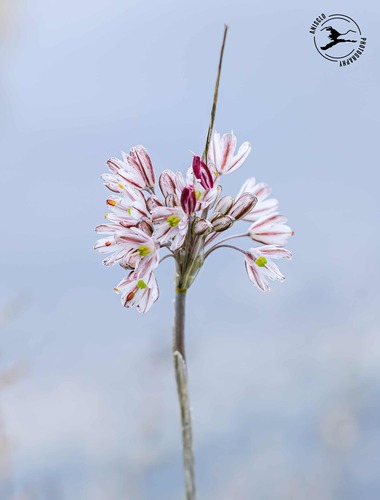
Allium callimischon
Autumn flowered onion
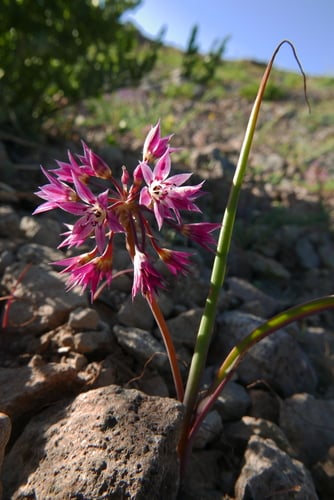
Allium campanulatum
Dusky onion
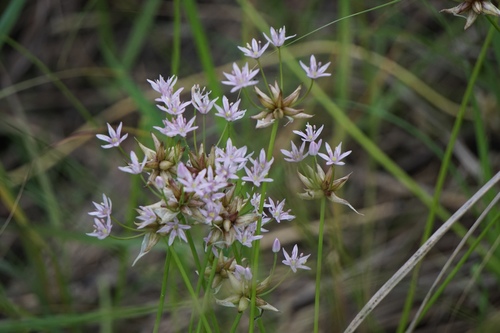
Allium canadense
Wild garlic, Canadian garlic, Meadow Garlic, Olympic Onion, American wild garlic, Rose garlic, Tree onion
Allium canadense mobilense - (Regel.)F.M.Ownb.
Canadian Garlic
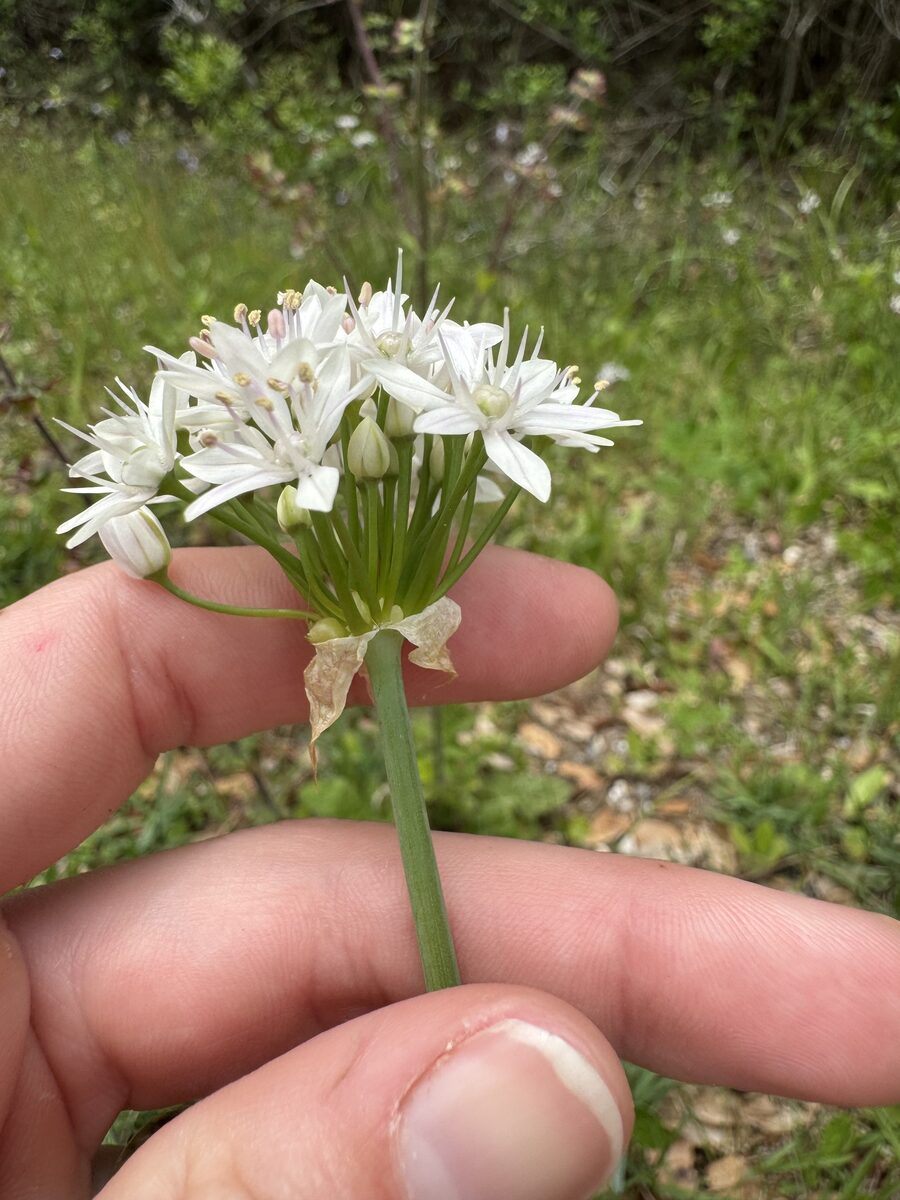
Allium canadense var. mobilense
Canadian garlic, Meadow Garlic
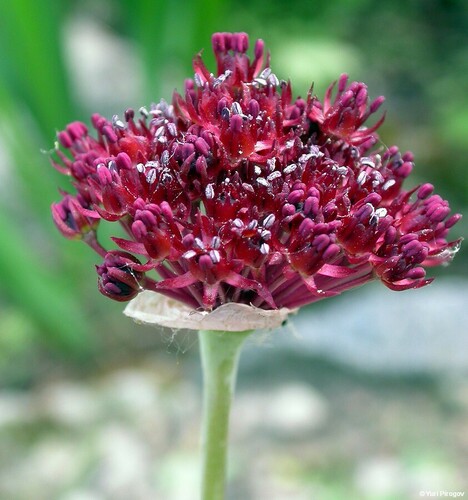
Allium cardiostemon
Purple gem ornamental onion