Celtis luzonica
Warb.
Celtis
iNaturalist· cc-by-nc
(c) Ben Zerante, some rights reserved (CC BY-NC), uploaded by Ben Zerante
gbif· cc-by
Royal Botanic Gardens, Kew
iNaturalist· cc-by-nc
(c) Norbert Sauberer, some rights reserved (CC BY-NC), uploaded by Norbert Sauberer
wikimedia· cc-by-sa
Rasbak (via Wikimedia Commons)
Summary
Source: WikipediaCeltis luzonica is a species of plant in the family Cannabaceae. It is endemic to the Philippines. It is threatened by habitat loss.
Description
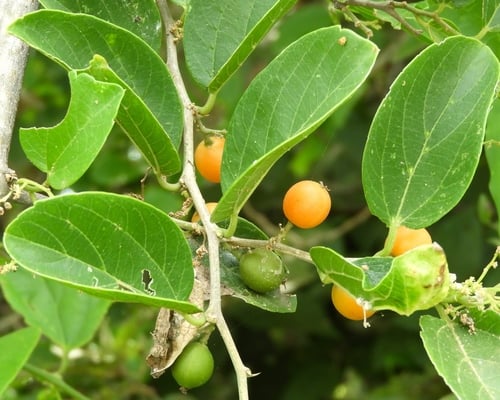
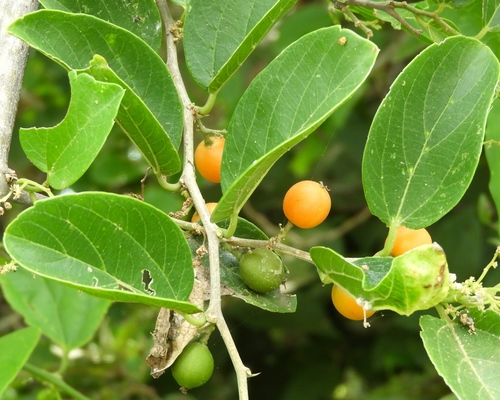
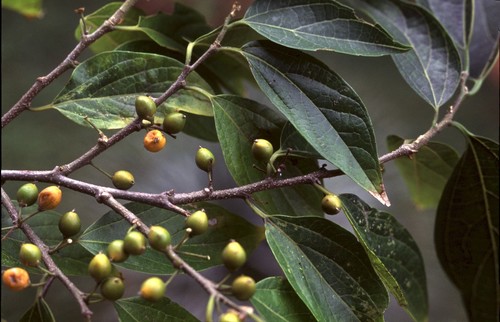
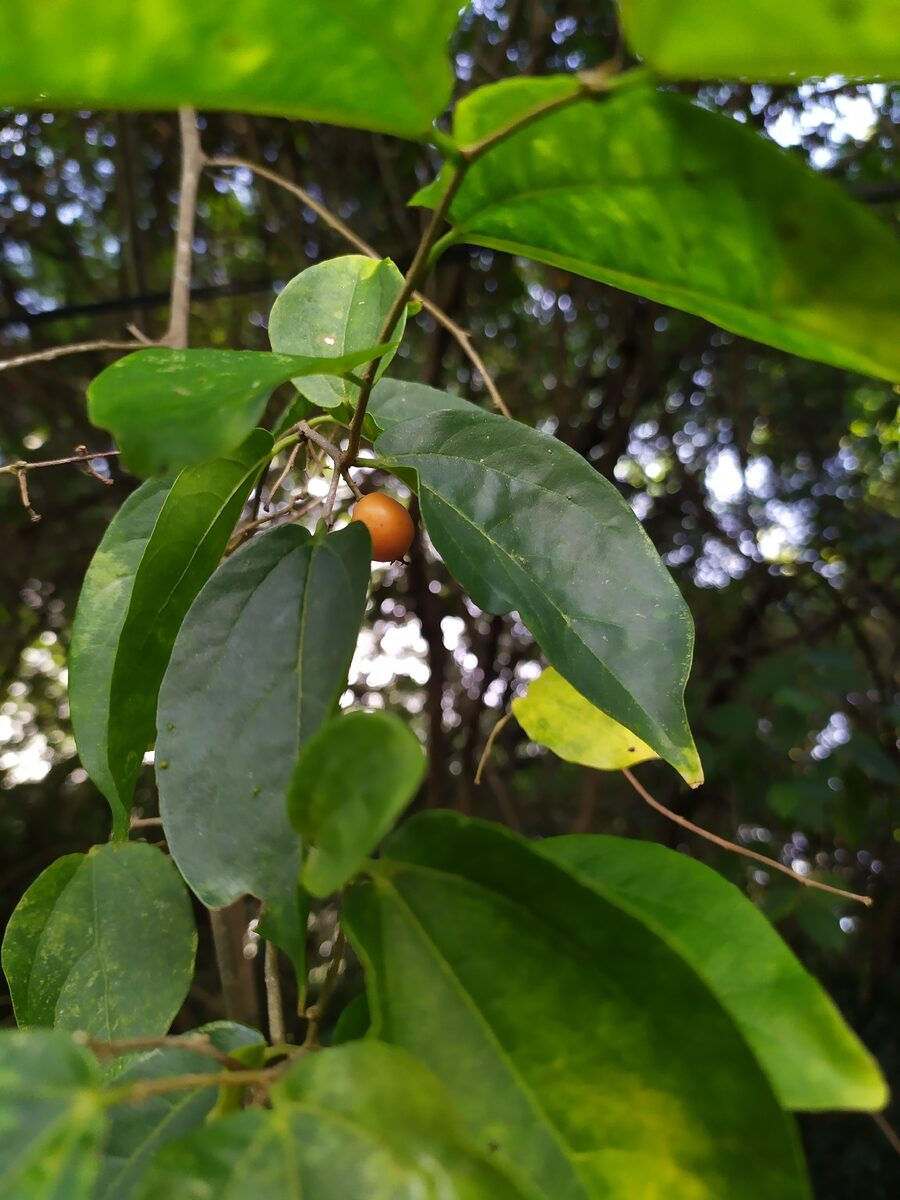
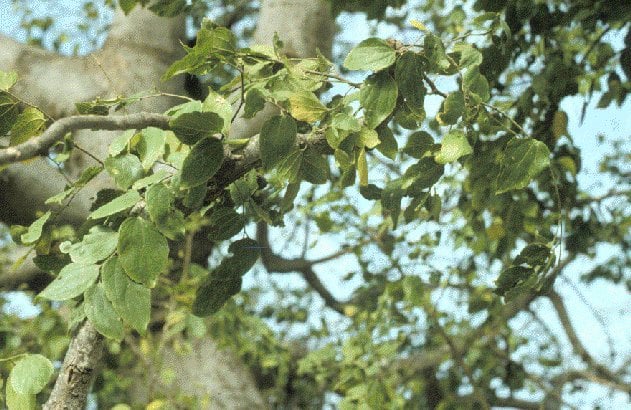
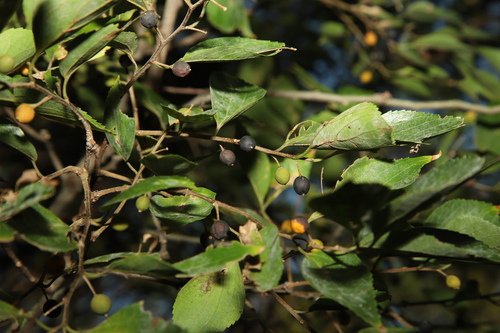
A large tree. It grows up to 40 m tall. The trunk is 1 m across and long, and tapers to a narrow crown. The trunk often has buttresses. The bark is 1.2 cm thick. It is smooth, except for some blisters and some ridges running across the trunk. The inner bark has a red-brown "salt and pepper" pattern on it. The leaves are simple and alternate. They are oval but can be unequal on opposite sides of the midrib. They are 7 cm long by 3.5 cm wide. The base of the leaf is rounded and the tip is drawn out to a point. The leaves are leathery. They are dark green and shiny on top, and light green underneath. The flowers occur in branched clusters, either in the axils of leaves or at the ends of branches. The flowers are small and yellow-green, with a faint smell. They can be separately male and female on the same plant or both flower sexes can occur together. The fruit is a round fleshy fruit, with one hard seed or stone inside. It has thin flesh and is pointed at the tip. It is shiny blue-black when ripe.
Edible Uses
The leaves have been recorded as being eaten.
Traditional Uses
The leaves have been recorded as being eaten.
This uses section is brief — help expand it
Distribution
A tropical plant. It grows in lowland rainforests.
Where It Grows
Asia, Pacific, Papua New Guinea, Philippines, PNG, SE Asia,
Propagation
Seed - best sown as soon as it is ripe in a nursery seedbed in a sunny position. A high germination rate can be expected, with the seeds sprouting within 28 - 42 days. The seedlings grow away quickly..
Other Uses
The heartwood is light yellowish gray, in large trees the inner part of the heartwood has irregular ashy grayish or brownish streaks; it is not distinct from the sapwood. The grain is somewhat crossed; texture variable, in some specimens rather coarse in appearance, but dense, in others fine and even glossy. The wood is moderately hard to hard; tough and somewhat difficult to split moderately heavy, moderately durable and seldom attacked by insects. It seasons well; is fairly easy to work. It is used locally for beams, joists, rafters, etc.;and is sometimes used commercially for making cheap and temporary construction, cheap furniture, box lumber etc.
Other Information
It is not known if it is used as food in Papua New Guinea.
Notes
There are 70-100 Celtis species. They are mostly in the tropics. There are 8-10 species in tropical America. Also put in the family Ulmaceae.
References (2)
- Havel, J.J., 1975, Forest Botany, Volume 3 Part 2 Botanical taxonomy. Papua New Guinea Department of Forests, p 45
- Martin, F.W. & Ruberte, R.M., 1979, Edible Leaves of the Tropics. Antillian College Press, Mayaguez, Puerto Rico. p 222