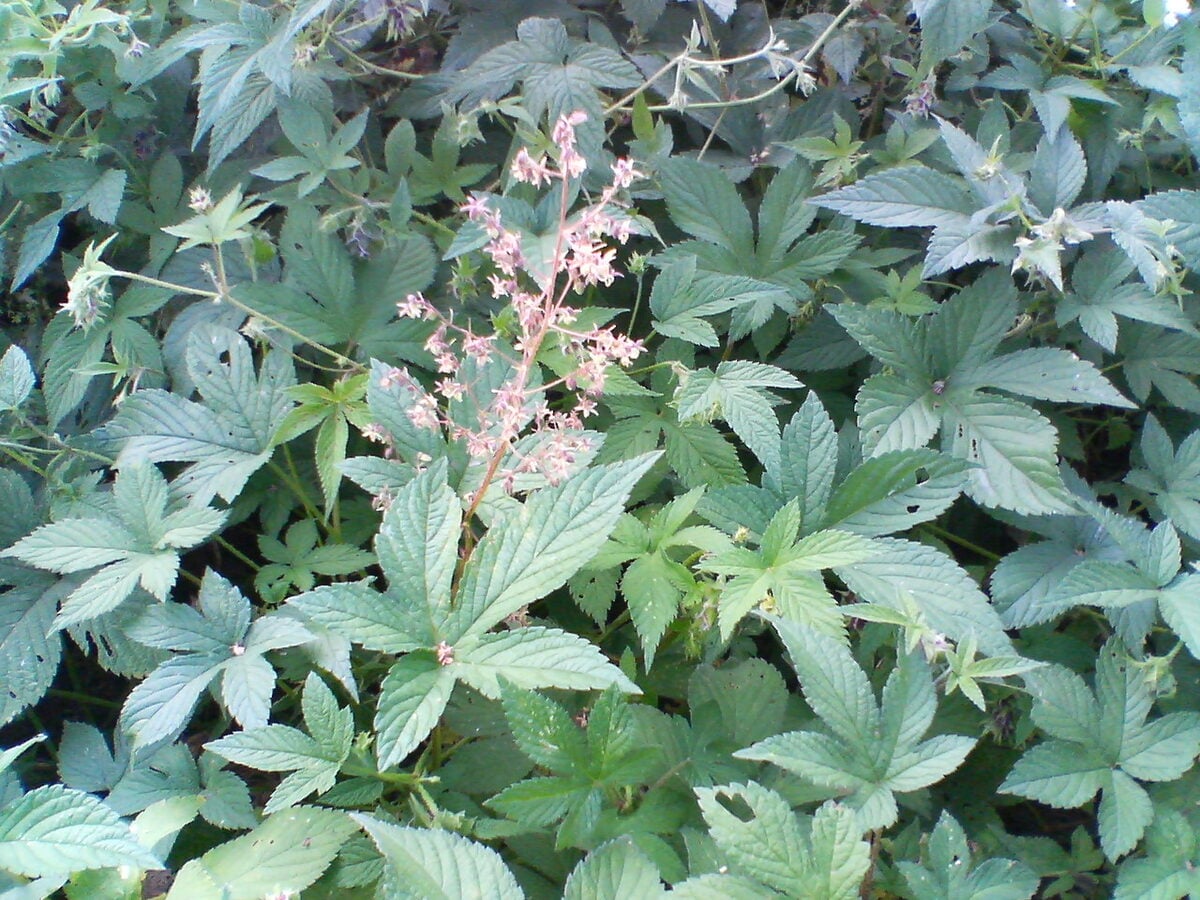
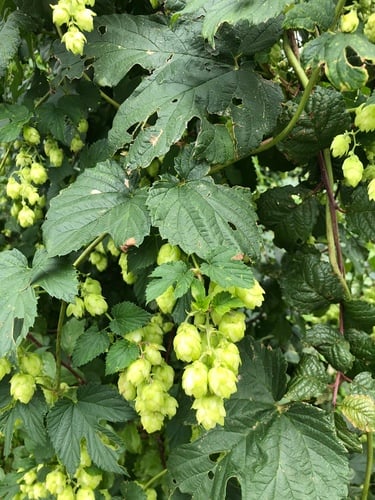
Celtis lindheimeri
Engelm.
Lindheimer's Hackberry
iNaturalist· cc-by-nc
(c) Forester Babberney, some rights reserved (CC BY-NC), uploaded by Forester Babberney
iNaturalist· cc-by-nc
(c) Eric Keith, some rights reserved (CC BY-NC)
Summary
Source: WikipediaCeltis lindheimeri, also called Lindheimer's hackberry, is a species of tree in the family Cannabaceae. It is typically found in areas of central Texas and northeastern Mexico. It has a height averaging 9 meters, and produces a reddish-brown berry. It is a species closely related to netleaf hackberry which is common in western United States. The Spanish common name is "palo blanco", meaning "white tree", which is commonly used to identify this tree. It is named after its discoverer Ferdinand Lindheimer, a German-born botanical collector and Texas newspaper editor.
Description
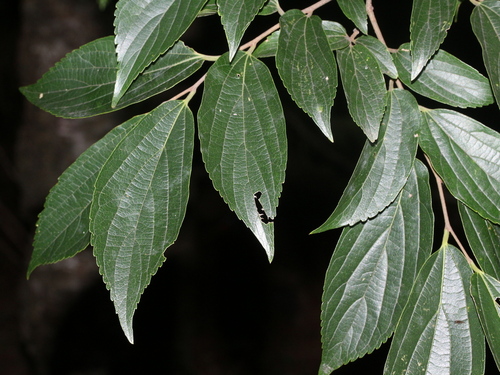
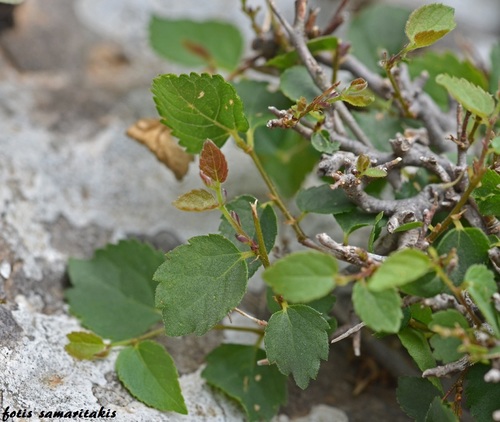
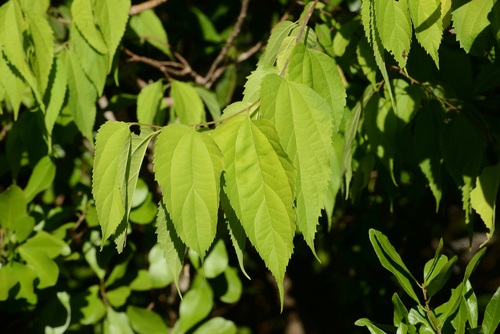
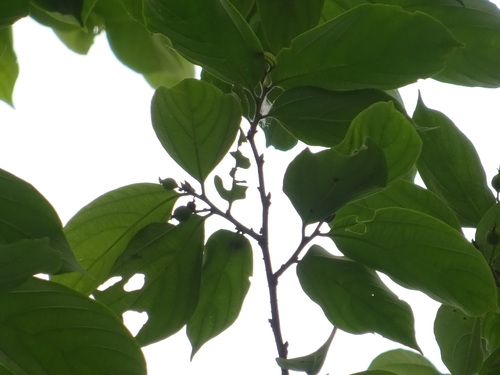
A small tree with many branches. The crown is broad and irregular. It grows 9 m high. The bark is brown, thick and smooth but becomes lumpy with age. The trunk is 15 cm across. The leaves are in 2 rows. They are 4-7 cm long by 2-4 cm wide. They are narrowly oval. There are 3 main veins and the base is unequal. The leaves are thick and grey-green above and paler with soft hairs underneath. The flowers are 3 mm wide and pale green.
Edible Uses
The fruit, which is about 7–9mm in diameter with a thin flesh surrounding a large seed, is traditionally pounded into a mush and eaten. The seed is likely pounded together with the fruit in this process.
Medicinal Uses
None known.
Distribution
It is a tropical plant. It grows along streams in limestone hills. It grows between 300-600 m altitude in Mexico.
Where It Grows
Central America, Mexico, North America, USA,
Cultivation
We have very little information on this species and do not know if it will be hardy in Britain, though judging by its native range it could succeed outdoors in many parts of this country. The plant is quite rare in the wild and is of conservation concern. The following notes are based on the general needs of the genus. Succeeds in any reasonably good soil, preferring a good fertile well-drained loamy soil. Succeeds on dry gravels and on sandy soils. Established plants are very drought resistant. Trees prefer hotter summers and more sunlight than are normally experienced in Britain, they often do not fully ripen their wood when growing in this country and they are then very subject to die-back in winter. Trees can be very long-lived, perhaps surviving for 1000 years. Plants in this genus are notably resistant to honey fungus.
Propagation
Seed is best sown as soon as it is ripe in a cold frame. Stored seed should be given 2–3 months of cold stratification before sowing in February or March in a greenhouse. Germination rates are usually good, though stored seed may take 12 months or more to germinate. Seed can be stored for up to 5 years. Prick seedlings out into individual pots as soon as they are large enough to handle. Seedling leaves often show white patches lacking chlorophyll — this is normal, and older plants produce fully green leaves. Grow seedlings on in a cold frame through their first winter, then plant out the following late spring or early summer, with some cold protection during their first winter outdoors. Cuttings can also be used.
Other Uses
The wood is neither strong nor durable and is of little value, though it is used locally as a fuel.
Notes
There are 70-100 Celtis species. They are mostly in the tropics. There are 8-10 species in tropical America. Also put in the family Ulmaceae.
Synonyms
Also Known As
Palo blanco
References (4)
- Little, E.L., 1980, National Audubon Society Field Guide to North American Trees. Alfred A. Knopf. p 413
- Plants for a Future database, The Field, Penpol, Lostwithiel, Cornwall, PL22 0NG, UK. http://www.scs.leeds.ac.uk/pfaf/
- Segura, S., et al, 2018, The edible fruit species in Mexico. Genet Resour Crop Evol (2018) 65:1767–1793
- World Checklist of Useful Plant Species 2020. Royal Botanic Gardens, Kew