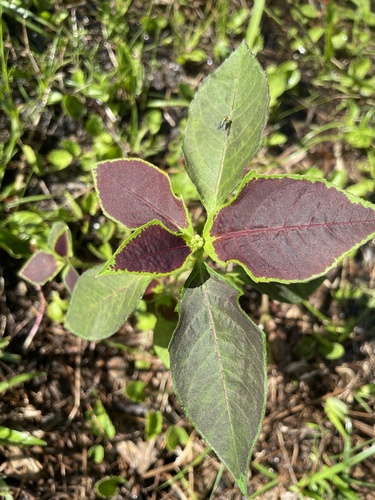
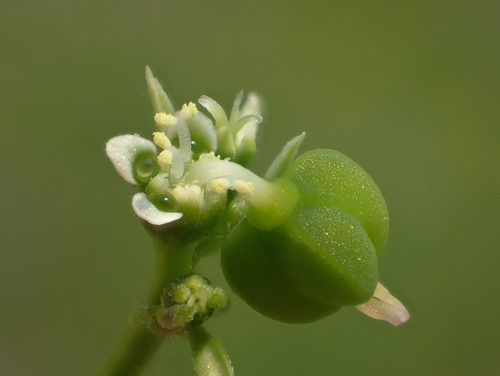
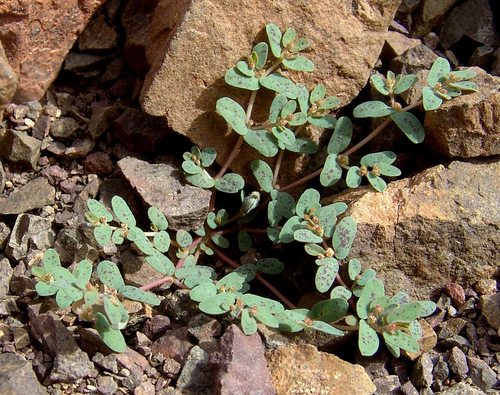
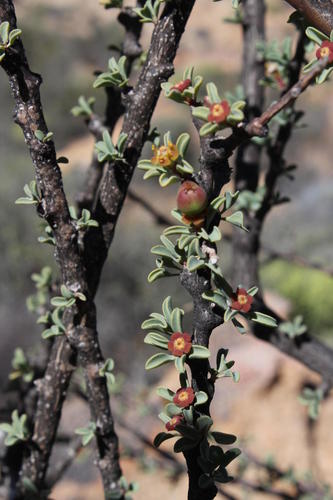
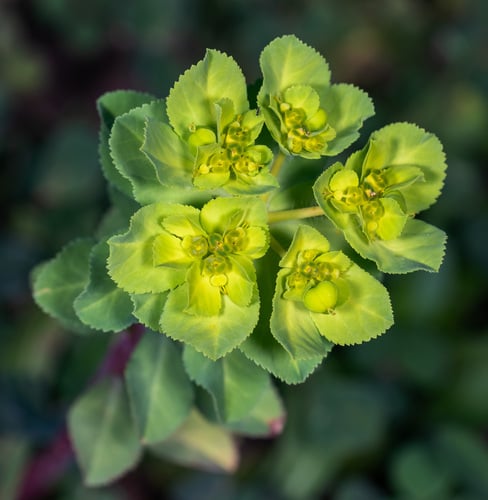
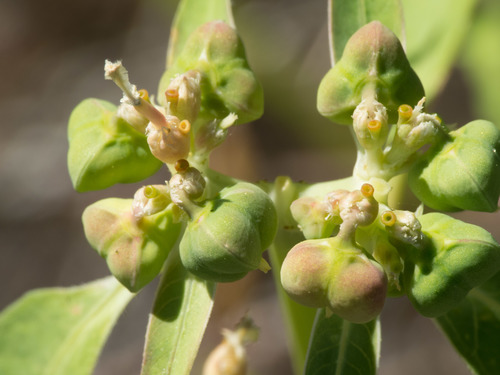
Hevea benthamiana
Mull.Arg.
wikimedia· cc0
Wikimedia Commons - Vis M
wikimedia· cc-by-sa
Wikimedia Commons - Mithila Madawa
Summary
Source: WikipediaHevea benthamiana is a species of rubber tree in the genus Hevea, belonging to the family Euphorbiaceae. A medium-sized deciduous tree growing to a height of about 27 m (90 ft), it is native to the rainforests of northern Brazil, Colombia and Venezuela.
Description
Hevea benthamiana is a large evergreen tree growing rapidly to 20 m tall by 15 m wide, hardy to UK zone 10. It accommodates light sandy, medium loamy, and heavy clay soils with good drainage, tolerates mildly acid to basic pH levels, and thrives in moist conditions in semi-shade to full sun.
Edible Uses
The seeds are edible when cooked but are poisonous raw. To prepare them, boil for 24 hours and strain off the liquid; the remaining mass has a colour and consistency somewhat like long-boiled rice. The seeds are commonly eaten by some native peoples, though other tribes regard them only as a famine food when nothing better is available.
Traditional Uses
The seeds are cooked and eaten. They are cooked for 24 hours then the liquid strained off. Caution: They can contain cyanide so need to be well cooked.
Medicinal Uses
None known.
Known Hazards
H. benthamiana produces a good quality latex which is slightly lower in quality than that of the Pará rubber tree, H. brasiliensis. The tree is tapped for the production of rubber but is not widely grown as a plantation crop, although occasionally cultivated in Venezuela, Sri Lanka, Malaysia, and Indonesia. It has been used in breeding programmes for increasing the disease resistance and improving the growth qualities of H. brasiliensis. The seeds contain toxic substances and are poisonous to humans when raw, but they are eaten by local people when thoroughly cooked.
Distribution
It is a tropical plant. It grows in low alluvial flood sites.
Where It Grows
Asia, Brazil, Colombia, South America, Sri Lanka, Venezuela,
Cultivation
A tropical plant.
Propagation
Seed.
Other Uses
A good-quality, pure-white latex suitable for rubber production is obtained from the tree. The rubber it yields is only slightly inferior to that of Hevea brasiliensis.
Other Information
In some places the seeds are an important food and in others only a famine food.
Synonyms
Also Known As
Siringa
References (4)
- Fern, K., 2012, Tropical Species Database http://theferns.info/tropical/
- Journal of the Arnold Arboretum Vol 37. 1956, http://www.bioversitylibrary.org
- Kew Plants of the World On line
- Roa, J. A. G. & Boada, D. S. G., 2018, Fundación para el Fortalecimiento de la Fruticultura y Plantas Alimenticias no Convencionales en Colombia.