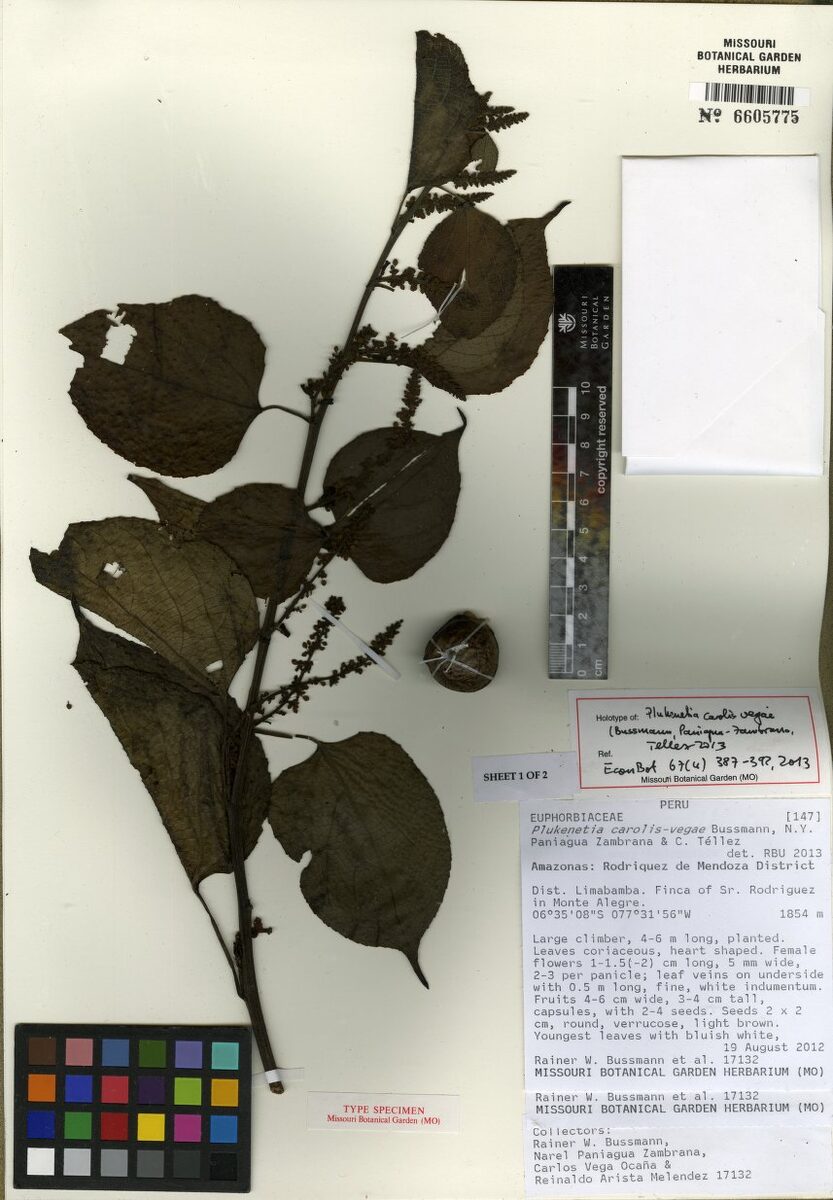
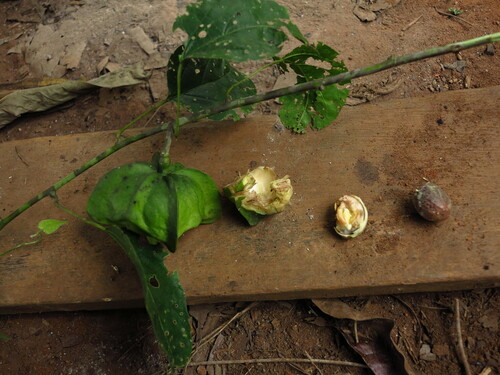
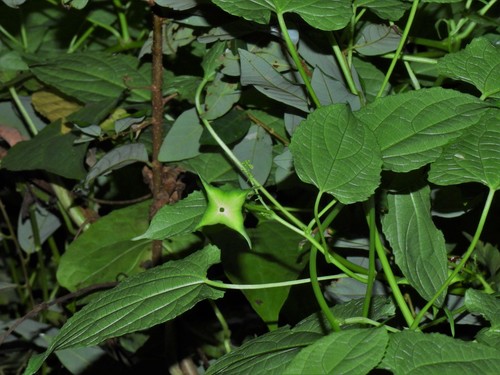
Hevea brasiliensis
(Willd. ex A. Juss.) Mull. Arg.
Para rubber tree, Caoutchouc tree
iNaturalist· cc-by-nc-sa
(c) Iman Akbar, some rights reserved (CC BY-NC-SA)
iNaturalist· cc-by-nc
(c) georgia-ss, some rights reserved (CC BY-NC)
iNaturalist· cc-by-sa
(c) Cheongweei Gan, some rights reserved (CC BY-SA)
Summary
Source: WikipediaHevea brasiliensis, the Pará rubber tree, sharinga tree, seringueira, or, most commonly, rubber tree or rubber plant, is a flowering plant belonging to the spurge family, Euphorbiaceae. It is originally native to the Amazon basin, but is now pantropical in distribution due to introductions. It is the most economically important member of the genus Hevea, because the milky latex extracted from the tree is the primary source of natural rubber.
Description
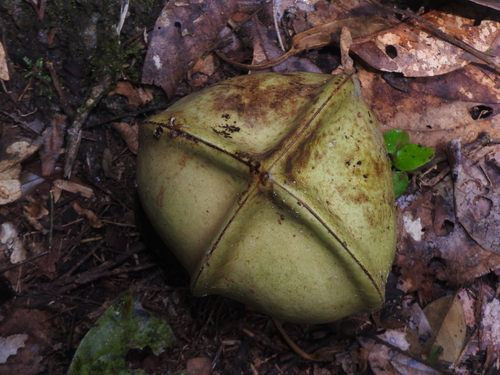
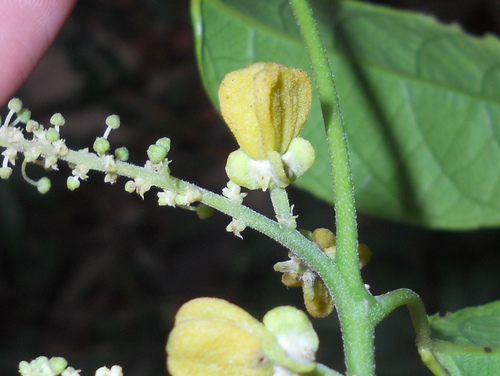
A deciduous tree. It grows 20 m tall. The bark is smooth and grey. The leaves have 3 leaflets. They are dark green and 30-60 cm long. They are arranged in spirals. The flowers are pale yellow and occur in large panicles. They have a scent. The fruit is a capsule. It is large and has 3 lobes. They are held in clusters. The explode on opening. The seeds are speckled and 2.5 cm long.
Edible Uses
The seeds are edible when cooked, and despite being poisonous they serve as a staple food for local peoples in the jungle. Poison is destroyed by prolonged soaking or boiling. The seeds contain 40–50% oil, which is also suitable for use as food. Considered a famine food.
Traditional Uses
CAUTION: The seeds are poisonous until treated. They contain cyanic poisons. The seeds are eaten after prolonged periods of boiling. They are also fermented. The young leaves are cooked and eaten.
Medicinal Uses
None known.
Known Hazards
The seeds contain cyanic compounds are poisonous to humans unless treated. See notes on edible uses below.
Distribution
A tropical plant. It is native to the Amazon in Brazil. It grows in rainforest and along river banks. It suits humid locations. It does best with a pH of 5.5-6.5. It needs a minimum of 1,500 mm rain per year. In Java it grows up to about 1,000 m above sea level. In XTBG Yunnan.
Where It Grows
Africa, Amazon, Andamans, Asia, Bangladesh, Benin, Bolivia, Brazil, Brunei, Cambodia, Central Africa, Central African Republic, Central America, China, Colombia, Congo DR, Costa Rica, Côte d'Ivoire, Dominican Republic, East Africa, East Timor, Ethiopia, Fiji, Ghana, Guam, French Guiana, Guianas, Guinea, Guinea-Bissau, Guyana, Haiti, India, Indochina, Indonesia, Ivory Coast, Laos, Liberia, Madagascar, Malaysia, Marianas, Mexico, Myanmar, Nigeria, Northeastern India, Pacific, Papua New Guinea, PNG, Peru, Philippines, Samoa, Sao Tome and Principe, SE Asia, Singapore, South America*, Sri Lanka, Suriname, Taiwan, Thailand, Timor-Leste, Togo, Trinidad-Tobago, Uganda, Venezuela, Vietnam, West Africa, West Indies,
Cultivation
Plants are grown from seeds. Seeds need to be planted fresh. They can also be grown from cuttings.
Propagation
Seed viability is very short at 7–10 days, so seed should be sown as soon as possible, either in situ with 2 or more seeds per hole followed by selective thinning, or in a nursery bed. Germination takes 1–3 weeks depending on conditions and seed freshness, and is best at around 25°C. Seedlings reach 1–1.5 metres in height within 6 months. Seed storage behaviour is recalcitrant; viability can be maintained for up to 3 months in moist storage using moist charcoal and sawdust in a perforated polythene bag kept at 7–10°C. Whole seed moisture content is 36%; the lowest safe moisture content is 20%, and no seeds survive desiccation to 15%. Seeds are killed by exposure to -5°C for 3–4 hours. Commercial clonal seed is stored at around 4°C, which typically results in reduced but tolerable germination rates. Vegetative propagation is carried out by budding or cuttings; seedlings root well from cuttings, but material from older rubber-bearing trees takes very poorly or not at all.
Other Uses
Intercropping with coffee or cocoa, possibly alongside ipecac, is feasible. After a few years under legumes, nitrogen fertilizer may not be needed, though phosphorus, magnesium, and potassium can be limiting in some areas. Press cake or extracted meal from the seeds can be used as fertilizer. Latex is obtained by tapping the trunk and is coagulated using acetic acid, formic acid, or alum. This tree is the primary source of natural rubber, used in car tyres, shoes, boots, balls, elastic bands, erasers, and many other products, as well as by local people for domestic items such as water bottles. The seeds yield a semi-drying pale yellow oil known as Para rubber seed oil; boiling removes the toxins and releases the oil, which is used for illumination, soap making, paints, and varnishes. This oil also functions as an effective treatment against houseflies and lice. The pale cream heartwood, sometimes pink-tinged when fresh and darkening to pale straw or pale brown, has a straight to shallowly interlocked grain with a moderately coarse, even texture. Freshly sawn wood has a distinct smell of latex. Poor tapping practices can cause black streaks from bark inclusion. Timber is primarily used for furniture, and also for interior finishes, mouldings, wall panelling, picture frames, drawer guides, cabinet handles, parquet flooring, household utensils, blockboard cores, pallets, crates, coffins, veneer, and glue-laminated timber for staircases and door and window components. It is only moderately durable and should not be used for exterior applications. Offcuts and residues have been used successfully in Malaysia to produce particle board, wood-cement board, and medium-density fibreboard. Rubberwood waste is an excellent growing medium for mushrooms, especially oyster mushrooms (Pleurotus spp.). Formerly used as charcoal or fuel wood for brick making, tobacco drying, and rubber drying.
Other Information
It is cultivated.
Notes
There are 9 Hevea species.
Synonyms
Also Known As
Caucho, Kawbat, Kyetpaung, Pohon karet brasil, Shiringa
References (18)
- Barwick, M., 2004, Tropical and Subtropical Trees. A Worldwide Encyclopedic Guide. Thames and Hudson p 219
- Bekele-Tesemma A., Birnie, A., & Tengnas, B., 1993, Useful Trees and Shrubs for Ethiopia. Regional Soil Conservation Unit. Technical Handbook No 5. p 270
- Burkill, H. M., 1985, The useful plants of west tropical Africa, Vol. 2. Kew.
- Condit, R., et al, 2011, Trees of Panama and Costa Rica. Princeton Field Guides. p 166
- Etkin, N.L. (Ed.), 1994, Eating on the Wild Side, Univ. of Arizona. p 122
Show all 18 references Hide references
- Kew Plants of the World On line
- Linnaea 34:204. 1865
- Ochse, J.J. et al, 1931, Vegetables of the Dutch East Indies. Asher reprint. p 276
- Ong, H. C., Mojiun, P. F. J., & Milow, P., 2011, Traditional knowledge of edible plants among the Temuan villagers in Kampung Guntor, Negeri Sembilan, Malaysia. African Journal of Agricultural Research Vol. 6(8), pp. 1962-1965, 18 April, 2011
- Plants of Haiti Smithsonian Institute http://botany.si.edu/antilles/West Indies
- Rajkalkshmi, P. et al, 2001, Total carotenoid and beta-carotene contents of forest green leafy vegetables consumed by tribals of south India. Plant Foods for Human Nutrition 56:225-238
- Roa, J. A. G. & Boada, D. S. G., 2018, Fundación para el Fortalecimiento de la Fruticultura y Plantas Alimenticias no Convencionales en Colombia.
- Sukarya, D. G., (Ed.) 2013, 3,500 Plant Species of the Botanic Gardens of Indonesia. LIPI p 322
- van Roosmalen, M.G.M., 1985, Fruits of the Guianan Flora. Utrecht Univ. & Wageningen Univ. p 118
- Vasquez, R. and Gentry, A. H., 1989, Use and Misuse of Forest-harvested Fruits in the Iquitos Area. Conservation Biology 3(4): 350f
- www.worldagroforestrycentre.org/treedb/
- World Checklist of Useful Plant Species 2020. Royal Botanic Gardens, Kew
- Zeven, A. C. & de West, J. M. J., 1982, Dictionary of cultivated plants and their regions of diversity. Wageningen. p 52