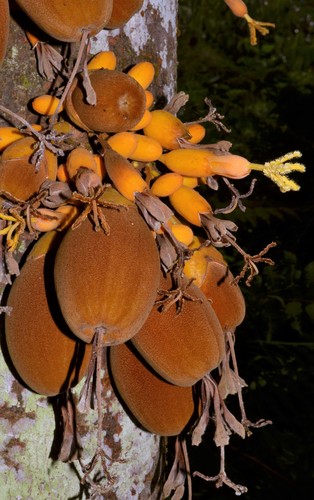
Herrania albiflora
Goudot
Whiteflower herrania
iNaturalist· cc-by-nc-sa
(c) Mateo Hernandez Schmidt, some rights reserved (CC BY-NC-SA), uploaded by Mateo Hernandez Schmidt
iNaturalist· cc-by-nc
(c) davduf, some rights reserved (CC BY-NC)
Description
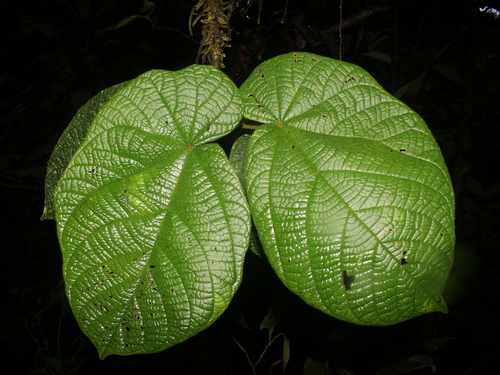
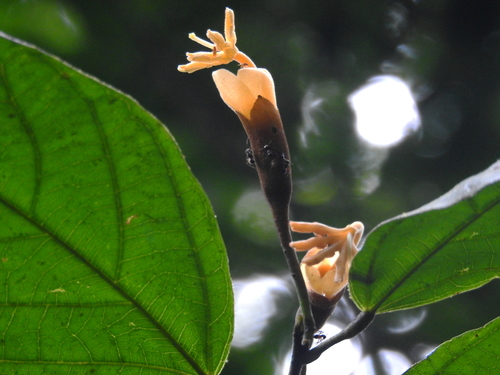
A small evergreen tree growing to 5 m tall with a trunk 11–14 cm across, native to dense forests on Andean slopes between 90–900 m elevation in tropical regions.
Edible Uses
The sweet fruit pulp is eaten raw. The seeds are sometimes mixed with Theobroma cacao in chocolate to enhance flavour.
Traditional Uses
The fruit pulp is eaten raw. It is sweet. The seeds are sometimes mixed with Theobroma cacao in chocolate to improve flavour.
This uses section is brief — help expand it
Medicinal Uses
The seeds are used to make a bitter febrifuge.
Known Hazards
The fruits of many members of this genus have some or many stinging hairs on them.
Distribution
It is a tropical plant. It grows in dense forests on slopes of the Andes between 90-900 m above sea level.
Where It Grows
Andes, Colombia, South America, Venezuela,
Cultivation
Succeeds in most soils.
Other Uses
The following description of the wood is for H. Nitida. The wood of this species is likely to be very similar. The heartwood is pinkish brown, the sapwood pale pink. The wood has no distinctive odour or taste; it is straight- or wavy-grained; coarse-textured. It is light in weight; soft; not durable. It requires sharp tools in order to cut smoothly across the grain.
Notes
Also in the family Byttneriaceae.
Synonyms
Also Known As
Cacao cimarron, Cacao monteras
References (5)
- Fern, K., 2012, Tropical Species Database http://theferns.info/tropical/
- Grandtner, M. M. & Chevrette, J., 2013, Dictionary of Trees, Volume 2: South America: Nomenclature, Taxonomy and Ecology. Academic Press p 298
- Kermath, B. M., et al, 2014, Food Plants in the Americas: A survey of the domesticated, cultivated and wild plants used for Human food in North, Central and South America and the Caribbean. On line draft. p 413
- Lopez-Diago, D. & Garcia, N., 2021, Wild edible fruits of Colombia. Biota ColomBiana 22 (2) p 41
- Roa, J. A. G. & Boada, D. S. G., 2018, Fundación para el Fortalecimiento de la Fruticultura y Plantas Alimenticias no Convencionales en Colombia.