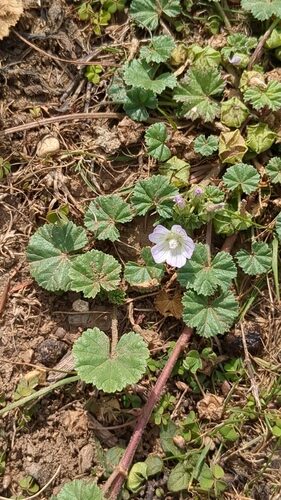
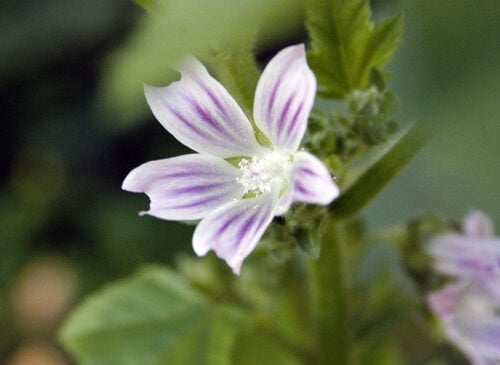
Hibiscus moscheutos
L.
Rose mallow, Swamp rose mallow
iNaturalist· cc-by-nc
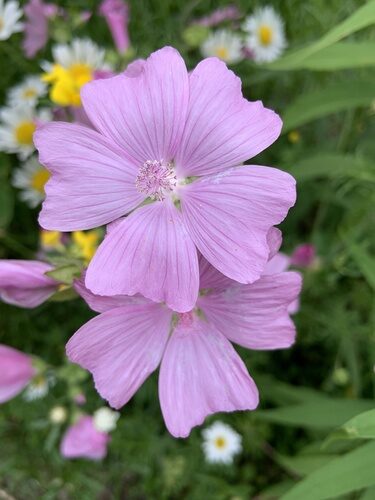
(c) Chuangzao, some rights reserved (CC BY-NC), uploaded by Chuangzao
iNaturalist· cc-by-nc
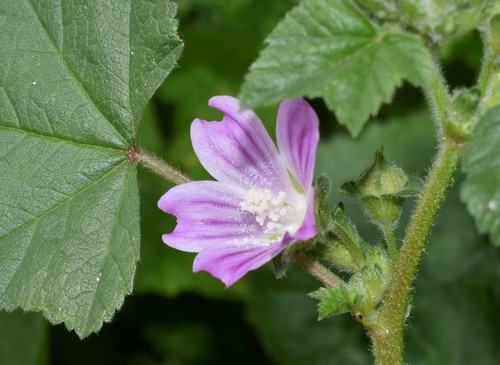
(c) Doug Wilson, some rights reserved (CC BY-NC), uploaded by Doug Wilson
iNaturalist· cc-by-sa
(c) Douglas Goldman, some rights reserved (CC BY-SA), uploaded by Douglas Goldman
Summary
Source: WikipediaHibiscus moscheutos, the rose mallow, swamp rose-mallow, crimsoneyed rosemallow, or eastern rosemallow, is a species of flowering plant in the family Malvaceae. It is a cold-hardy perennial wetland plant that can grow in large colonies. The hirsute leaves are of variable morphology, but are commonly deltoidal in shape with up to three lobes. It is found in wetlands and along the riverine systems of the eastern United States from Texas to the Atlantic states, its territory extending northward to southern Ontario. Numerous forms exist in nature. It is a tall plant, with a height of 1.5–2.5 metres (4.9–8.2 ft) and flowers up to 20 centimetres (7.9 in) across. Petal colors range from pure white through various pinks to deep red, and most have an eye of deep maroon. Taxonomic consensus is lacking for the nomenclature of the multiple subspecies. The flowers are borne apically, whereas the related Hibiscus laevis carries bud and bloom along the stem.
Description
A bushy herb. It is erect and coarse. It keeps growing from year to year. It is similar to okra. It grows 1-2.5 m tall. The leaf stalk is 4-10 cm long. The leaves are broad and angular. Sometimes they have 2 side lobes. The leaf blade is 10-18 cm long by 4-8 cm wide. The flowers occur singly in the axils of leaves. The flower has 5 petals. They are cream coloured. It has a yellow centre. Flowers are 10-14 cm across. The fruit is a capsule which is cone shaped. It is 2.5-3 cm across. The seeds are kidney shaped and 2-3 mm across.
Edible Uses
No edibility has been formally recorded for this species, but most members of its family have edible leaves and flowers. The flowers, which reach around 15 cm in diameter (up to 25 cm in some cultivars), have a mild flavour and a slightly mucilaginous texture with a faint bitterness in the aftertaste. The leaves are bland and similarly mucilaginous, though a slight hairiness detracts somewhat from eating quality.
Traditional Uses
The seed are used to flavour coffee.
This uses section is brief — help expand it
Medicinal Uses
The leaves and roots are rich in mucilage. Like many relatives in this family, the plant is demulcent and emollient, and is used in the treatment of dysentery, lung ailments and urinary complaints. An infusion made from the dried stalks has been used to treat inflammation of the bladder.
Distribution
It is a tropical plant. It will grow in swamps and marshes. It suits hardiness zones 5-9. In Yunnan.
Where It Grows
America, Asia, Australia, Canada, China, Indochina, Korea, North America*, SE Asia, Slovenia, Thailand, USA,
Cultivation
Hibiscus moscheutos (hardy hibiscus, rose mallow) is a cold-hardy herbaceous perennial suitable for USDA Zones 4–9. Prefers a well-drained humus rich fertile soil in a sheltered position in full sun. Well-suited to a water-side planting. One report says that the plants are hardy in zone 5 (tolerating winter temperatures down to about -25°c), this same report also says that the plant succeeds outdoors in Britain only in those areas where winter temperatures do not fall below about -5°c. Another report says that it needs to be grown in a warm garden in the warmer areas of Britain. Plants of the cultivar 'Southern Belle' have been seen growing outdoors at Kew Gardens, they are situated on a south-east facing wall of the Temperate House and have been there for at least 3 years as of 2000. A very ornamental plant, there are many named varieties.
Propagation
Sow seed in early spring in a greenhouse; germination is usually rapid. Prick seedlings out when large enough to handle and plant into permanent positions in early summer. Some reports indicate that seed can be sown directly outdoors with a good rate of germination.
Other Uses
Suited to use as a border plant, in containers, as a foundation planting or as a specimen.
Notes
There are about 220 Hibiscus species.
Also Known As
Amberseed, Ambrette, Fu rong kui, Musk seed, Phuttan-rah
References (6)
- Cundall, P., (ed.), 2004, Gardening Australia: flora: the gardener's bible. ABC Books. p 702
- Hibbert, M., 2002, The Aussie Plant Finder 2002, Florilegium. p 139
- Kiple, K.F. & Ornelas, K.C., (eds), 2000, The Cambridge World History of Food. CUP p 1718
- McMakin, P.D., 2000, Flowering Plants of Thailand. A Field Guide. White Lotus. p 27
- Slocum, P.D. & Robinson, P., 1999, Water Gardening. Water Lilies and Lotuses. Timber Press. p 94
Show all 6 references Hide references
- Sp. pl. 2:693. 1753