Alpinia globosa
(Lour.) Horan
Chinese cardamom
wikimedia· cc-by
Wikimedia Commons
Summary
Source: WikipediaAlpinia globosa is a species of flowering plant in the ginger family, Zingiberaceae. It is sometimes referred to by the common name round Chinese cardamom and is native to South-Central China, and Vietnam. It was first described by João de Loureiro, and got its current name from Paul Fedorowitsch Horaninow.
Description
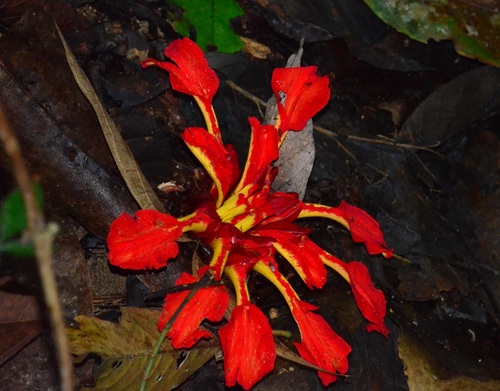
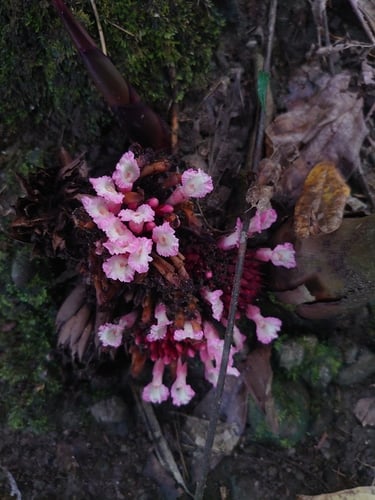
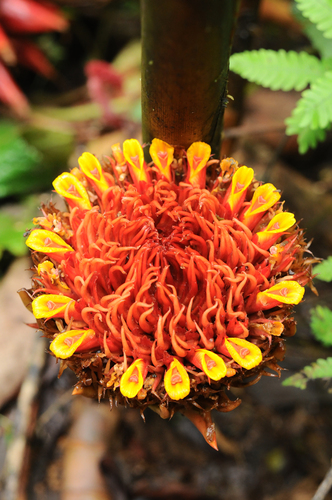
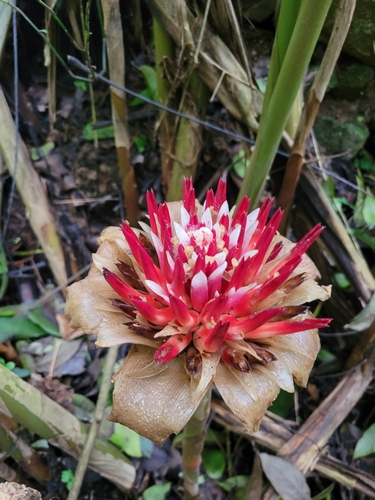
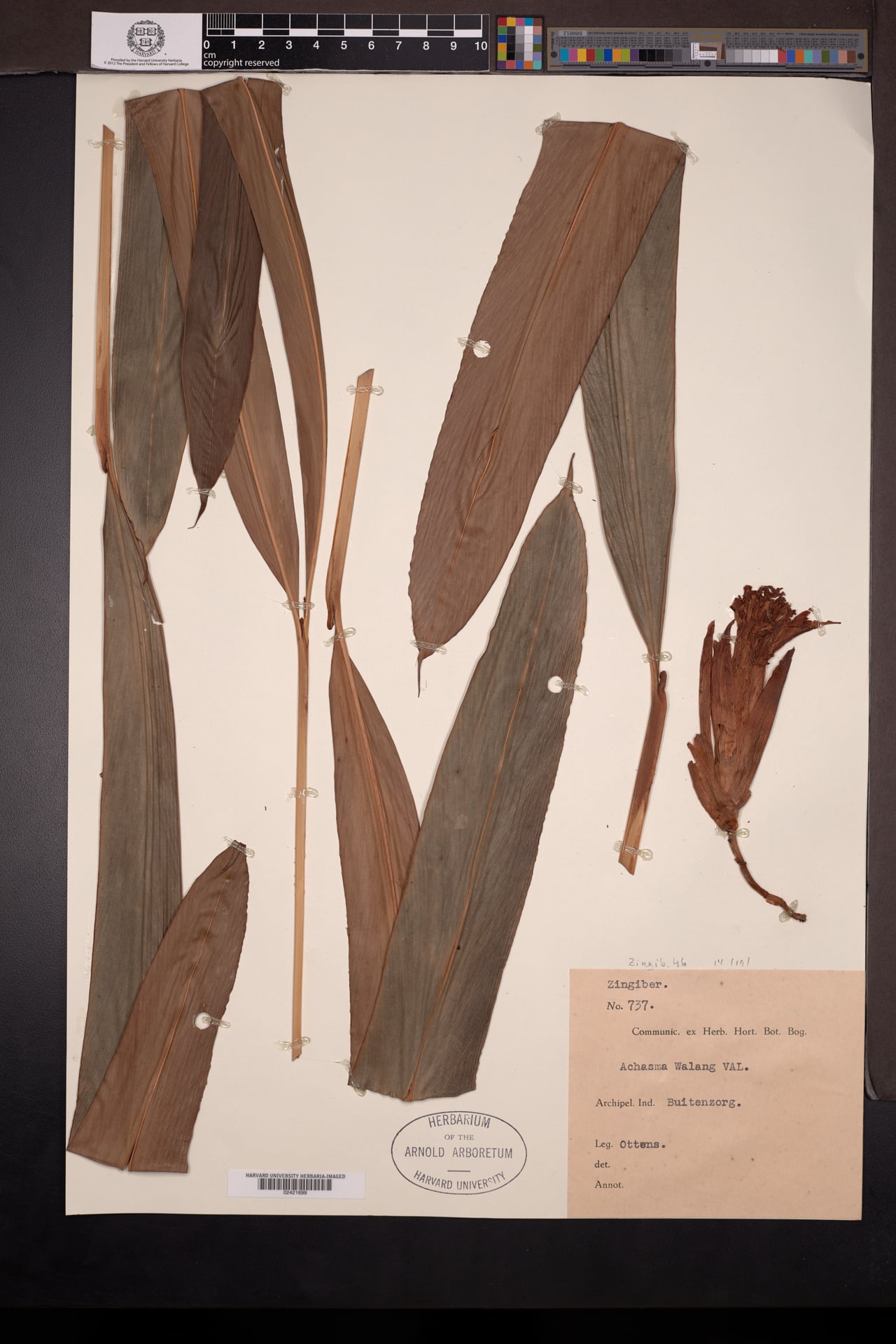
An erect ginger family herb. It keeps growing from year to year. It grows 1.3 m tall. The leaves are oblong and 60 cm long by 12 cm wide. There are fine teeth along the edge. It tapers at the tip. The flower spike is at the top of the plant. Each bract has 4 flowers. The flowers are 3 cm wide and white with red. The fruit is a round capsule. It is 1-3 cm across. There are 5-7 seeds which have 3 angles.
Edible Uses
The seeds are used as a spice with a pine-like flavor to season food.
Traditional Uses
The seeds are used to spice food. They have a pine like flavour.
This uses section is brief — help expand it
Medicinal Uses
A decoction of the seeds is stomachic. It is used in the treatment of disorders of the intestines such as colic, stomach-ache and dysentery.
Distribution
A tropical plant. In southern China it grows in forests between 100-300 m above sea level. In Yunnan.
Where It Grows
Asia, Cambodia, China, Himalayas, Indochina, Korea, Laos, SE Asia, Thailand, Vietnam,
Cultivation
Plants in this genus generally grow best in a sunny or partially sunny position in a moist, fertile soil.
Propagation
Seed - Division of the rhizome.
Other Information
It is a cultivated food plant.
Notes
There are about 200-230 Alpinia species. They are mostly tropical and subtropical.
Synonyms
Also Known As
Brittle-fruited Mountain Ginger, Chinese brown cardamom, Cuiguo Shanjiang, Globosa Galangal, Mef, Sej, Tref
References (11)
- Arora, R. K., 2014, Diversity in Underutilized Plant Species - An Asia-Pacific Perspective. Bioversity International. p 100 (As Amomum globosum)
- Bircher, A. G. & Bircher, W. H., 2000, Encyclopedia of Fruit Trees and Edible Flowering Plants in Egypt and the Subtropics. AUC Press. p 21
- Burkill, I.H., 1966, A Dictionary of the Economic Products of the Malay Peninsula. Ministry of Agriculture and Cooperatives, Kuala Lumpur, Malaysia. Vol 2 (I-Z) p 1325 (As Languas globosa)
- Fl. cochinch. 1:4. 1790 (As Amomum globosum)
- Hemphill, I, 2002, Spice Notes. Macmillan. p 84 (As Amomum globosum)
Show all 11 references Hide references
- Prodr. Monogr. Scitam. 34. 1862
- PROSEA handbook Volume 13 Spices. p 245
- Sang, D. T., & Mizoue, K. O. N., 2012, Use of Edible Forest Plants among Indigenous Ethnic Minorities in Cat Tien Biosphere Reserve, Vietnam. Asian Journal of Biodiversity Vol. 3 (1), p 23-49
- Seidemann J., 2005, World Spice Plants. Economic Usage, Botany, Taxonomy. Springer. p 29 (As Amomum globosum)
- Valder, P., 1999, The Garden Plants of China. Florilegium. p 350
- World Checklist of Useful Plant Species 2020. Royal Botanic Gardens, Kew