Archidendron havilandii
(Ridley) Nielsen
gbif· cc0
President and Fellows of Harvard College
gbif· cc0
President and Fellows of Harvard College
gbif· cc0
President and Fellows of Harvard College
Description
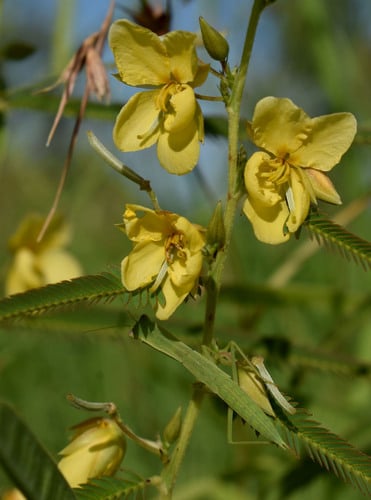
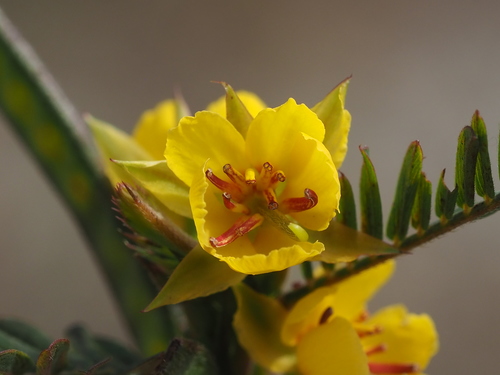
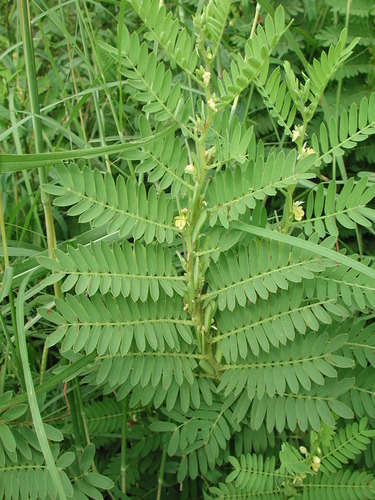
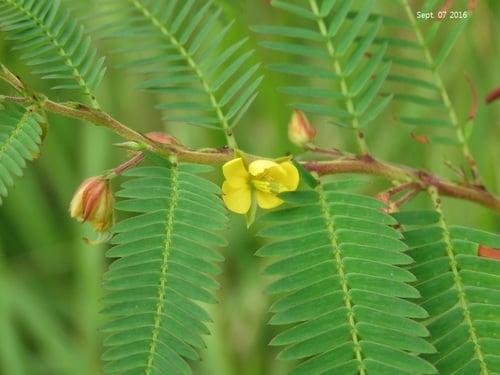
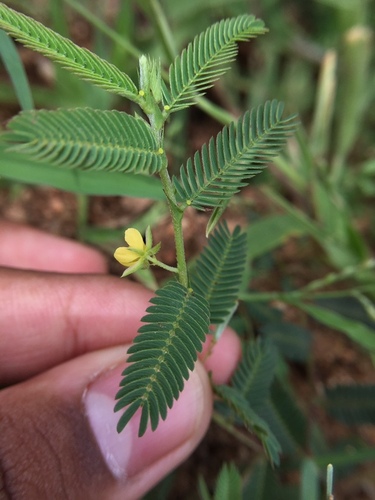
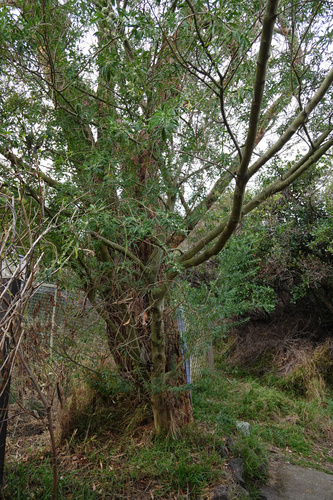
A shrub or tree. It can grow up to 40 m high with a 15 m trunk which is 75 cm across. The small branches are round or slightly angular. They are brown and hairy towards the ends. The leaves are compound leaves with the axis 1.5-4.5 cm long. This has 1 pair of first leaflets 2.5-8 cm long with 1-2 pairs of leaflets each and these leaflets are 6-22 cm long by 3-12 cm wide. The base of these leaflets can vary from equal and round to unequal and tapering. The flower clusters are at the ends of branches. They have dense rust coloured hairs. The flower heads are 25 cm long by 10-20 cm across. These are made up of 5-12 flowers with very short stalks. The flowers can have 3-5 flower parts and have both sexes and a sweet smell. The fruit are pods which are brown on the outside and straight and stiff. They are 16 cm long by 4 cm wide. They are only very slightly constricted between the seeds. Pods split open along both sides. The seeds are brown and 12-35 mm across by 10 mm high.
Edible Uses
Seeds - cooked. Some caution should be employed here, some other members of the genus (see A. Jiringa for example) contain djenkolic acid, an amino acid derivative that can cause similar symptoms to kidney stones. It is recommended, for that species, that the seed be boiled in three changes of water to ensure they are safe to eat.
Traditional Uses
The young fruit are edible after burning. The seeds are boiled and then eaten.
This uses section is brief — help expand it
Medicinal Uses
The seeds are crushed and steeped in coconut-oil. This is then used as a treatment against mosquito and snake bites.
Known Hazards
Although we have no specific information for this species, the seeds of several other members of this genus contain the amino acid derivative djenkolic acid. Ingestion of seed containing this substance can cause the formation of sharp needle-like crystals of djenkolic acid in the kidney or urinary tract. In severe cases, crystals of djenkolic acid have been found in urine. Indeed, people who are suffering from djenkolism show similar symptoms to those suffering from kidney or urinary stones, a condition for which it has been frequently mistaken.
Distribution
A tropical plant. They grow in lowland rainforest on a range of soils. They mostly occur between sea level and 1550 m altitude.
Where It Grows
Asia, Indonesia, Malaysia, Papua New Guinea, PNG, SE Asia,
Cultivation
A plant of the moist tropics where it can be found at elevations up to 1,550 metres. Plants can flower throughout the year. This species has a symbiotic relationship with certain soil bacteria, these bacteria form nodules on the roots and fix atmospheric nitrogen. Some of this nitrogen is utilized by the growing plant but some can also be used by other plants growing nearby.
Other Uses
The heartwood is bright yellow, the sapwood white.
Production
Trees flower throughout the year.
Notes
There are 90 Archidendron species. Also as Mimosaceae.
Synonyms
Also Known As
Jarung burung, Kadi, Kayu ilun, Mempollot, Tadarum
References (3)
- Kew Plants of the World On line
- Nielsen, 1992, Mimosaceae. Flora Malesiana ser 1, 11(1) p 105
- Slik, F., www.asianplant.net