Chenopodium foliosum
(Moench) Asch.
Strawberry-fruited fat hen
iNaturalist· cc-by-nc
(c) Alla Troshina, some rights reserved (CC BY-NC)
iNaturalist· cc-by-nc
(c) Alla Troshina, some rights reserved (CC BY-NC)
iNaturalist· cc-by-nc
(c) Alla Troshina, some rights reserved (CC BY-NC)
Summary
Source: WikipediaAnnual herb reaching 0.6 m tall. Hardy to UK zone 5. Flowers July to October with seeds ripening August to October. Hermaphroditic and wind-pollinated. Grows in light, medium, or heavy soils across mildly acidic to basic pH ranges. Requires full sun and moist conditions.
Description
An annual herb. It grows 20-70 cm tall. It often has several stems. It can be erect or sprawling. The leaves have irregular lobes and are almost triangle shaped. They are 7-10 cm long and have a pointed tip. The leaves are dark green above and are paler underneath. The flowers are small and 4 mm wide. They occur in clusters on the main stem. They are a greenish-yellow colour. Plants contain both sexes and they are pollinated by wind. The fruit are like berries. There are many small drupelets in a tight cluster. The fruit are bright red. They are 1-1.5 cm wide. The fruit can be juicy.
Edible Uses
The leaves are cooked and used as a spinach substitute, though raw leaves should only be eaten in small quantities due to toxicity concerns. The fruit, about 12mm in diameter, can be eaten raw, though it is fairly insipid despite being visually attractive. The seed, roughly 1mm in diameter, is very small and fiddly but can be ground into a powder and added to cereal flours for making bread. Before grinding, soak the seed for 12 hours and rinse thoroughly to remove saponins.
Traditional Uses
The fruit have little flavour but can be used as a garnish on sweet or savoury dishes. They are eaten fresh. They are also boiled with milk. The leaves are usually lightly boiled then eaten. It is used as a pot-herb.
Medicinal Uses
None known.
Known Hazards
Sphaeraphides occur in the leaves, stem, pith and mesophloem.
Distribution
It is a cool temperate plant. It grows naturally in mountainous regions in Central and Southern Europe. It cannot tolerate frost but is grown as an annual. It needs full sun. They grow best in fertile soil. In the Indian Himalayas it grows between 1,200-2,300 m above sea level
Where It Grows
Armenia, Asia, Australia, Britain, Caucasus, China, Europe, Georgia, Himalayas, India, Moldova, Nepal, North Africa, North America, Pakistan, South Africa, Southern Africa, Tasmania, Turkey, Türkiye, Ukraine, USA,
Cultivation
Plants are usually grown from seed. Seeds can be broadcast and grow in 7-14 days. Seedlings can be transplanted. A spacing of 30-50 cm is suitable.
Propagation
Sow seed in spring in situ. Most of the seed usually germinates within a few days of sowing.
Other Uses
Gold and green dyes can be obtained from the whole plant.
Production
It grows easily.
Notes
There are about 100-150-250 Chenopodium species. They are mostly in temperate regions. Also put in the family Chenopodiaceae.
Nutrition
| Part | Moisture | kJ | kcal | Protein | Vit A | Vit C | Iron | Zinc |
|---|---|---|---|---|---|---|---|---|
| Leaves | 82.8 | 184 | 44 | 3 | — | — | 14.5 | 0.9 |
Synonyms
Also Known As
Ban palak, Beetberry, It uzumu, Joasag, Kaz aya, Khorrach, Kupald, Kusuzumu, Matuta, Raske ruvi, Sangsti, Sneou, Strawberry sticks, Tirye ruvi
References (33)
- Ambasta, S.P. (Ed.), 2000, The Useful Plants of India. CSIR India. p 119 (As Chenopodium blitum)
- Ari, S., et al, 2015, Ethnobotanical survey of plants used in Afyonkarahisar-Turkey. Journal of Ethnobiology and Ethnomedicine 11:84
- Baker, M. L. & de Salas, M. F., 2012, A Census of the Vascular Plants of Tasmania. (On line)
- Bussman, R. W., et al, 2016, A comparative ethnobotany of Khevsureti, Samtskhe-Javakheti, Tusheti, Svaneti, and Racha-Lechkhumi, Republic of Georgia (Sakartvelo), Caucasus. Journal of Ethnobiology and Ethnomedicine (2016) 12:43
- Bussman, R. W., et al, 2021, Unity in diversity—food plants and fungi of Sakartvelo (Republic of Georgia), Caucasus. Journal of Ethnobiology and Ethnomedicine (2021) 17:72 p 4 (As Blitum virgatum)
Show all 33 references Hide references
- Cakir, E. A., 2017, Traditional knowledge of wild edible plants of Iğdır Province (East Anatolia, Turkey). Acta Soc Bot Pol. 2017;86(4):3568.
- Ciocarlan, N. & Ghendov, V., 2015, Ethnobotanical and Ecological Studies of Wild Edible Plants from Bugeac Steppe, Republic of Moldova. Journal of EcoAgriTourism. Cailta terra Vol. 11(2):
- Ekka, N. S. & Ekka, A., 2016, Wild Edible plants Used by Tribals of North-east Chhattisgarh (Part-I), India. Research Journal of Recent Sciences. Vol. 5(ISC-2015), 127-131 (2016)
- Ertug, F, Yenen Bitkiler. Resimli Türkiye Florası -I- Flora of Turkey - Ethnobotany supplement
- Fl. Brandenburg 1(2):572. 1864
- Flowerdew, B., 2000, Complete Fruit Book. Kyle Cathie Ltd., London. p 245
- Hammer, K. & Spahillari, M., 1999, Crops of European origin. in Report of a networking group on minor crops. IPGRI p 44
- Hovsepyan, R., et al, 2016, Food as a marker for economy and part of identity: traditional vegetal food of Yezidis and Kurds in Armenia. Journal of Ethnic Foods. 3:32-41
- Khalid, N., et al, 2023, Wild food plants gathered by four cultural groups in North Waziristan, Pakistan. Genet Resour Crop Evol. 70:1243–1276
- Lyle, S., 2006, Discovering fruit and nuts. Land Links. p 120
- Misra, S. et al, 2008, Wild leafy vegetables: A study of their subsistence dietetic support to the inhabitants of Nanda Devi Biosphere reserve, India. Journal or Ethnobiology and Ethnomedicine. 4:15
- Mukemre, M., et al, 2016, Survey of wild food plants for human consumption in villages of Catak, (Van-Turkey), Indian Journal of Traditional Knowledge. Vol. 15(2) pp. 183-191
- Murugan, Pal M., et al, 2010, Phytofoods of Nubra valley, Ladakh - The cold desert. Indian Journal of Traditional Knowledge. Vol. 9(2): 303-308
- Negi, P. S. & Subramani, S. P., 2015, Wild Edible Plant Genetic Resources for Sustainable Food Security and Livelihood of Kinnaur District, Himachal Pradesh, India, International Journal of Conservation Science. 6 (4): 657-668
- Ozbucak, T. B. et al, 2006, The Contribution of Wild Edible Plants to Human Nutrition in the Black Sea Region of Turkey. Ethnobotanical Leaflets 10: 98-103
- Plants for a Future database, The Field, Penpol, Lostwithiel, Cornwall, PL22 0NG, UK. http://www.scs.leeds.ac.uk/pfaf/
- Radha, B., et al, 2013, Wild Edible Plant Resources of the Lohba Range of Kedarnath Forest Division (KFD), Garhwal Himalaya, India. Int. Res J. Biological Sci. Vol. 2 (11), 65-73
- Rana, P. K., et al, 2014, Uses of Local Plant Biodiversity among the Tribal Communities of Pangi Valley of District Chamba in Cold Desert Himalaya, India. The Scientific World Journal. Volume 2014, Article ID 753289, 15 pages
- Rawat, G.S., & Pangtey, Y.P.S., 1987, A Contribution to the Ethnobotany of Alpine Regions of Kumaon. J. Econ. Tax. Bot. Vol. 11 No. 1 pp 139-147 (As Chenopodium foliolosum)
- Ruiters-Welcome, A. K., 2019, Food plants of southern Africa. Ph.D. thesis. Univ. of Johannesburg p 11
- Sharma, L. et al, 2018, Diversity, distribution pattern, endemism and indigenous uses of wild edible plants in Cold Desert Biosphere Reserve of Indian Trans Himalaya. Indian Journal of Traditional Knowledge. Vol 17(1) January 2018 pp 122-131
- Singh, H.B., Arora R.K.,1978, Wild edible Plants of India. Indian Council of Agricultural Research, New Delhi. p 21 (As Chenopodium blitum)
- Tareen, N. M., et al, 2016, Ethnomedicinal Utilization of Wild Edible Vegetables in District Harnai of Balochistan Province - Pakistan. Pakistan Journal of Botany 48(3): 1159-1171
- Wehmeyer, A. S, 1986, Edible Wild Plants of Southern Africa. Data on the Nutrient Contents of over 300 species
- Welcome, A. K. & Van Wyk, B.-E., 2019, An inventory and analysis of the food plants of southern Africa. South African Journal of Botany 122 (2019) 136–179
- Wild edible plants of Himachal Pradesh (As Chenopodium virgatum)
- World Checklist of Useful Plant Species 2020. Royal Botanic Gardens, Kew (As Blitum virgatum)
- Zhu Gelin (Chu Ge-ling); Steven E. Clemants, CHENOPODIACEAE [Draft], Flora of China
More from Amaranthaceae
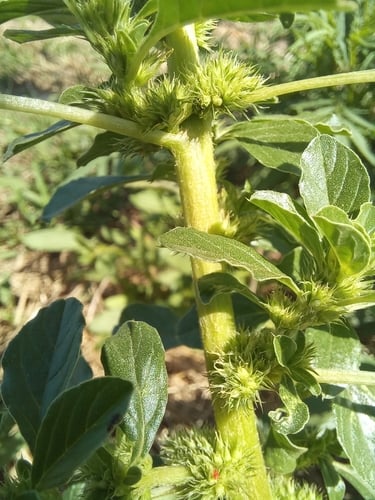
Amaranthus thunbergii
Thunberg’s Pigweed, Thunberg's Amaranth
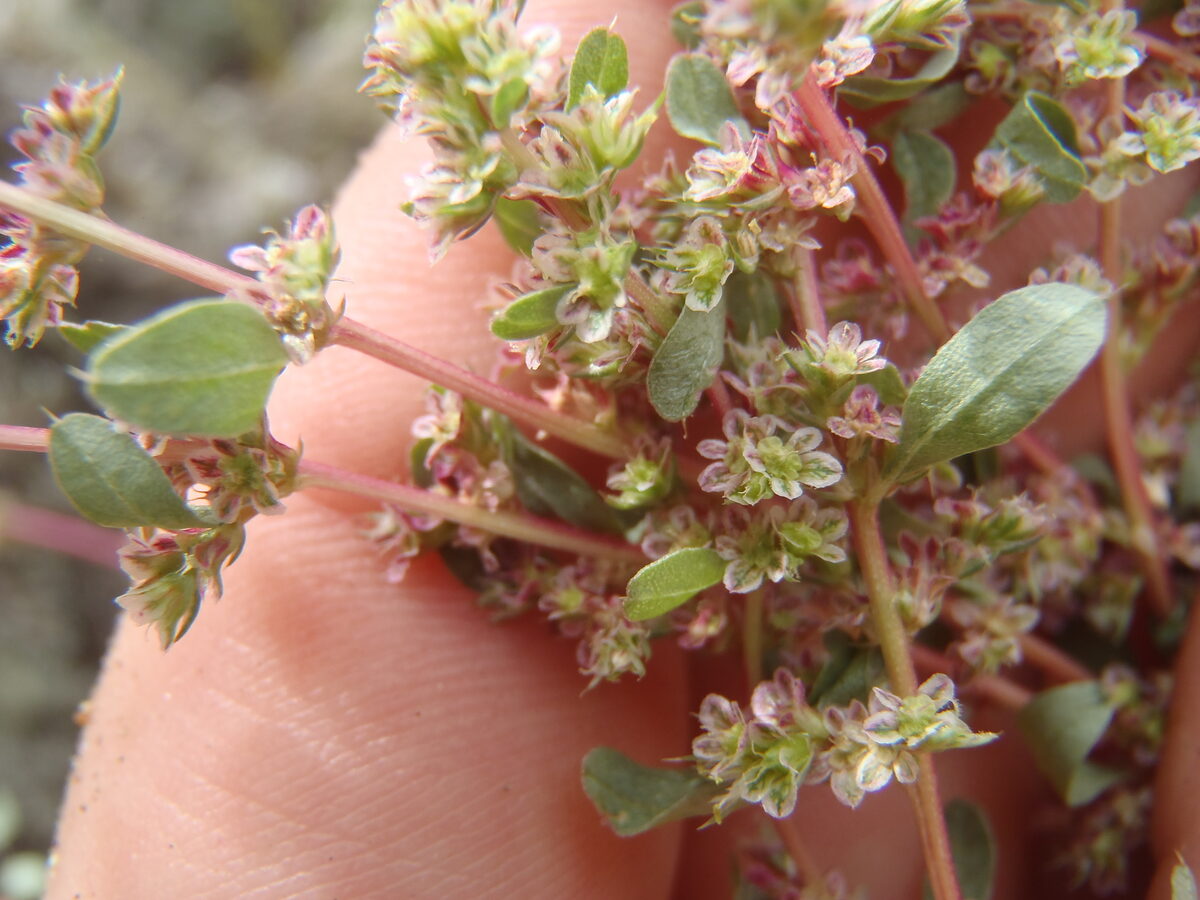
Amaranthus torreyi - (A.Gray.)Benth. ex Watson.
Torrey's amaranthus
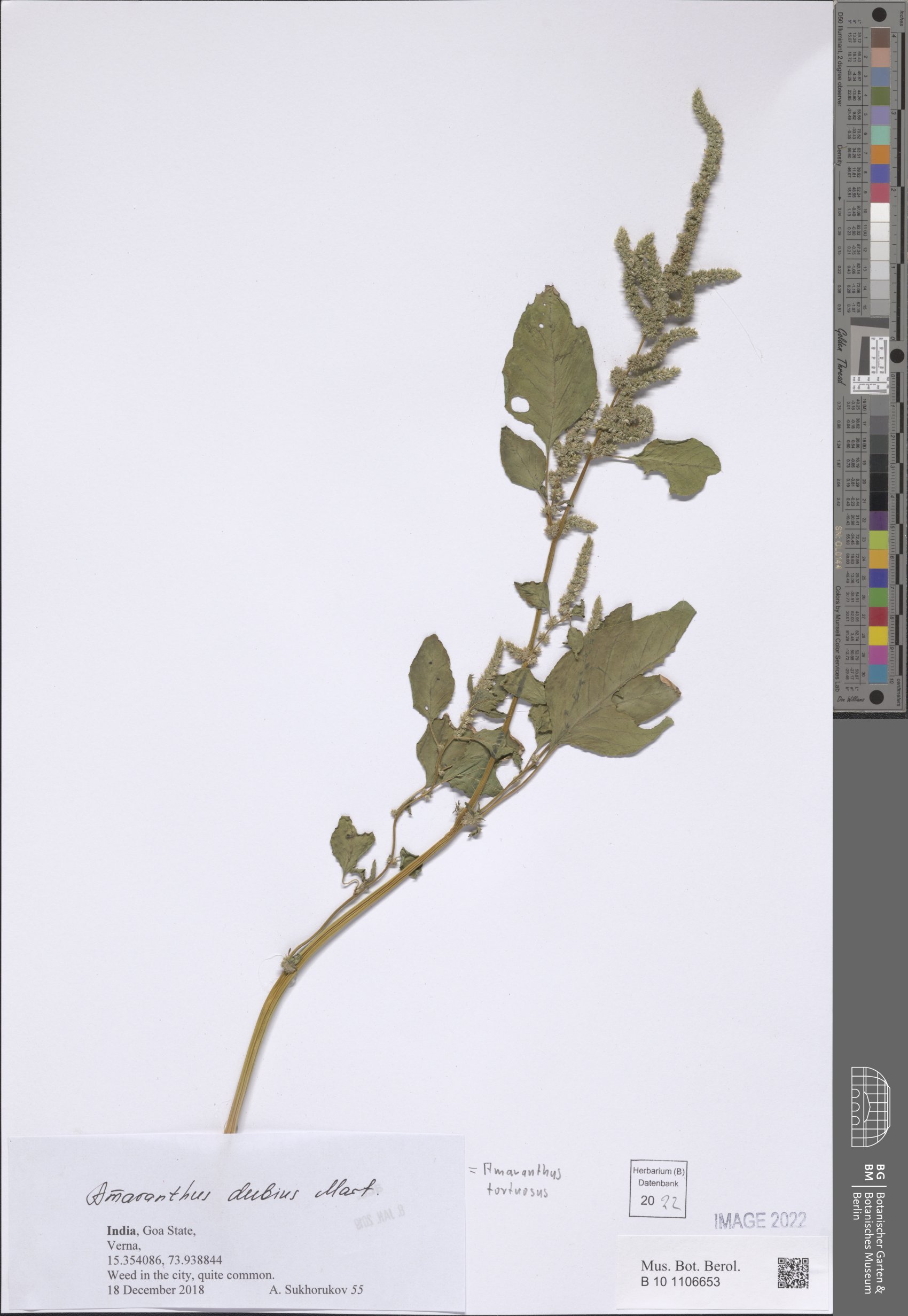
Amaranthus tortuosus
Spleen amaranth
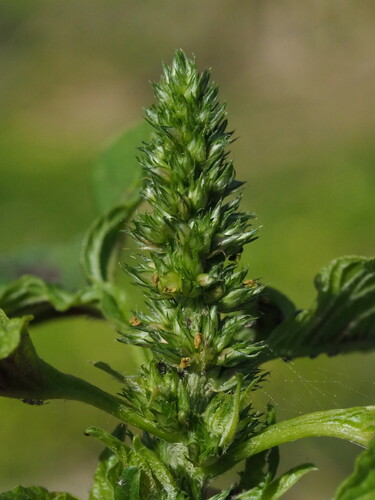
Amaranthus tricolor
Chinese amaranth, Red amaranth
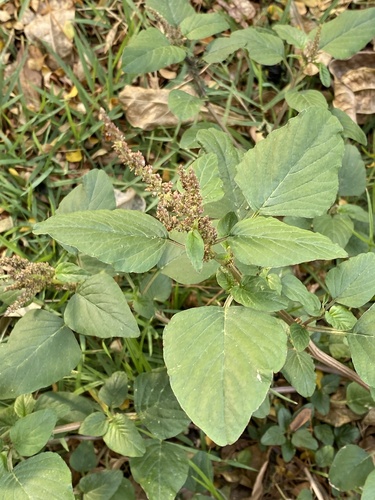
Amaranthus viridis
Green amaranth, Slender amaranth
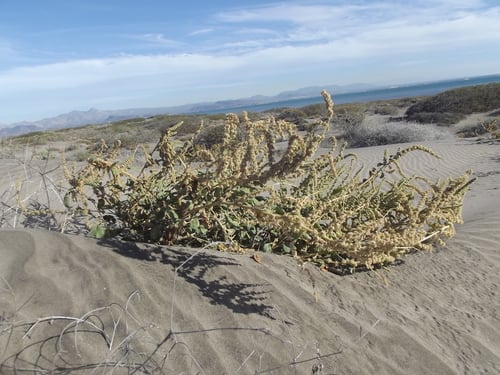
Amaranthus watsonii
Sandhill Amaranth