Tecticornia verrucosa
Paul G. Wilson
Samphire, Bulli-Bulli
iNaturalist· cc-by-nc-sa
(c) caliologist, some rights reserved (CC BY-NC-SA), uploaded by caliologist
iNaturalist· cc-by-nc
(c) Peter, some rights reserved (CC BY-NC)
Summary
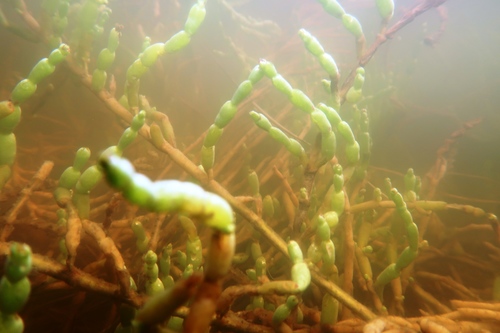
Source: WikipediaTecticornia verrrucosa is a species of plant that is succulent and halophyte (salt tolerant). This plant was a member of the Chenopodiaceae, which are now included in family Amaranthaceae. T. verrucosa was first described in 1972 by Paul Wilson. It is an annual or short-lived perennial which grows to 40 cm high, which branches at the occasionally woody base. The inflorescence is a set of opposite and decussate lateral sessile spikes, at right angles to the branch. They are cylindrical and 10–20 mm long by 6 mm diam. The flowers are triads with free tepals below and slightly united above. It grows on coastal mud flats, slightly saline clay pans, and inland freshwater. The Walmajarri people of the southern Kimberley call this plant Mungily.
Description
Tecticornia verrucosa is a leafless, succulent, annual or short-lived perennial plant growing 20 - 60cm tall. The small seed was harvested by the native Australian Aborigine as a food. It is unclear whether it is used today, but the plant has been recommended for cultivation in saline soils.
Edible Uses
Seed - cooked. Ground into a flour and used to make bread. The seed is small.
Traditional Uses
Seeds,
This uses section is brief — help expand it
Distribution
Australia - Western Australia, Northern Territory.
Where It Grows
Coastal flats, freshwater or slightly saline claypans & lakes in clay loam, clay, and sandy soils.
Cultivation
Amaranthaceae
Production
A herb. It lies along the ground and lives for a few years. It grows 20-60 cm high.
References (11)
- Bindon, P., 1996, Useful Bush Plants. Western Australian Museum. p 243
- Cancilla, D., 2018, Ethnobotanical and Ethnozoological Values Desktop Assessment - Eliwana Project. p 38
- Cherikoff V. & Isaacs, J., The Bush Food Handbook. How to gather, grow, process and cook Australian Wild Foods. Ti Tree Press, Australia p 191
- Facciola, S., 1998, Cornucopia 2: a Source Book of Edible Plants. Kampong Publications, p 77
- Flora of Australia, Volume 4, Phytolaccaceae to Chenopodiaceae, Australian Government Publishing Service, Canberra (1984) p 304
Show all 11 references Hide references
- Latz, P.K., 1996, Bushfires and Bushtucker: Aboriginal plant use in Central Australia. IAD Press Alice Springs p 283
- Latz, P & Wightman, G., 1995, Desert Bush Tucker Identikit. Common Native Food Plants of Central Australia. Parks & Wild Commission Northern territory. p 52
- Lazarides, M. & Hince, B., 1993, Handbook of Economic Plants of Australia, CSIRO. p 234
- Low, T., 1992, Bush Tucker. Australia’s Wild Food Harvest. Angus & Robertson. p 88
- Paczkowska, G. & Chapman, A.R., 2000, The Western Australian Flora. A Descriptive Catalogue. Western Australian Herbarium. p 210
- Wheeler, J.R.(ed.), 1992, Flora of the Kimberley Region. CALM, Western Australian Herbarium, p 106
More from Amaranthaceae
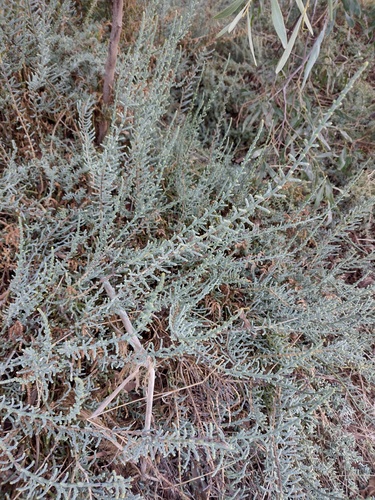
Sarcocornia fruticosa
Glasswort, Shrubby swampfire
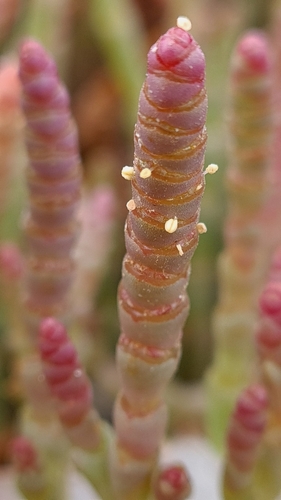
Sarcocornia natalensis
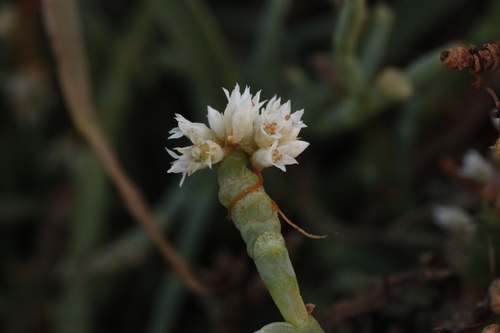
Sarcocornia pacifica
Pacific swampfire, Beach asparagus
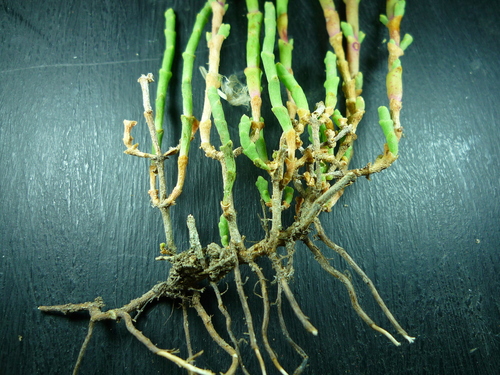
Sarcocornia perennis
Sarcocornia quinqueflora
Samphire, Beaded Glasswort, Marsh samphire, Beaded samphire, Ureure, Glasswort, Chicken-claws, Salthorn
Sarcocornia stricta
Sea fennel, Peter’s cress