Diospyros vignei
F. White
iNaturalist· cc-by-nc
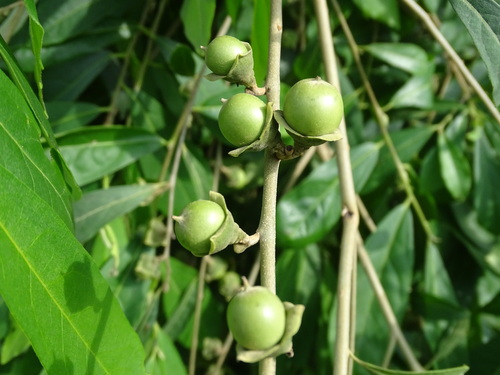
(c) Carel Jongkind, some rights reserved (CC BY-NC), uploaded by Carel Jongkind
iNaturalist· cc-by-nc
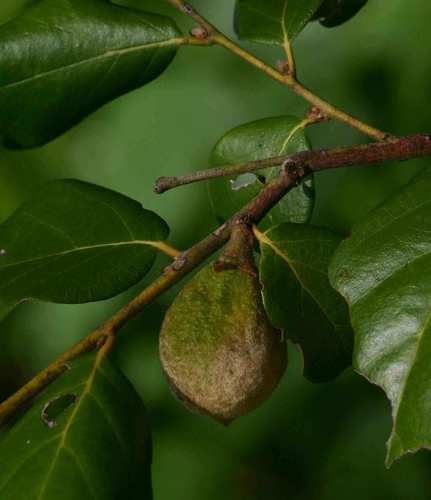
(c) Carel Jongkind, some rights reserved (CC BY-NC)
Description
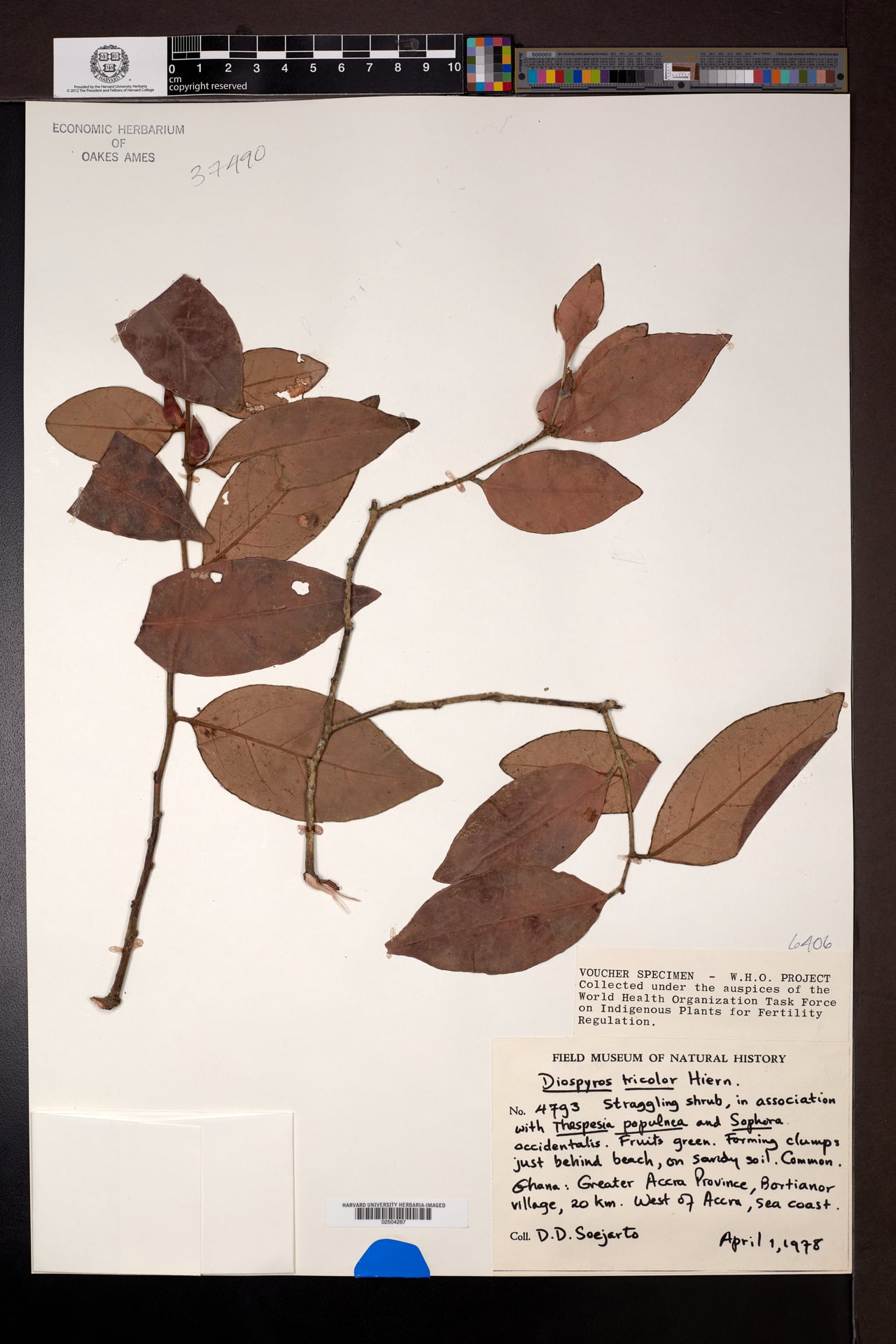
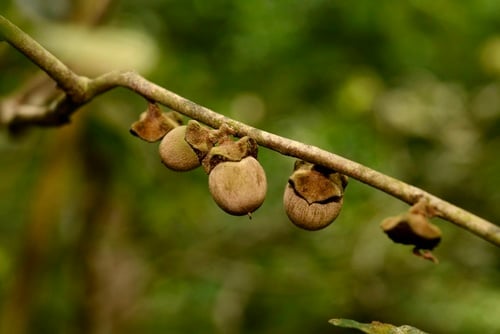
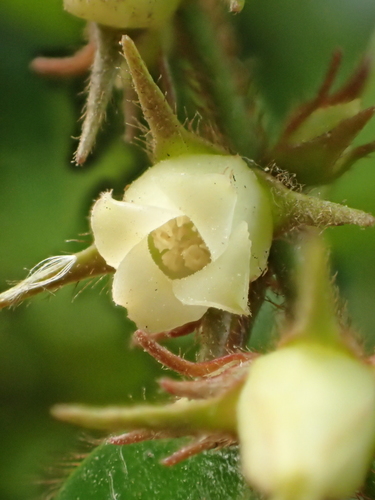
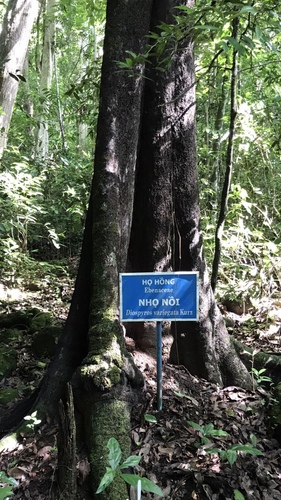
A shrub or small tree. It grows 3.5-10 m tall. The trunk is 3 cm across. The leaves are alternate and simple. The leaves are oval and taper to both ends with a tip or point at the top end. There are 3-7 pairs of side veins. The leaves are 7-13 cm long by 3-4 cm wide. The male flowers are in the axils of the leaves and on the trunk and large branches. The female flowers are on the trunks. The flowers are bell shaped and white with 3 lobes. The fruit is bottle shaped with a point at the tip. It is 3 cm long by 2 cm wide. There can be 4 seeds in a sweet whitish pulp. The seeds are oblong and large. They are dark reddish brown.
Edible Uses
The fruit are eaten fresh.
Traditional Uses
The fruit are eaten fresh.
This uses section is brief — help expand it
Distribution
It is a tropical plant. It grows in the undergrowth in wet evergreen forests.
Where It Grows
Africa, Côte d'Ivoire, Ghana, Ivory Coast, Liberia, West Africa,
Synonyms
Also Known As
Sanzamulike
References (3)
- Aboagye, L. M., et al, 2007, Underutilized species Policies and Strategies. Report. CSIR Ghana.
- Burkill, H. M., 1994, The useful plants of West Tropical Africa. Volume 2. Kew.
- Nyadanu, D., et al, 2015, Agro-biodiversity and challenges of on-farm conservation: the case of plant genetic resources of neglected and underutilized crop species in Ghana. Genet. Resourc. Crop Evol. 62(7):