Rauvolfia vomitoria
Afzel.
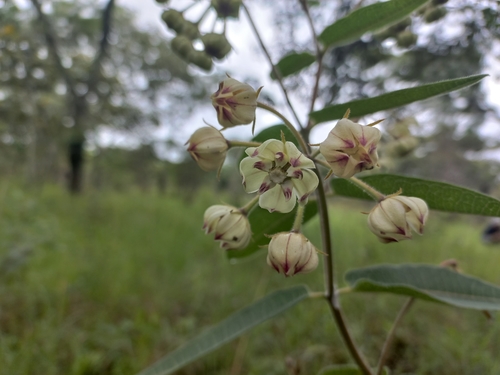
iNaturalist· cc-by-nc-sa
(c) Marco Schmidt, some rights reserved (CC BY-NC-SA), uploaded by Marco Schmidt
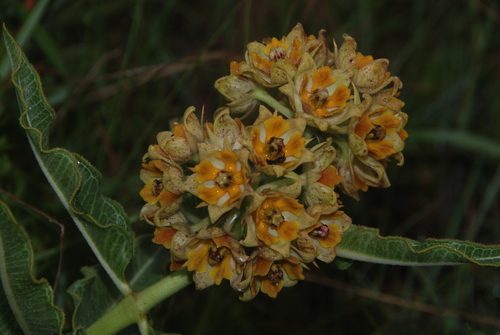
iNaturalist· cc-by-nc
(c) Lucie Bauret, some rights reserved (CC BY-NC)
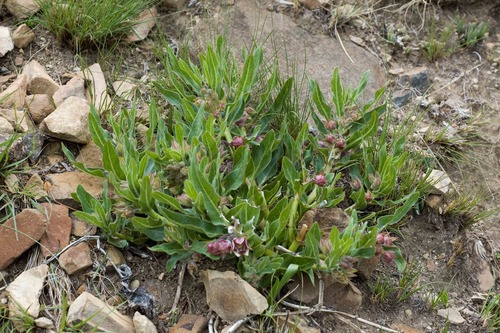
iNaturalist· cc-by-nc
(c) Lucie Bauret, some rights reserved (CC BY-NC)
Summary
Source: WikipediaRauvolfia vomitoria, the poison devil's-pepper, is a plant species in the genus Rauvolfia. It is native from Senegal east to Sudan and Tanzania, south to Angola; and naturalized in China, Bangladesh, different ranges of Himalayan and Puerto Rico. The plant contains a number of compounds of interest to the pharmaceutical industry and is widely used in traditional medicine.
Description
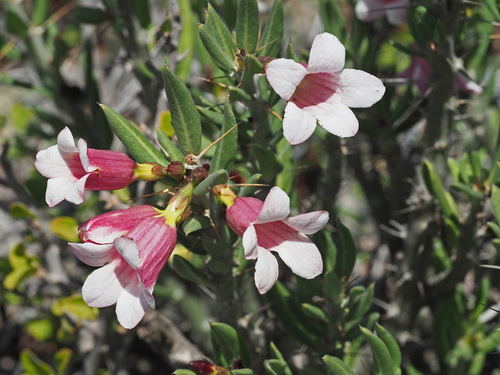
A shrub or tree. It grows 5-10 m tall. The stems are erect and stiff. The leaves are in rings. They are broadly oval and 5-12 cm long by 3-6 cm wide. The flowers are tube shaped and pale green and hairy inside. The fruit are in pairs and narrowly oval.
Edible Uses
The leaves are eaten.
Medicinal Uses
Rauvolfia vomitoria is widely used in traditional medicine in Africa and has also become a major source of a number of compounds used in the pharmaceutical industry, particularly reserpine, reserpinine, deserpidine, ajmalicine and ajmaline. It contains in total between 40 - 80 different indole alkaloids, most of which occur in very small amounts and several are disputed. Most alkaloids occur in an unstable complex, and seasonal variation is present as well. The leaves contain 0.03 - 0.8% total alkaloids; the stem bark about 0.6%; the roots 0.15 - 0.2%; and the root bark from 1.5 - 2% The alkaloids can be grouped into 5 main groups, plus some minor ones. These are: 1). Yohimbine and derivatives, including reserpine and deserpidine. 2). The heteroyohimbine type, including ajmalicine (raubasine), reserpinine (rescinnamine) and reserpiline. 3). Sarpagane derivatives, including sarpagine (raupine). 4). The dihydro-indole type, including ajmaline. 5). The anhydronium bases, including alstonine, serpentine and serpenticine. 6). Other groups include the oxindoles and pseudoindoxyls. Serpentinine is the only dimeric yohimbin-related alkaloid isolated so far. Reserpiline is the major component in the root bark, followed by reserpine, reserpinine and ajmaline. Reserpiline is also the major component of the stem bark, with small amounts of isoreserpiline and yohimbine. The leaves contain a different range of alkaloids mainly geissoschizol, but no reserpine, reserpinine or ajmaline. The alkaloids in the leaves comprise about 41% heteroyohimbines and 52% oxindoles. The unripe fruit contains several alkaloids, but they are absent in the ripe fruits. Reserpine is a well-known antihypertensive, antipsychotic and sedative. It is a sympatholytic agent acting indirectly on the peripheral and central nerve terminals. It impairs the storage of biogenic amines resulting in depletion of norepinephrine, dopamine, and serotonin. Depletion of norepinephrine induces a lasting drop in blood pressure. Contra-indications for using reserpine are depression, peptic ulcer, and hypersensitivity to the alkaloid. Side effects of the medication include drowsiness, nasal congestion, salivary and gastric hypersecretion, paradoxical anxiety, depression and retention of water and sodium. Overdose may cause respiratory depression, slowed heartbeat, hypotension, confusion, tremors, convulsions and gastro-intestinal distress. Reserpine has been shown to enhance the hypoglycaemic effect of insulin and the hyperglycaemic effect of adrenalin, and has inhibited the physiological hyperglycaemic response in diabetic patients. Because of the necessary high doses and the resulting dangerous side effects, reserpine lost its importance as a medicine. It is only used in low doses for mild to moderately severe high blood pressure, often together with ajmalicine. Reserpinine and deserpidine are reserpine analogues. Both alkaloids have the same effects as reserpine, and can be used to treat the same conditions, while their side effects are reported to be less pronounced. Reserpiline is marked sympatholytic and hypotensive with no noticeable depressant effects on the central nervous system andno sedative properties. It also lacks most ofthe side effects of reserpine and its analogues. Ajmalicine is an alpha-adrenergic blocking spasmolytic which, at high doses, moderates the activity of the vasomotor centres, especially in the brain stem causing an increase of the bloodflow to the brain. It is mainly used in products that treat the psychological and behavioural problems associated with senility, stroke and head injuries. Ajmaline is an anti-arrhythmic, which substantially decreases the rate of depolarization of atrial and ventricular cells. Its toxicity has limited its uses and it is mainly prescribed against rapid irregular cardiac beat. Because of its toxicity it is no longer marketed in several countries. Several other Rauvolfia alkaloids have hypotensive or sedative activities, but most are less effective. An ethanolic leaf extract has shown a reduction in blood sugar levels of normal and alloxan-induced diabetic rabbits, comparable to that of tolbutamide. A root bark extract showed antibacterial activity in vitro against several human pathogens. A root decoction, root macerate or powdered root in water is used throughout the range of the plant as a treatment for diarrhoea, rheumatism, jaundice, venereal diseases and snakebites. Root products are also widely taken to treat hypertension, and as a sedative to calm people with epilepsy, and those who are psychotic or mentally ill. The root, infused in palm wine is considered to be aphrodisiac and is also used to treat female sterility. The roots are often used externally. As a wash they are used to treat children with colic or fever. The macerated or powdered root, or sometimes the pulped fruit, is applied to a range of skin problems, such as rash, pimples, chicken pox, wounds, scabies, psoriasis, leprosy, haemorrhoids, head lice and parasitic skin diseases. The decoction is used in massages and baths to treat rheumatism, tiredness and rachitis; and is used as a mouth wash against gingivitis or thrush. The stem bark or leaves are also used for these purposes, but to a lesser extent. In Guinea the root maceration is applied to tumours. The stem bark, leaf decoction and latex of young twigs are widely used as purgative or emetic. A bark infusion is taken to cure fever. A mixture of the pulverized root or leaf sap, combined with plant oil or lemon juice, is applied to the hair to stop hair loss. A decoction of the root and leaves is taken to treat indigestion, as a tonic, and as an abortifacient. The latex is used for cicatrization of wounds.
Known Hazards
Rauvolfia vomitoria has been used across its range in traditional medicine. A decoction or extract of the roots is used for diarrhea, jaundice, venereal disease, rheumatism, snake-bites, colic, fever, to calm people with anxiety or epilepsy, and to lower blood pressure. The macerated root, or sometimes the pulped fruit, is used for a variety of skin conditions, and the bark, twigs, and leaves are used as a purgative and emetic. Every part of the tree is toxic, and this is put to use with a paste made from the pulverized root being coated on arrow tips and spears for hunting, and by being mixed with cassava meal to make rat poison. The plant contains a number of chemical compounds used by the pharmaceutical industry; these include reserpine, reserpinine, deserpidine, ajmalicine, and ajmaline. In the 1970s, the bark from stems and roots was harvested from which reserpine was extracted and sold for human use. Reserpine is still available, but has been largely replaced by less toxic products. 2,6-Dimethoxybenzoquinone is a benzoquinone found in R. vomitoria.
Distribution
It is a tropical plant. It grows in open spaces in forests and along the edges of forests. In Nigeria it has been recorded at 450- 1,500 m above sea level. In XTBG Yunnan.
Where It Grows
Africa, Angola, Asia, Benin, Burkina Faso, Cameroon, Central Africa, Central African Republic, CAR, China, Congo DR, Gabon, Hawaii, Nigeria, Pacific, Sao Tome and Principe, Senegal, Sierra Leone, Sudan, Tanzania, West Africa,
Cultivation
Plants can be grown from seeds. The fruit are dried and seeds planted fresh. It can be grown from cuttings.
Propagation
Seed - best sown as soon as it is ripe because it has a viability of no more than 6 months. Wild seedlings can be successfully transplanted and cultivated. Tests with vegetative propagation of root and shoot cuttings in vitro have been moderately successful.
Other Uses
The young twigs with a whorl of branches at the end are used as mixing sticks for drinks. Larger branches are similarly used to stir the indigo mixture in dyeing pits. A yellow dye is produced from the bark. A good quality fibre is obtained from the bark. A latex exudes from the young stems. No uses are recorded. The light yellowish to white wood reddens with age. It is fine-grained with a fairly hard heartwood. It is of little economic importance, although it is sometimes used to make small kitchen utensils and the heartwood is sometimes used as a substitute for boxwood (Buxus spp.). The wood is used for fuel. Rauvolfia vomitoria is a host of the pathogen causing collar crack of cacao. Even so, it is widely planted as a shade tree for cacao and coffee, and is also used as a support for vanilla. The plant is grown as a live fence.
Production
In Central African Republic plants flower in March and fruit June and July.
Synonyms
Also Known As
Bon-de, Chunchunka, Du ga, Gbasa, Ka-bonen, Ka-fenkre, Kilungu, Koroga, Kogei, Kowogei, Mundungu, Mvuala, Tangbesowakoloma, Zumbu
References (7)
- Avouhou, H. T., et al, 2012, Ethnobotanical Factors Influencing the Use and Management of Wild Edible Plants in Agricultural Environments in Benin. Ethnobotany Research & Applications Vol 10:571-592
- Harris, D. J., 2002, The vascular plants of the Dzanga-Sangha Reserve, Central African Republic. National Botanic Garden of Belgium, 2002. – 274 pages p 53
- Koni, J. M. & Bostein, K., 2008, Noms et usages des plantes utiles chez les Nsong, DR Congo. University of Gothenburg. Department of Oriental and African Languages. p 32
- Latham, P., 2004, Useful Plants of Bas-Congo province. Salvation Army & DFID p 236
- Lautenschläger, T., et al, 2018, First large-scale ethnobotanical survey in the province of Uíge, northern Angola. Journal of Ethnobiology and Ethnomedicine (2018) 14:51
Show all 7 references Hide references
- Savill, P. S. & Fox, J. E. D., Trees of Sierra Leone. p 50
- World Checklist of Useful Plant Species 2020. Royal Botanic Gardens, Kew