Stephania brachyandra
Diels
Bai xian shu
gbif· cc-by-sa
GBIF
gbif· cc0
President and Fellows of Harvard College
gbif· cc0
President and Fellows of Harvard College
Description
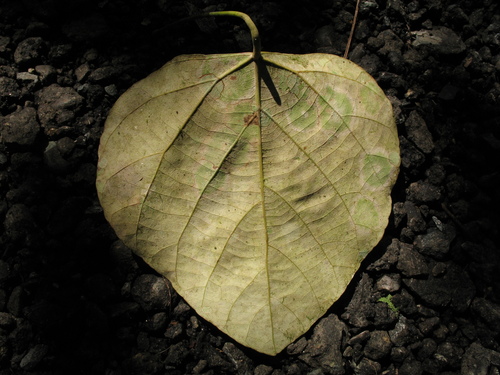
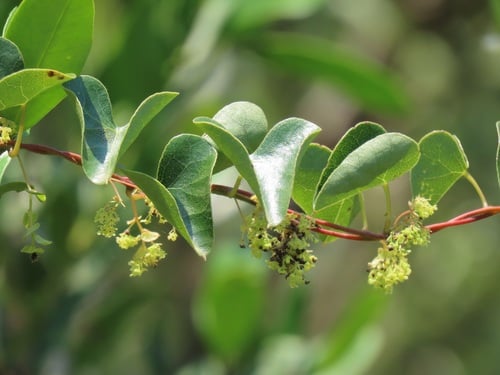
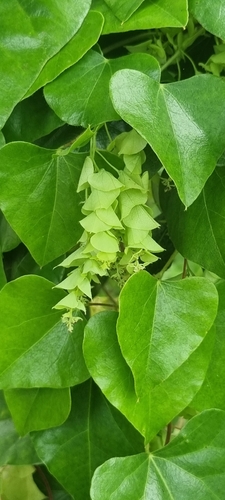
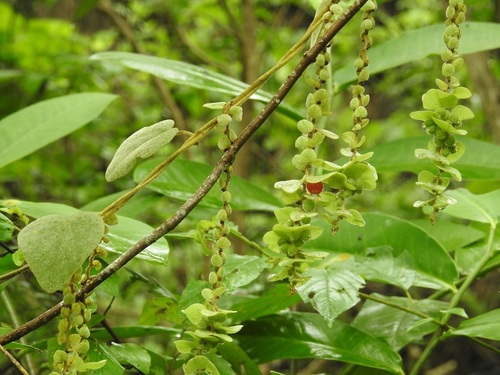
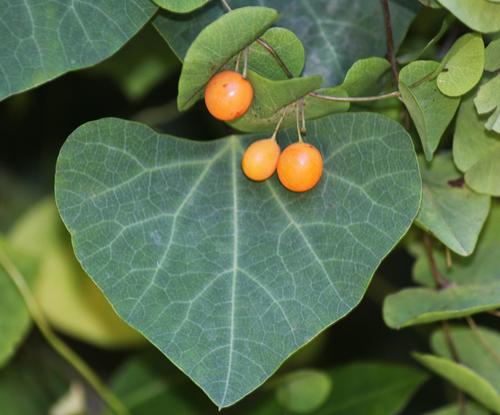
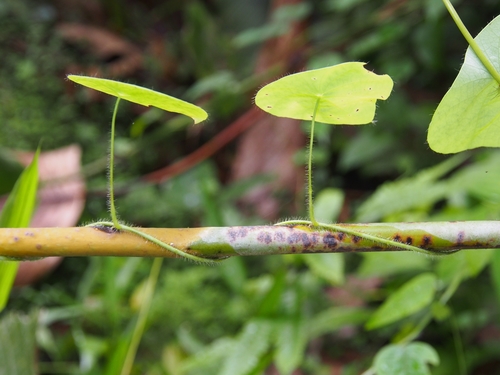
A soft vine. It loses its leaves during the year. The stems are winding and have lines along them. The leaf stalks are about the same length as the leaf blade. The leaf stalk joins the leaf blade about 1.5-3 cm from the edge. The leaf blade is thin and papery and triangle shaped. It is 8-18 cm long. It has 10 veins spreading out from the base. The male flowers are slender. They are on a stalk 3-7 cm long. The female flowers are small. The fruit is fleshy with a hard stone inside. It is oval and red. It is 9 mm long by 8 mm wide.
Edible Uses
The root is eaten.
Medicinal Uses
The tuberous root is used in medicine and contains the alkaloid isocorydine.
Distribution
A tropical plant. It grows in the forest in Yunnan in China at about 1000 m altitude.
Where It Grows
Asia, China, Indochina, Myanmar, SE Asia,
Notes
There are about 60 Stephania species. They occur in the tropics and subtropics. The roots are used in medicine. The tuberous root contains isocorydine.
References (2)
- Altschul, S.V.R., 1973, Drugs and Foods from Little-known Plants. Notes in Harvard University Herbaria. Harvard Univ. Press. Massachusetts. no. 987
- Lo Hsienshui, Chen Tao, Menispermaceae. Flora of China.