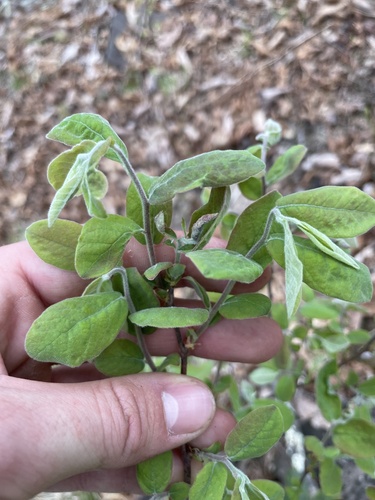
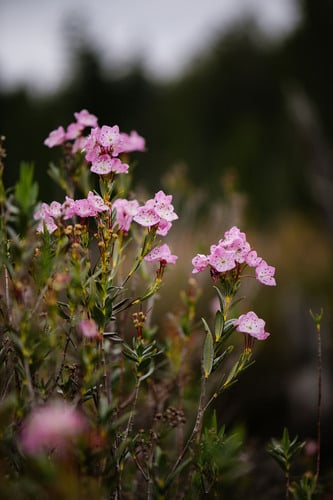
Pyrola rotundifolia
L.
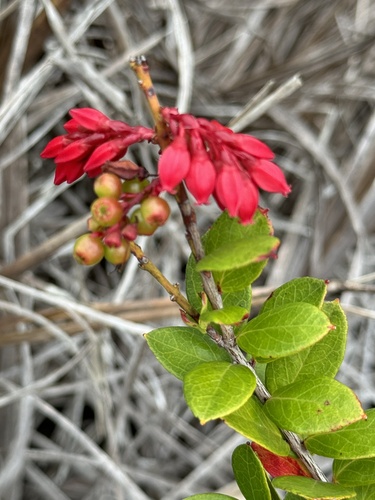
iNaturalist· cc-by-nc
(c) Urszula Wojciechowska, some rights reserved (CC BY-NC)
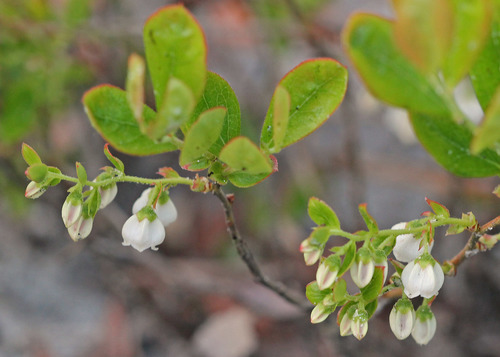
iNaturalist· cc-by-nc
(c) lotuslotta, some rights reserved (CC BY-NC)
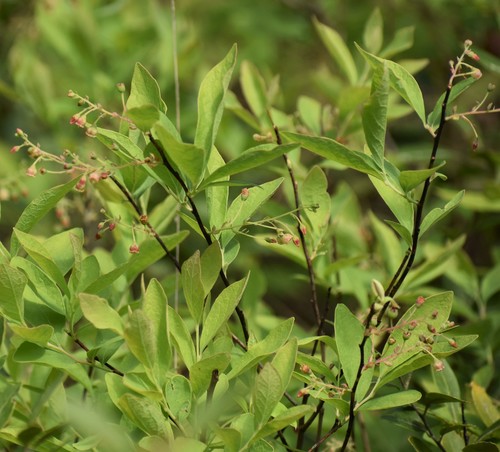
iNaturalist· cc-by-nc
(c) lotuslotta, some rights reserved (CC BY-NC)
Summary
Source: WikipediaPyrola rotundifolia, the round-leaved wintergreen, is a plant species of the genus Pyrola. It is found in Europe, Japan, Mongolia, Myanmar, Vietnam and Russia. It typically grows about a foot tall and blooms from May to August with bell-shaped, fragrant white flowers. The plant prefers moist, alkaline soils—often thriving in sandy or loamy environments such as bogs, fens, and beech woods.
Description
A herb. It grows between 15-25 cm tall. The rhizomes is long and slender and branched. It roots at the nodes and also produces aerial stems. There is a ring of 4-7 leaves at the base. They are light green underneath. Leaves are oval and 3-6 cm long by 3-6 cm wide. There are 8-15 flowers in a group. The petals are white and curve inwards.
Edible Uses
None known.
Traditional Uses
The leaves are used to make drinks.
This uses section is brief — help expand it
Medicinal Uses
The leaves are antirheumatic, antiseptic, antispasmodic, astringent, cardiotonic, contraceptive, diuretic, sedative, and tonic. A decoction is used to treat skin diseases, as a gargle, and as an eye wash. Internally, it is used for epilepsy and other nervous afflictions. Leaves are harvested in mid to late summer and can be used fresh or dried. The plant contains arbutin, a proven diuretic and antibacterial agent used as a urinary antiseptic, which hydrolyzes in the body into the toxic hydroquinone.
Distribution
It is a temperate plant. It grows in mountain thickets and grassy slopes between 1,400-3,200 m above sea level in China. In Sichuan and Yunnan.
Where It Grows
Asia, Central Asia, China, Estonia, Europe, Japan, Luxembourg, Mongolia, Myanmar, Russia, SE Asia, Slovenia, Tajikistan, Tibet,
Cultivation
Prefers a moist sandy woodland soil in a cool position with partial shade. Requires a peaty or leafy but not very acid soil that remains moist in the summer. Plants are hardy to at least -20°c. This is a very ornamental but difficult plant to grow. It requires a mycorrhizal relationship in the soil and therefore needs to be grown initially in soil collected from around an established plant. It is also very difficult from seed as well as being intolerant of root disturbance which makes division difficult. The flowers have a delicious almond-like fragrance.
Propagation
This species is difficult from seed and germinates infrequently. Sow seed as soon as it is ripe if possible, into soil collected from around an established plant, barely covering the seed, and place the pot in a shady part of a cold frame. Pot up seedlings as soon as they are large enough to handle, again using soil from around an established plant. Plant out when large enough; soil from the pot should carry the necessary mycorrhiza so additional collected soil is not needed at that stage. Division can be attempted with great care in spring. Pot up divisions using soil from around an established plant, grow on in a lightly shaded greenhouse or frame, and do not plant out until the divisions are growing vigorously.
Other Uses
Plants can be used as ground cover when spaced about 30cm apart each way, though they are somewhat slow to establish and only form good cover once growing luxuriantly.
Notes
Also put in the family Pyrolaceae.
Also Known As
Bairu, Okroglolistna zelenka, Shoucha, Talihaljak
References (4)
- http://www.botanic-gardens-ljubljana.com/en/plants
- Kalle, R. & Soukand, R., 2012, Historical ethnobotanical review of wild edible plants of Estonia (1770s-1960s) Acta Societatis Botanicorum Poloniae 81(4):271-281
- Kang, Y., et al, 2012, Wild food plants and wild edible fungi in two valleys on the Qinling Mountains (Shaanxi, central China) Journal of Ethnobiology and Ethnomedicine; 9:26
- Urgamal, M., Oyuntsetseg, B., Nyambayar, D. & Dulamsuren, Ch. 2014. Conspectus of the vascular plants of Mongolia. (Editors: Sanchir, Ch. & Jamsran, Ts.). Ulaanbaatar, Mongolia. “Admon“ Press. 334pp. (p. 79-90).