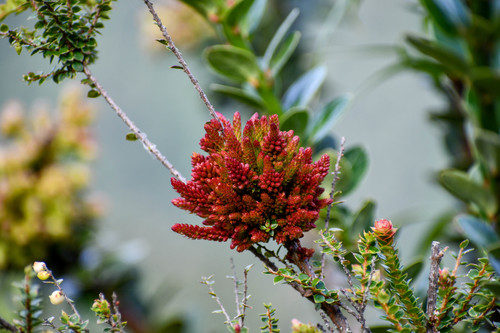
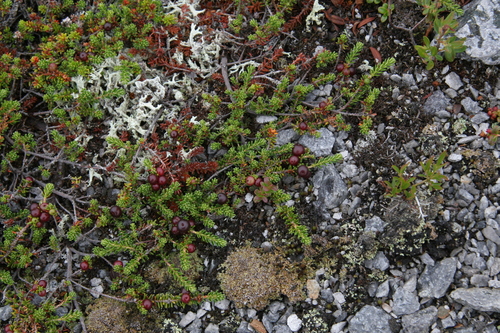
Rhododendron anthopogon
D. Don
iNaturalist· cc-by-nc-sa
(c) Phuentsho, some rights reserved (CC BY-NC-SA), uploaded by Phuentsho
iNaturalist· cc-by-nc
(c) Rajendra Koranga, some rights reserved (CC BY-NC)
Summary
Source: WikipediaRhododendron anthopogon, the dwarf rhododendron, is a species of flowering plant in the family Ericaceae, native to Pakistan, the Himalayas, Tibet, and Myanmar. It is used to make an essential oil. Its habitats include open slopes, thickets, hillsides, and cliff ledges.
Description
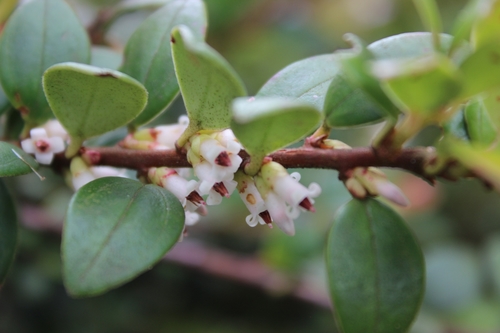
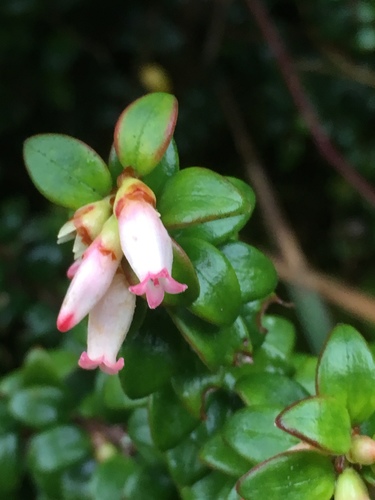
A compact shrub. It grows about 30-90 cm high. It spreads 90 cm wide. The leaves have stalks. The leaves are oval and can have a sharp tip. The upper surface is slightly scaly and the lower surface is densely scaly. The leaves have an aroma when crushed. The flowers are yellow or red. They are tube shaped. The fruit is a capsule. It is oval and enclosed in a layer of the flower which remains.
Edible Uses
The flowers can be used as a tea substitute.
Traditional Uses
The flowers are dried and used as a substitute for tea. The leaves are boiled in water for tea.
This uses section is brief — help expand it
Medicinal Uses
The stems and leaves of the sub-species R. anthopogon hypenanthum are used in Tibetan herbalism. They have a sweet, bitter and astringent taste and are said to promote heat. They act as an antitussive, diaphoretic and digestive, and are used to treat lack of appetite, coughing and various skin disorders. In Nepal, leaves are boiled and the steam inhaled to relieve coughs and colds. The flowers of the same sub-species are also used in Tibetan medicine, with a sweet taste and neutral potency. They are antitussive, febrifuge and tonic, used to treat inflammations, lung disorders and general bodily weakness, as well as complaints arising from a change of environment where water and locality are not agreeable.
Known Hazards
Although no specific mention of toxicity has been seen for this species, it belongs to a genus where many members have poisonous leaves. The pollen of many if not all species of rhododendrons is also probably toxic, being said to cause intoxication when eaten in large quantities.
Distribution
It is a temperate plant. In Nepal it grows between 3300-4600 m altitude. It grows on open, moist hillsides. It suits hardiness zones 7-9.
Where It Grows
Asia, Australia, Bhutan, China, Himalayas, India, Myanmar, Nepal, Northeastern India, SE Asia, Sikkim, Tibet,
Cultivation
Succeeds in a most humus-rich lime-free soils except those of a dry arid nature or those that are heavy or clayey. Prefers a peaty or well-drained sandy loam. Succeeds in sun or shade, the warmer the climate the more shade a plant requires. A pH between 4.5 and 5.5 is ideal. Succeeds in a woodland though, because of its surface-rooting habit, it does not compete well with surface-rooting trees. Plants need to be kept well weeded, they dislike other plants growing over or into their root system, in particular they grow badly with ground cover plants, herbaceous plants and heathers. Plants form a root ball and are very tolerant of being transplanted, even when quite large, so long as the root ball is kept intact. The whole plant is strongly aromatic with a slightly acrid odour, especially when crushed. Plants in this genus are notably susceptible to honey fungus.
Propagation
Sow seed in a greenhouse as soon as it is ripe in autumn, providing artificial light. Alternatively, sow in a lightly shaded part of a warm greenhouse in late winter, or in a cold greenhouse in April. Surface-sow and keep the compost consistently moist. Pot up seedlings once large enough to handle and grow on under glass for at least the first winter. Layering in late July takes 15–24 months. Cuttings of half-ripe wood taken in August and rooted in a frame are difficult.
Other Uses
The dried leaves are burned as incense.
Notes
There are about 850 Rhododendron species.
Synonyms
Also Known As
Ba-lu-dkar-po, Banchai, Chulthi amilo, Dhoop, Kai zaban, Kodya, Korlingo, La qi la ni, Morua, Nera, Nichni, Palu, Rattankat, Sunpati, Talis-faz, Talisa, Talisri, Tazaktsum
References (12)
- Agarwal, R. & Chandra, V., 2019, Diversity of wild edible plants in the Mandal-Chopta forest, Uttarakhand. Journal of Medicinal Plants Studies 2019; 7(1): 89-92
- Ambasta S.P. (Ed.), 2000, The Useful Plants of India. CSIR India. p 521
- Boesi, A., 2014, Traditional knowledge of wild food plants in a few Tibetan communities. Journal of Ethnobiology and Ethnomedicine 10:75
- Chen, W., et al, 2021, Wild plants used by the Lhoba people in Douyu Village, characterized by high mountains and valleys, in southeastern Tibet, China. Journal of Ethnobiology and Ethnomedicine (2021) 17:46
- Cundall, P., (ed.), 2004, Gardening Australia: flora: the gardener's bible. ABC Books. p 1144
Show all 12 references Hide references
- Dutt, B., et al, 2011, Ethnobotanical Survey of Plants used by Gaddi Tribe of Bharmour Area in Himachal Pradesh. ENVIS Bulletin: Himalayan Ecology 19, 2011
- GUPTA,
- Malhotra, C.L.., et al, 1985, Additional Notes on the wild edible plants of India J. Econ. Tax. Bot. Vol 6. No.2 pp 481-482
- Manandhar, N.P., 2002, Plants and People of Nepal. Timber Press. Portland, Oregon. p 394
- Mem. Wern. Nat. Hist. Soc. 3:409. 1821
- Sharma, L. et al, 2018, Diversity, distribution pattern, endemism and indigenous uses of wild edible plants in Cold Desert Biosphere Reserve of Indian Trans Himalaya. Indian Journal of Traditional Knowledge. Vol 17(1) January 2018 pp 122-131
- Yeshi, K. et al, 2017, Taxonomical Identification of Himalayan Edible Medicinal Plants in Bhutan and the Phenolic Contents and Antioxidant Activity of Selected Plants. TBAP 7 (2) 2017 pp 89 - 106