Rubus polyodontus
Hand.-Mazz.
gbif· cc0
President and Fellows of Harvard College
Description
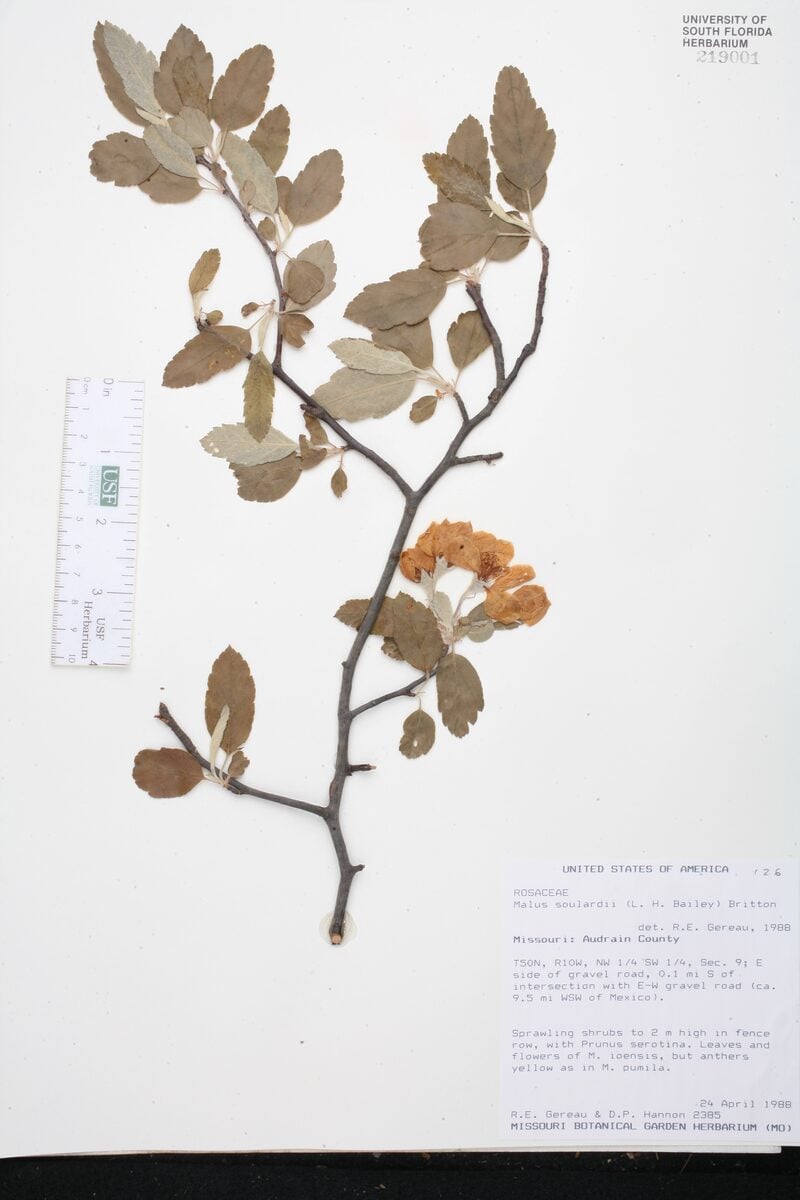
A low shrub. It grows 20-40 cm tall. The branches are creeping and form roots at the nodes. There are straight needle-like prickles. The leaves are simple and divided with uneven teeth. Flowers are in clusters or 3 to 4. The petals are red. The fruit is aggregate.
Edible Uses
The fruit are eaten fresh.
Traditional Uses
The fruit are eaten fresh.
This uses section is brief — help expand it
Distribution
It is a subtropical plant. It grows in bamboo forests between 2,300-3,200 m above sea level. It grows in Yunnan in China.
Where It Grows
Asia, China, Tibet,
Production
In China plants flower in July to August and fruit September to October.
Dangerous Lookalikes
This plant can be confused with the following toxic species. Always verify identification carefully before consuming any wild plant.
Red Baneberry
Actaea rubra
Walter Siegmund (talk)
Rubus polyodontus
Rubus polyodontus
President and Fellows of Harvard College
Red Baneberry: Short herbaceous plant (no thorns), berries on thick red stems, each berry has a single seed, compound sharply-toothed leaves.
Rubus polyodontus: Thorny woody canes (brambles), aggregate berry made of many drupelets, berries pull easily from receptacle.
Also Known As
Hongpai, Yongde
References (2)
- Flora of China @ efloras.org Volume 9
- Ju, Y., et al, 2013, Eating from the wild: diversity of wild edible plants used by Tibetans in Shangri-la region, Yunnan, China, Journal of Ethnobiology and Ethno medicine 9:28