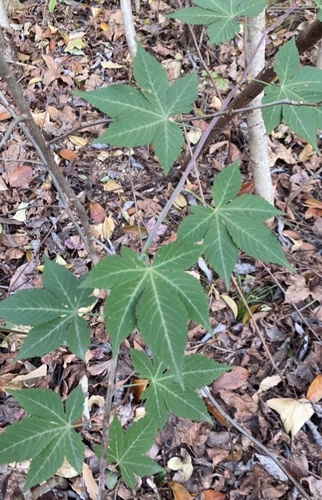
Prunus arabica
(Olivier) Meikle
iNaturalist· cc-by-nc
(c) marinat17, some rights reserved (CC BY-NC), uploaded by marinat17
iNaturalist· cc-by-nc
(c) Ibrahim Hirory, some rights reserved (CC BY-NC)
iNaturalist· cc-by-nc
(c) Ibrahim Hirory, some rights reserved (CC BY-NC)
Summary
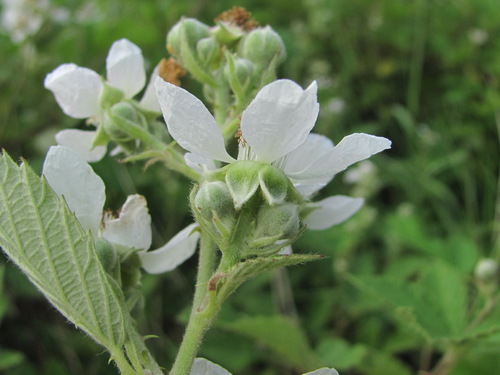
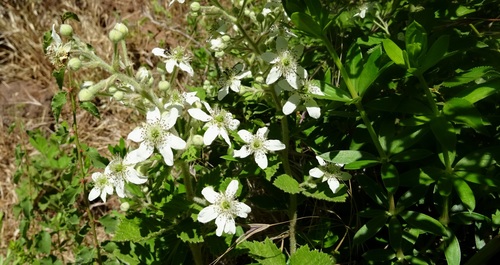
Source: WikipediaPrunus arabica is a species of wild almond found across the Middle East. It is a broomlike shrub typically 0.75 to 2 m tall, with brown bark. Its leaves have a 5-8 mm petiole and the leaf blades are 15 to 44 mm long and 3 to 10 mm wide. Its inflorescences have dark red hypanthia and sepals (green on the interior of the sepals), and white, pale pink or pink petals. The flowers are borne on a pedicel about 3 mm long, which lengthens to 6 mm when the fruit is fully developed. It prefers to grow in arid or semiarid areas at 500 to 2700 m above sea level. A full genetic and morphological analysis suggests that Prunus scoparia may be conspecific with it; certainly it is its closest relative. It is occasionally cultivated for erosion control, as its brushy growth form makes a good windbreak.
Description
A shrub. It grows 1-2 m tall. The bark is brown. The leaves are 2-4 cm long by 3-10 mm wide.
This description is brief — help expand it
Edible Uses
The fruit can be eaten raw or cooked and contains a single large seed. The seed is also edible raw or cooked, but should not be eaten if it tastes too bitter. The plant also produces a gum that is sold in local markets.
Traditional Uses
The nuts are soaked in salt water.
This uses section is brief — help expand it
Medicinal Uses
No specific medicinal uses have been recorded for this species, but all members of the genus contain amygdalin and prunasin, which break down in water to release hydrocyanic acid (prussic acid). In small amounts this exceedingly poisonous compound stimulates respiration, improves digestion and gives a sense of well-being.
Known Hazards
Seeds contain amygdalin and prunasin that produce hydrocyanic acid (cyanide). Do not consume bitter seeds.
Distribution
Temperate. It grows in arid places between 500-2,700 m above sea level.
Where It Grows
Iran, Iraq, Lebanon, Middle East, Oman, Palestine, Saudi Arabia, Syria, Turkey, Türkiye,
Propagation
Seed requires 2–3 months of cold stratification and is best sown in a cold frame as soon as it is ripe. Stored seed should be sown in a cold frame as early in the year as possible, with protection from mice. Germination can be slow, sometimes taking 18 months. Prick seedlings into individual pots when large enough to handle, overwinter in a greenhouse or cold frame, then plant out in late spring or early summer the following year. Half-ripe wood cuttings with a heel can be taken in July/August in a frame. Softwood cuttings from strongly growing plants can be taken in spring to early summer in a frame. Layering can be done in spring.
Other Uses
The leaves yield a green dye and the fruit a dark grey to green dye. A gum obtained from the plant — most likely from the trunk and branches — is sold in local markets.
Notes
There are about 200 Prunus species.
Synonyms
Also Known As
Kalla sheen
References (5)
- Demir, I. & Ayaz, N., 2022, Wild edible plants contributing to the traditional foods of Mardin (Turkey) Province. Indian Journal of Traditional Knowledge Vol 21(3), July 2022, pp 569-582 (As Amygdalus arabica)
- Ertug, F, Yenen Bitkiler. Resimli Türkiye Florası -I- Flora of Turkey - Ethnobotany supplement (As Amygdalus arabica)
- Galalaey, A. M. K., et al, 2021, Ethnobotanical study of some wild edible plants in Hujran Bason, Kurdistan Region of Iraq. ZANCO Journal of Pure and Applied Sciences. Salahaddin University-Erbil p 27
- Kew Bull. 19:229. 1965
- Plants for a Future database, The Field, Penpol, Lostwithiel, Cornwall, PL22 0NG, UK. http://www.scs.leeds.ac.uk/pfaf/