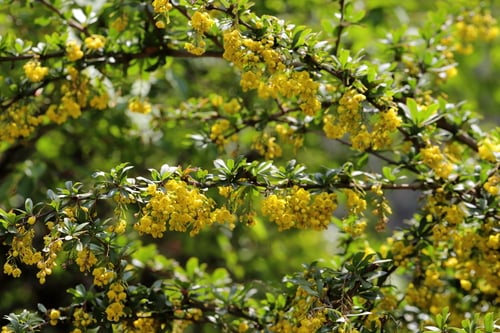
Mahonia duclouxiana
Gagnep.
iNaturalist· cc-by-nc
(c) MP Zhou, some rights reserved (CC BY-NC)
iNaturalist· cc-by-nc
(c) MP Zhou, some rights reserved (CC BY-NC)
iNaturalist· cc-by-nc
(c) bowterfly, some rights reserved (CC BY-NC)
Description
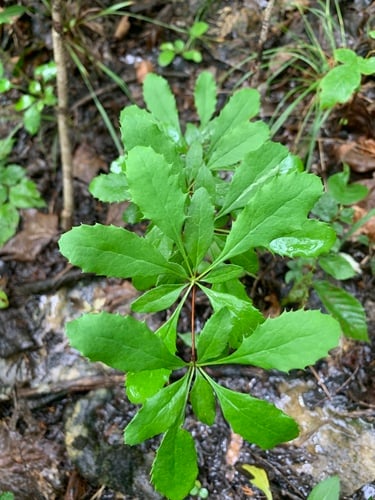
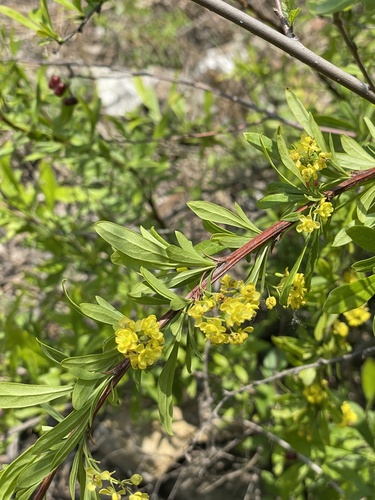
A shrub. It grows 2-4 m tall. The leaves are yellow green underneath. The leaves are 20-70 cm long by 10-22 cm wide. There are 3-9 pairs of leaflets. They have teeth along the edge. The flowers are in 4-15 groups of flowers at the top of the plant. The fruit are deep purple berries. They are 5-8 mm across.
Edible Uses
The fruit are eaten fresh, though they are only occasionally harvested for food.
Traditional Uses
The fruit are eaten fresh.
This uses section is brief — help expand it
Distribution
It is a tropical plant. It grows in light shade on dry slopes between 1,800-2,700 m above sea level in southern China. It grows in Sichuan and Yunnan in China.
Where It Grows
Asia, China, India, Indochina, Myanmar, SE Asia, Thailand, Tibet,
Cultivation
The plants are used as a hedge.
Production
In Yunnan the fruit are harvested in August and September.
Other Information
Fruit are only occasionally eaten.
Synonyms
Also Known As
Jisa
References (2)
- Plants for a Future database, The Field, Penpol, Lostwithiel, Cornwall, PL22 0NG, UK. http://www.scs.leeds.ac.uk/pfaf/ (As Mahonia flavida)
- Ju, Y., et al, 2013, Eating from the wild: diversity of wild edible plants used by Tibetans in Shangri-la region, Yunnan, China, Journal of Ethnobiology and Ethno medicine 9:28