Berberis concinna
Hook.f.
iNaturalist· cc-by-nc
(c) Elizabeth Byers, some rights reserved (CC BY-NC), uploaded by Elizabeth Byers
iNaturalist· cc-by-nc
(c) kaylasills27, some rights reserved (CC BY-NC)
iNaturalist· cc-by-nc
(c) kaylasills27, some rights reserved (CC BY-NC)
Summary
A deciduous shrub reaching 1 m tall with hermaphroditic flowers blooming May to June. Self-fertile and insect-pollinated. Hardy to UK zone 5. Tolerates light sandy, medium loamy, and heavy clay soils, including nutritionally poor conditions. Suitable for mildly acid to basic soil pH. Grows in semi-shade or full sun and prefers dry or moist soil.
Description
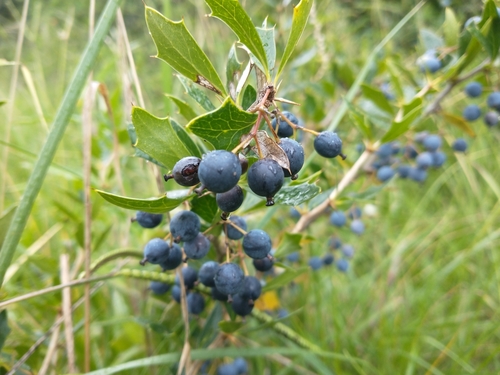
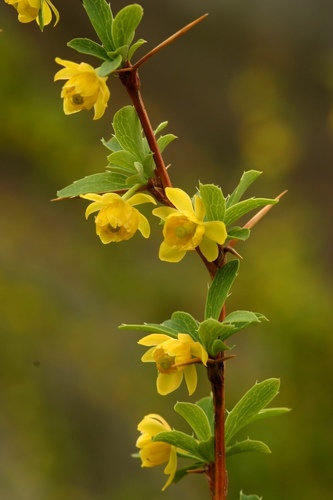
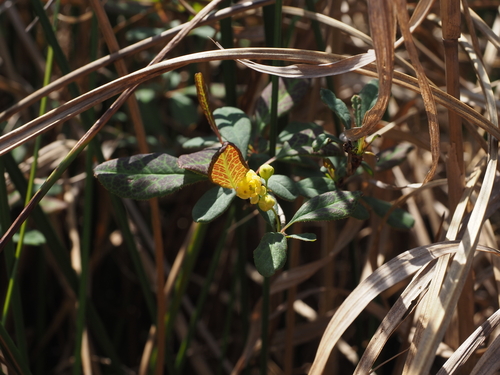
A shrub. It grows 1 m tall. It loses some of its leaves during the year. The stems are stout and the branches are shiny. They are dark red. They have spines. The leaves are shiny and dark green above and greyish white underneath. They are broadly oval and 1-3 cm long by 0.5-1.4 cm wide. Flowers occur singly. They have small red bracts and sepals in 3 rings. The fruit are dark red berries 13-16 mm long by 6-8 mm wide.
Edible Uses
Edible Parts: Fruit Edible Uses: Fruits - raw. The fleshy oblong berries are up to 18mm long.
Traditional Uses
The fruit are eaten raw.
This uses section is brief — help expand it
Medicinal Uses
Antibacterial Cancer Dysentery Ophthalmic Stomachic Berberine, universally present in rhizomes of Berberis species, has marked antibacterial effects. Since it is not appreciably absorbed by the body, it is used orally in the treatment of various enteric infections, especially bacterial dysentery. It should not be used with Glycyrrhiza species (Liquorice) because this nullifies the effects of the berberine. Berberine has also shown antitumour activity.
Distribution
It is a temperate plant.
Where It Grows
Asia, China, Nepal,
Cultivation
Prefers a warm moist loamy soil and light shade but it is by no means fastidious, succeeding in thin, dry and shallow soils. Grows well in heavy clay soils. Hybridizes freely with other members of this genus. A very ornamental plant. Plants can be pruned back quite severely and resprout well from the base.
Propagation
Seed - best sown as soon as it is ripe in a cold frame, when it should germinate in late winter or early spring. Seed from over-ripe fruit will take longer to germinate, whilst stored seed may require cold stratification and should be sown in a cold frame as early in the year as possible. The seedlings are subject to damping off, so should be kept well ventilated. When the seedlings are large enough to handle, prick them out into individual pots and grow them on in a cold frame. If growth is sufficient, it can be possible to plant them out into their permanent positions in the autumn, but generally it is best to leave them in the cold frame for the winter and plant them out in late spring or early summer of the following year. Cuttings of half-ripe wood, July/August in a frame. Cuttings of mature wood of the current season's growth, preferably with a heel, October/November in a frame.
Other Uses
Dye A yellow dye is obtained from the roots and stems. Special Uses
Also Known As
Lekh chutro, Lekh tishya
References (3)
- Flora of China.
- Ferns, Plants for the Future
- Khakurel, D., et al, 2021, Foods from the wild: Local knowledge, use pattern and distribution in Western Nepal. PLOS ONE.