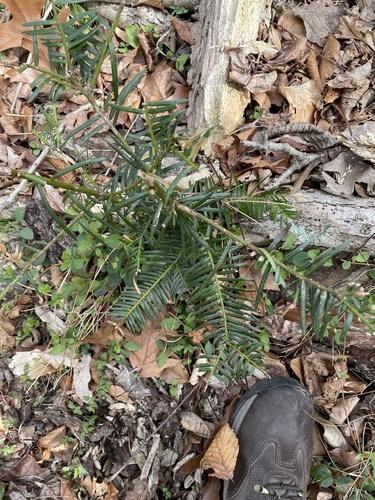
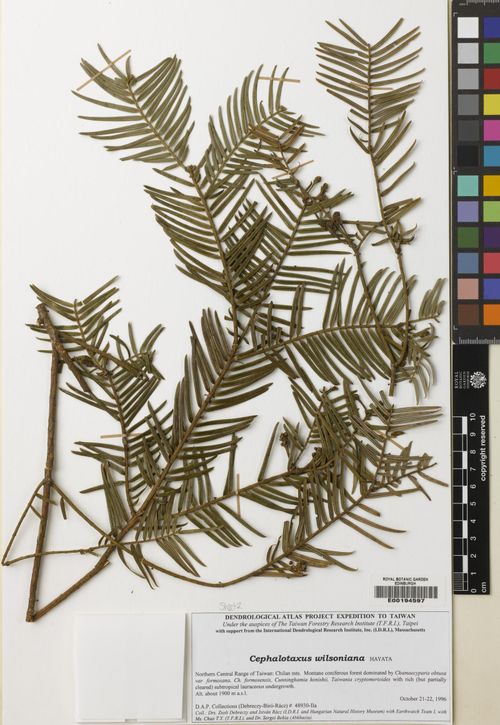
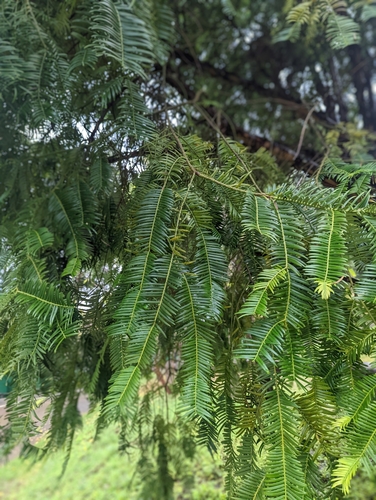
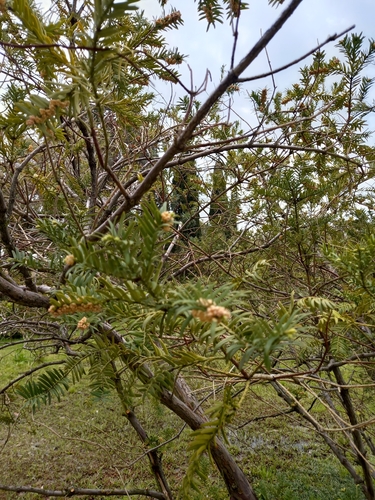
Cephalotaxus fortunei var. alpina
H. L. Li
gbif· cc-by-nc-sa
MBG
gbif· cc-by-nc-sa
MBG
gbif· cc0
Royal Botanic Garden Edinburgh
Summary
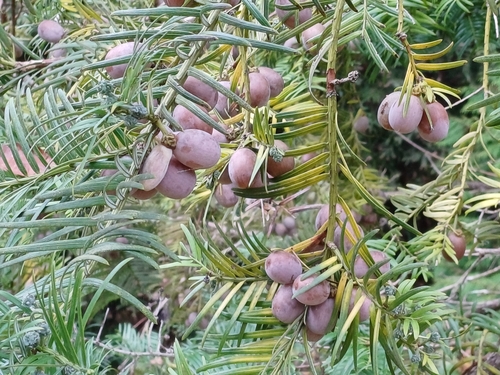
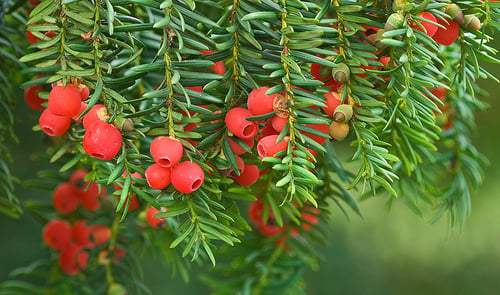
Source: WikipediaCephalotaxus fortunei, commonly called the Chinese plum-yew, Fortune's yew plum, simply plum yew, Chinese cowtail pine or in Chinese as san jian shan (Chinese: 三尖杉; pinyin: sǎnjiānshān), is a coniferous shrub or small tree in the family Taxaceae. It is native to northern Burma and China, but is sometimes grown in western gardens where it has been in cultivation since 1848.
Description
A tree in the Taxaceae family with narrow leaves 2-3 mm wide and non-stalked pollen cones, native to Yunnan, China where it grows by streams at elevations between 1,800–3,700 m.
Edible Uses
The seeds are eaten fresh or cooked in stir fries.
Traditional Uses
The seeds are eaten fresh or cooked in stir fries.
This uses section is brief — help expand it
Distribution
It grows in Yunnan in China. It grows by streams between 1,800-3,700 m above sea level.
Where It Grows
Asia, China, Tibet,
Production
In Yunnan fruit are harvested in September and October.
Notes
Also put in the family Cephalotaxaceae.
Synonyms
Also Known As
Miyou
References (1)
- Ju, Y., et al, 2013, Eating from the wild: diversity of wild edible plants used by Tibetans in Shangri-la region, Yunnan, China, Journal of Ethnobiology and Ethno medicine 9:28