Berchemia sinica
C. K. Schneid.
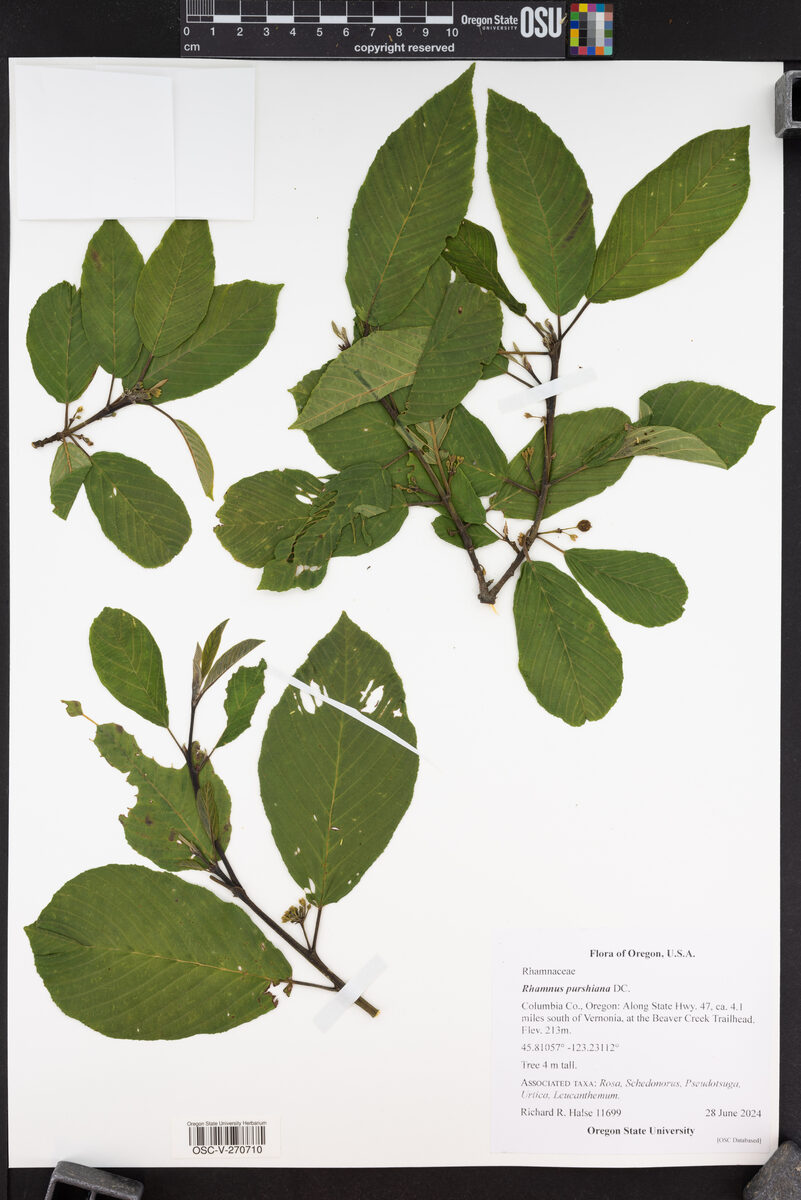
iNaturalist· cc-by-nc-sa
(c) mazus_jan, some rights reserved (CC BY-NC-SA), uploaded by mazus_jan
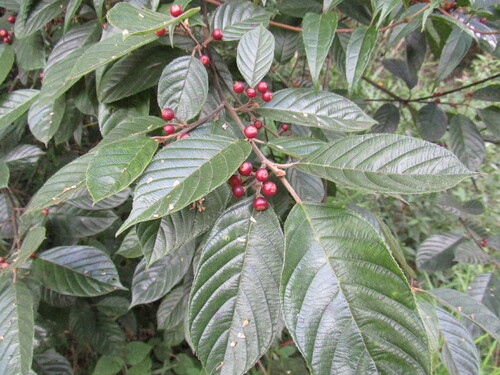
iNaturalist· cc-by-nc
(c) miaochunyu, some rights reserved (CC BY-NC), uploaded by miaochunyu
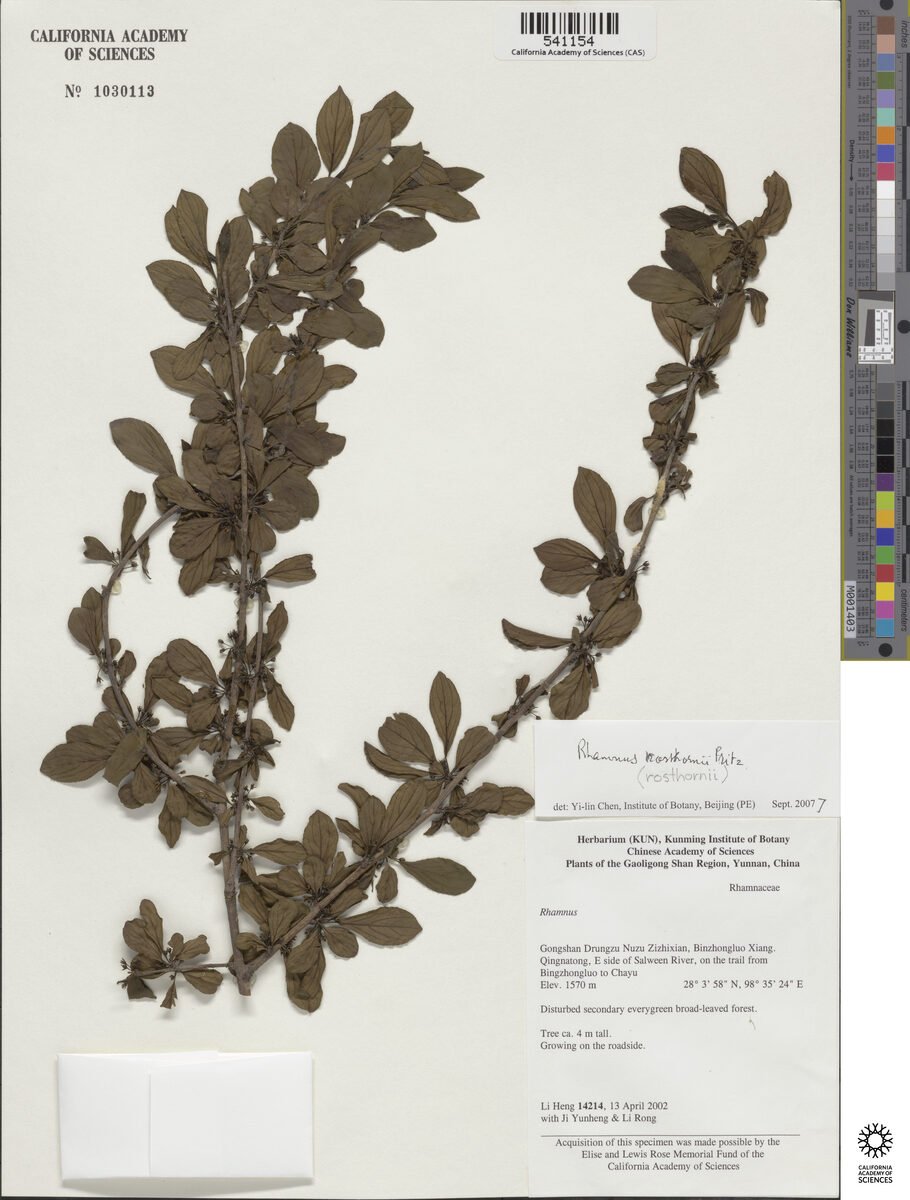
gbif· cc0
President and Fellows of Harvard College
Description
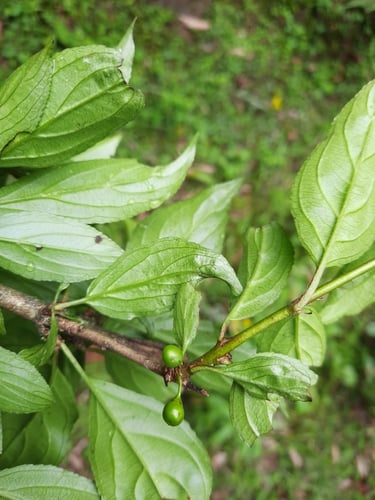
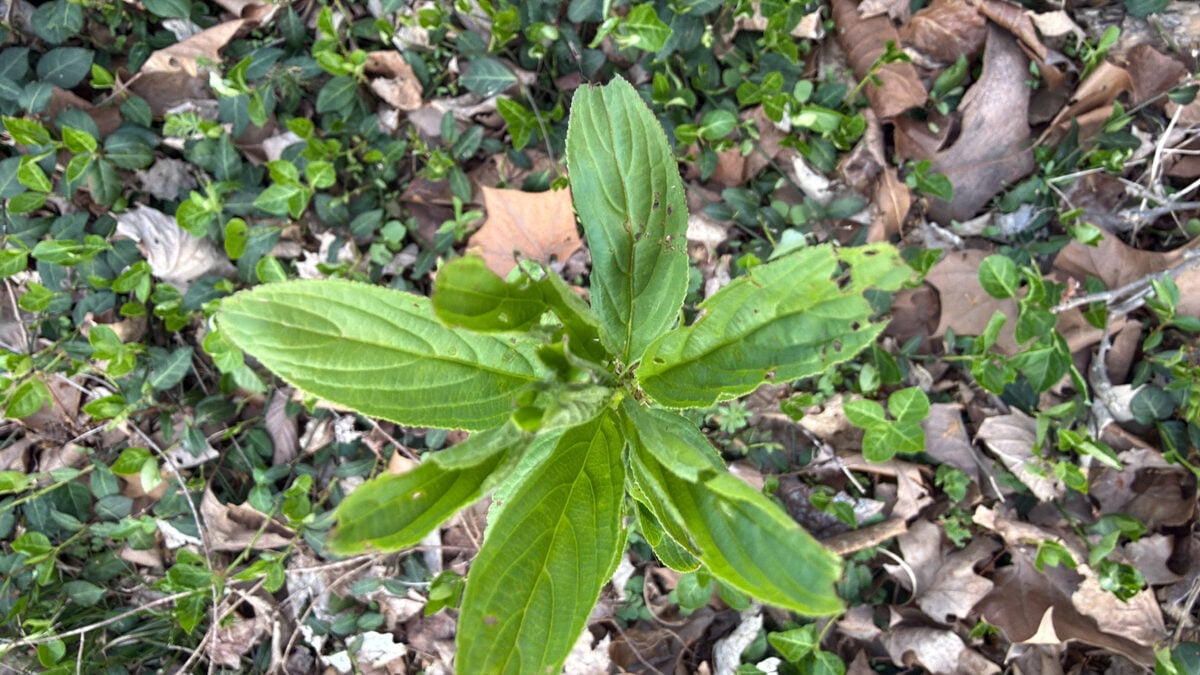
A shrub. It can be climbing. It grows 5 m tall. The leaves are alternate and greyish white underneath. They are 3-6 cm long by 2-4 cm wide. The flowers usually occur singly and are yellowish green. The fruit is purple to red and turns black when mature. It is cylinder shaped and 5-9 mm long by 3 mm wide.
Edible Uses
The fruits are eaten fresh, and young leaves are used for making tea drinks.
Traditional Uses
The fruit are eaten fresh. The young leaves are used for making tea drinks.
This uses section is brief — help expand it
Medicinal Uses
Young leaves are used for making tea drinks.
Distribution
It is a temperate plant. It grows in mixed forests in valleys between 1,000-2,500 m above sea level. It grows in Sichuan and Yunnan in China.
Where It Grows
Asia, China, Himalayas, Tibet,
Production
In Yunnan the fruit are harvested August to September and the leaves from April to June.
Also Known As
Saiu, Sau, Sawi, Ti ge er, Yaguteng, Zhila
References (4)
- Ju, Y., et al, 2013, Eating from the wild: diversity of wild edible plants used by Tibetans in Shangri-la region, Yunnan, China, Journal of Ethnobiology and Ethno medicine 9:28
- Kang, Y., et al, 2012, Wild food plants and wild edible fungi in two valleys on the Qinling Mountains (Shaanxi, central China) Journal of Ethnobiology and Ethnomedicine; 9:26
- Kang, Y., et al, 2014, Wild food plants used by the Tibetans of Gongba Valley (Zouqu country, Gansu, China) Journal of Ethnobiology and Ethnomedicine 10:20
- Zhang, L., et al, 2016, Ethnobotanical study of traditional edible plants used by the Naxi people during droughts. Journal of Ethnobiology and Ethnomedicine. 12:39