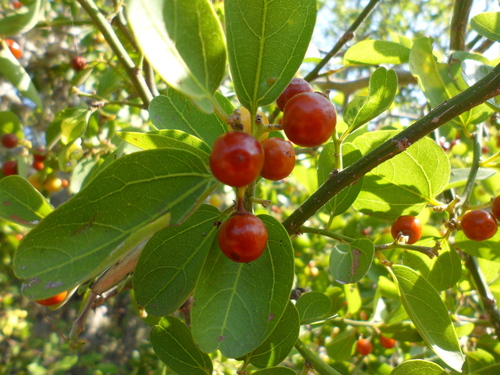
Rhamnus triquetra
(Wall.) Brandis
wikimedia· cc0
Wikimedia Commons - Patrick Alexander from Las Cruces, NM
Summary
Rhamnus triquetra is an evergreen shrub reaching 7 m tall with hermaphrodite flowers pollinated by insects. It grows in light sandy, medium loamy, and heavy clay soils across a range of pH levels from mildly acidic to mildly alkaline. The plant tolerates semi-shaded conditions and prefers consistently moist soil.
Description
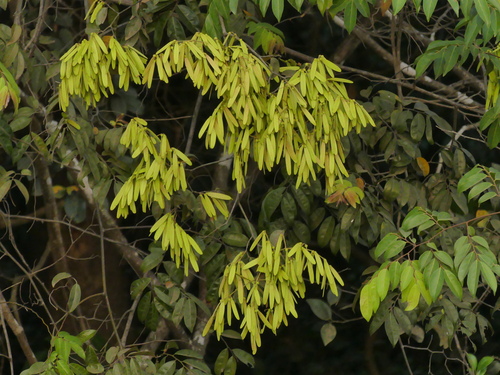
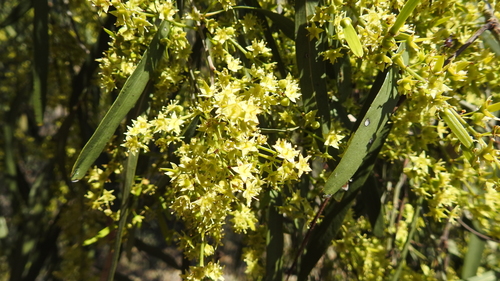
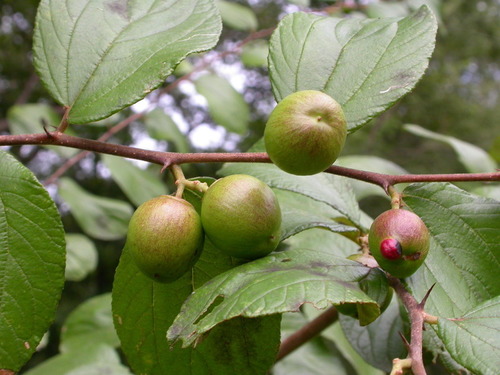
A shrub or small tree. It grows 7 m tall. It keeps its leaves throughout the year. The leaves are alternate and 7-15 cm long by 2-8 cm wide. They are oblong or narrowly oval with rounded teeth along the edge. They have a velvety covering underneath. The flowers are in a group in the axils of leaves. The flowers are 2-3 mm across. The fruit is 4-5 mm long and has 3 lobes. There are 3 seeds.
Edible Uses
None known
Traditional Uses
The ripe fruit are eaten.
This uses section is brief — help expand it
Medicinal Uses
The bark is astringent and deobstruent. Juice extracted from the bark is used to treat diarrhoea and dysentery. Caution is advised in the use of this plant due to its toxicity.
Known Hazards
The bark is toxic. Although no other mention of toxicity has been found for this species, it is possible that other parts of the plant could also be mildly poisonous.
Distribution
It is a subtropical plant. In the Indian Himalayas it grows between 1,500-2,200 m above sea level.
Where It Grows
Asia, Himalayas, India, Nepal, Pakistan,
Cultivation
We have very little information on this species and do not know if it will be hardy in Britain. The following notes are based on the general needs of the genus. Succeeds in any reasonably good soil. Often bears the aecidospore stage of 'crown rust' of oats. The species in this genus are notably resistant to honey fungus.
Propagation
Seed is best sown in autumn in a cold frame. Stored seed requires 1–2 months of cold stratification and should be sown as early in the year as possible in a cold frame or outdoor seedbed. Germination is usually good, reaching at least 80% by late spring. Prick seedlings into individual pots when large enough to handle and grow on in a greenhouse or cold frame through their first winter. Plant out in late spring or early summer the following year. Cuttings of half-ripe wood can be taken in July/August in a frame, mature wood cuttings from the current year's growth in autumn in a frame, and layering in early spring.
Other Uses
The wood is hard, close-grained, and handsome, used for turnery, agricultural implements, and small carvings. The plant is also a good source of charcoal.
Production
In Pakistan it flowers in July to August.
Notes
The bark is poisonous.
Synonyms
Also Known As
Fagoraa, Gardhan, Gaunt, Girgithan, Gount, Gudlei, Katheraa, Kumain
References (1)
- Radha, B., et al, 2013, Wild Edible Plant Resources of the Lohba Range of Kedarnath Forest Division (KFD), Garhwal Himalaya, India. Int. Res J. Biological Sci. Vol. 2 (11), 65-73