Ceropegia papillata
N. E. Br.
iNaturalist· cc-by-nc
(c) Nicholas Wightman, some rights reserved (CC BY-NC), uploaded by Nicholas Wightman
iNaturalist· cc-by-nc
(c) Nicholas Wightman, some rights reserved (CC BY-NC)
Description
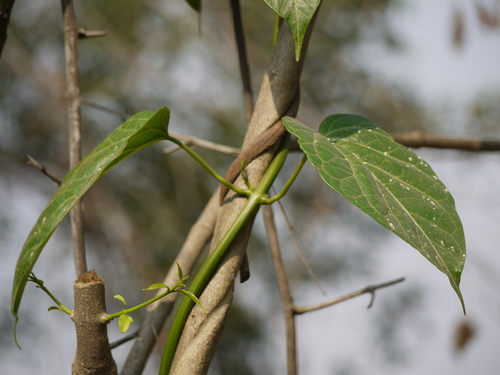
A climbing plant. It has thin twining stems. It has a fattened rootstock. It grows 1 m high. The leaves are opposite and simple. The leaves are heart shaped and taper to the tip. They are hairy on both sides. The leaf blade is 3-6 cm long by 1-2.5 cm wide. The flowers are white and in groups. There can be 10 flowers in a group. The lower third of the flower tube i swollen.
Edible Uses
Roots - raw or cooked. They are eaten by boys. The tubers contain around 95% water, and are eaten against thirst in dry regions. Leaves - raw. Eaten by boys.
Traditional Uses
The leaves and roots are eaten raw.
This uses section is brief — help expand it
Known Hazards
This is a rare species and should not be harvested from the wild; it should be cultivated instead.
Distribution
A tropical plant. It grows in mountainous areas between 1,350-2,000 m altitude in East Africa. It is often in rocky places. It needs well-drained soils and sun.
Where It Grows
Africa, Central Africa, Congo, East Africa, Malawi, Tanzania, Zambia,
Cultivation
Plants can be grown from seeds or cuttings.
Propagation
Seed - Cuttings
Other Information
They are eaten by boys.
Notes
There are about 160-200 Ceropegia species. Also put in the family Asclepiadaceae. It is a rare species and should not be harvested from the wild, but instead cultivated.
Synonyms
Also Known As
Chang'ombr, Fwafwalingo, Liundumula
References (6)
- Grubben, G. J. H. and Denton, O. A. (eds), 2004, Plant Resources of Tropical Africa 2. Vegetables. PROTA, Wageningen, Netherlands. p 178
- Jansen, P.C.M., 2004. Ceropegia papillata N.E.Br. [Internet] Record from Protabase. Grubben, G.J.H. & Denton, O.A. (Editors). PROTA (Plant Resources of Tropical Africa), Wageningen, Netherlands. < http://database.prota.org/search.htm>. Accessed 14 October 2009.
- Jardin, C., 1970, List of Foods Used In Africa, FAO Nutrition Information Document Series No 2.p 65
- Martin, F.W. & Ruberte, R.M., 1979, Edible Leaves of the Tropics. Antillian College Press, Mayaguez, Puerto Rico. p 177
- Peters, C. R., O'Brien, E. M., and Drummond, R.B., 1992, Edible Wild plants of Sub-saharan Africa. Kew. p 62
Show all 6 references Hide references
- Williamson, J., 2005, Useful Plants of Malawi. 3rd. Edition. Mdadzi Book Trust. p 62