Rauvolfia serpentina
(L.) Benth. ex Kurz
Serpent wood, Snake wood
iNaturalist· cc-by-nc
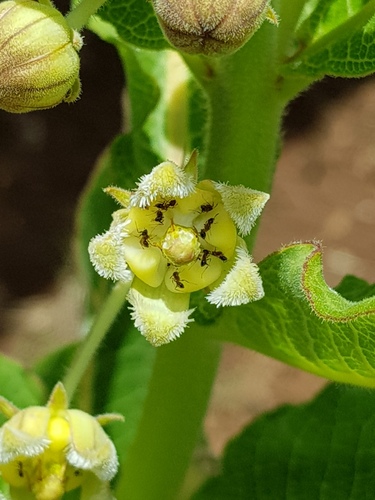
(c) Shiwalee Samant, some rights reserved (CC BY-NC), uploaded by Shiwalee Samant
iNaturalist· cc-by
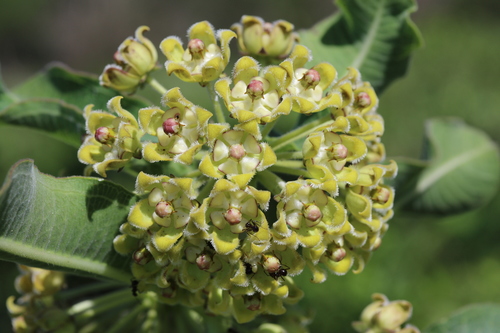
(c) Siddarth Machado, some rights reserved (CC BY)
Summary
Source: WikipediaRauvolfia serpentina, the Indian snakeroot, devil pepper, serpentine wood, Sarpagandha (as known locally) or Chandrika, is a species of flower in the milkweed family Apocynaceae. It is native to the Indian subcontinent and East Asia (from India to Indonesia). Rauvolfia is a perennial undershrub widely distributed in India in the sub-Himalayan regions up to 1,000 metres (3,300 ft). Sarpagandha is used in folk medicine in India for centuries to treat a wide variety of maladies, including snake and insect bites, febrile conditions, malaria, abdominal pain, and dysentery. It was also used as a uterine stimulant, febrifuge, and cure for insanity. The plant was mentioned in Hindu manuscripts as long ago as 1000 BCE.
Description
A small shrub. It grows 1 m tall. The stems are usually unbranched and slender and straw coloured. The leaves are grouped near the tip of the stem. They are in rings of 3-5. The leaves are narrowly oval and 7-17 cm long by 2-9 cm wide. The base is wedge shaped and they taper to the tip. The flowers are tube shaped and white. The fruit are oval and 8 mm across.
Edible Uses
None known
Traditional Uses
The root is used as medicine.
This uses section is brief — help expand it
Medicinal Uses
The roots are hypnotic, hypotensive, and sedative, used particularly in treating hypertension — said to lower blood pressure without dangerous side effects and considered a specific treatment for insanity. They are also used in decoction to treat painful bowel conditions and to increase uterine contractions during labour. The juice of the leaves is used to remove opacities of the cornea and to treat wounds and itches. The bark, leaves, and roots are used against snake and scorpion poisoning. The roots yield up to 1.3% medically active alkaloids, along with oleoresin and the sterol serposterol. The alkaloid rauwolfine has been shown to decrease heart rate. Several alkaloids — including serpentine, neoajmaline, and isoajmaline — produce a fall in blood pressure. Serpentine also increases the tone of the small intestine and decreases peristaltic contractions. The alkaloid-free oleoresin extract from the roots produces sedative and hypnotic effects. Reserpine, a highly active alkaloid, shows a marked hypnotic effect and lowers blood pressure, and is used in allopathic medicine.
Known Hazards
R. serpentina may cause adverse effects by interacting with various prescription drugs or via interference with mechanisms of mental depression or peptic ulcer. The reserpine in R. serpentina is associated with diverse adverse effects, including vomiting, diarrhea, dizziness, headache, anxiety, or hypersensitivity reactions.
Distribution
It is a tropical and subtropical plant. It grows in mountain forests between 800-1,500 m above sea level in southern China. In Nepal it grows between 100-1,200 m above sea level. In Yunnan.
Where It Grows
Asia, Bhutan, China, Himalayas, India, Indochina, Indonesia, Laos, Malaysia, Myanmar, Nepal, Northeastern India, SE Asia, Sri Lanka, Thailand,
Cultivation
Plants can be grown from seeds and cuttings. Seed can be kept for 6 months. It is best to soak seeds in water for 24 hours before sowing. They are best put in a nursery and transplanted after 3-4 months. Shoot cuttings 15-22 cm long with 3 nodes are suitable. A spacing of 40-50 cm is suitable. Removing shoots increase the yield of roots.
Propagation
Seed.
Other Uses
None known
Other Information
It is cultivated.
Notes
It is an at risk species.
Also Known As
Bonma-yaza, Chaandmaruwaa, Kayu ular, Pagal buti, Pulai pundak, Sarpagandha, Serpagandha
References (6)
- Kumar, S. A., Manus, D. & Mallika, M., 2018, Impact of non-timber forest products on Forest and in Livelihood Economy of the People of Adjoining Areas of Jalpaiguri Forest Division, West Bengal, India. Int. J. of Life Sciences, 2018; 6 (2):365-385
- Rajendra, K.C., 2014, Prominent Non-Wood Forest Products of Te- rai and Siwalik Regions in Nepal. Food and Agriculture Organization, Kathmandu, Nepal. p 105
- Sarma, H., et al, 2010, Updated Estimates of Wild Edible and Threatened Plants of Assam: A Meta-analysis. International Journal of Botany 6(4): 414-423
- Sukarya, D. G., (Ed.) 2013, 3,500 Plant Species of the Botanic Gardens of Indonesia. LIPI p 697
- World Checklist of Useful Plant Species 2020. Royal Botanic Gardens, Kew
Show all 6 references Hide references
- Zeven, A. C. & de West, J. M. J., 1982, Dictionary of cultivated plants and their regions of diversity. Wageningen. p 71