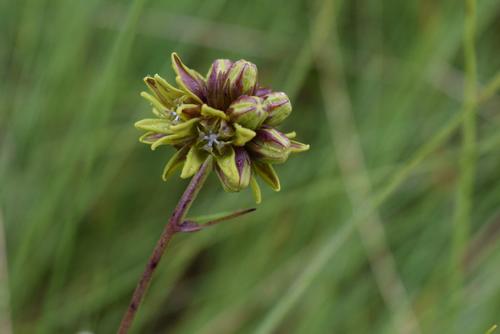
Ceropegia multiflora subsp. tentaculata
Bak., (N. E. Br.) Huber
gbif· cc-by-nc
Bart Wursten
gbif· cc-by-nc
Bart Wursten
gbif· cc-by-nc
Bart Wursten
Description
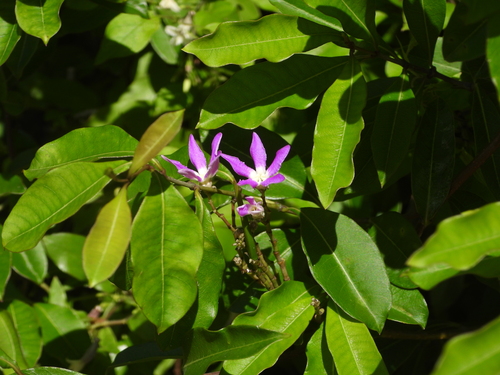
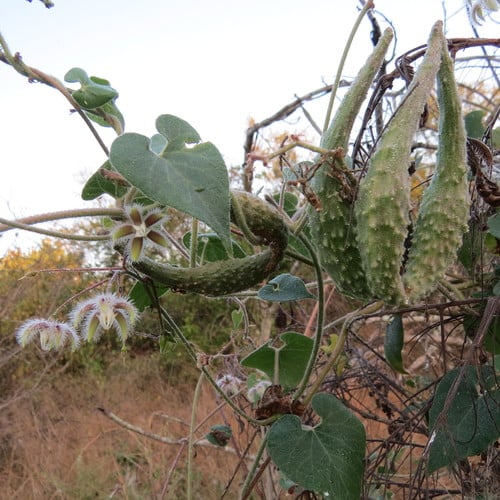
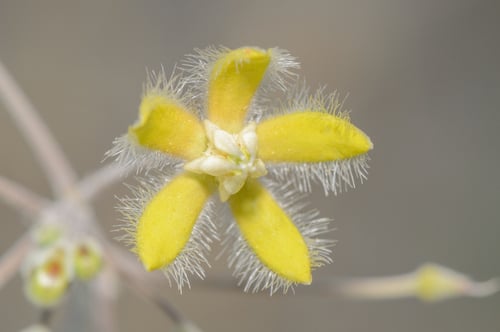
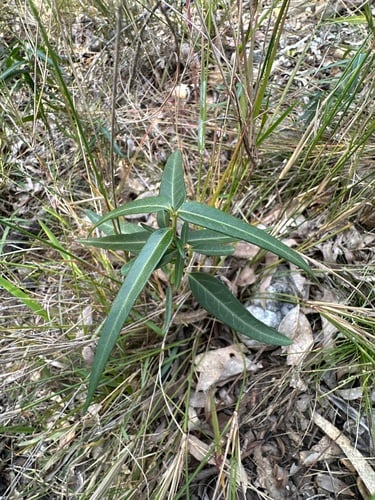
A herb. It is a climber and has a corm. It is a succulent plant and keeps growing from year to year. It grows 2 m high. The lower leaves are slender and 7 cm long. The upper ones are more broad and shorter. They are fleshy. The flowers are densely clustered in the axils of the leaves. They are pale yellow. They are 1 cm long. The corolla lobes. The fruit are 16 cm long in 2 follicles. The tubers are 8-12 cm across and are 15-20 cm below the ground.
Edible Uses
The tubers are eaten raw, mashed with other greens, or baked in ashes. The leaves are occasionally eaten raw.
Traditional Uses
The tuber is eaten raw. It is mashed with other greens. The tubers are also baked in the ashes. The leaves are also occasionally eaten raw.
This uses section is brief — help expand it
Distribution
It is a tropical plant. It grows in the Kalahari. In southern Africa it grows between 800-1,600 m altitude. It can grow in arid places.
Where It Grows
Africa, Angola, Botswana, Central Africa, East Africa, Guinea, Guinée, Namibia, South Africa, Southern Africa, West Africa, Zambia, Zimbabwe,
Production
Tubers are available all year round.
Other Information
The tubers are highly valued.
Notes
There are about 160-200 Ceropegia species. Probably now in Apocynaceae.
Synonyms
References (15)
- Arnold, T.H., Wells, M.J. & Wehmeyer, A.S., Khoisan food plants: taxa with potential for future economic exploitation, in Wickens, G.E., Goodin, J.R., and Field, D.V.,(Eds.) 1985, Plants for Arid Lands. Unwin Hyman, London, p 73
- Fox, F. W. & Young, M. E. N., 1982, Food from the Veld. Delta Books. p 108
- Grivetti, L. E., 1980, Agricultural development: present and potential role of edible wild plants. Part 2: Sub-Saharan Africa, Report to the Department of State Agency for International Development. p 73 (As Ceropegia tentaculata)
- Heinz & Maguire, 1974,
- Jardin, C., 1970, List of Foods Used In Africa, FAO Nutrition Information Document Series No 2.p 12 (As Ceropegia tentaculata)
Show all 15 references Hide references
- Lee, 1979,
- Leger, S., 1997, A Description of Today's Use of Plants in West Bushmanland (Namibia). German Development Service. PO Box 220035, 14061 Berlin, Germany. http://www.sigridleger.de/book/
- Newman, 1970, (As Ceropegia tentaculata)
- Peters, C. R., O'Brien, E. M., and Drummond, R.B., 1992, Edible Wild plants of Sub-saharan Africa. Kew. p 62
- Plowes, N. J. & Taylor, F. W., 1997, The Processing of Indigenous Fruits and other Wildfoods of Southern Africa. in Smartt, L. & Haq. (Eds) Domestication, Production and Utilization of New Crops. ICUC p 188
- Royal Botanic Gardens, Kew (1999). Survey of Economic Plants for Arid and Semi-Arid Lands (SEPASAL) database. Published on the Internet; http://www.rbgkew.org.uk/ceb/sepasal/internet [Accessed 28th March 2011]
- Ruiters-Welcome, A. K., 2019, Food plants of southern Africa. Ph.D. thesis. Univ. of Johannesburg p 23
- Scudder, 1962, 1971, (As Ceropegia tentaculata)
- Story, 1958,
- van Wyk, Be., & Gericke, N., 2007, People's plants. A Guide to Useful Plants of Southern Africa. Briza. p 82