Orthanthera albida
Schinz
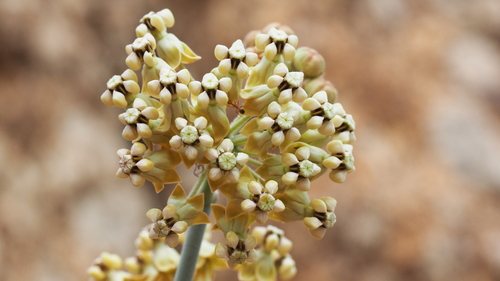
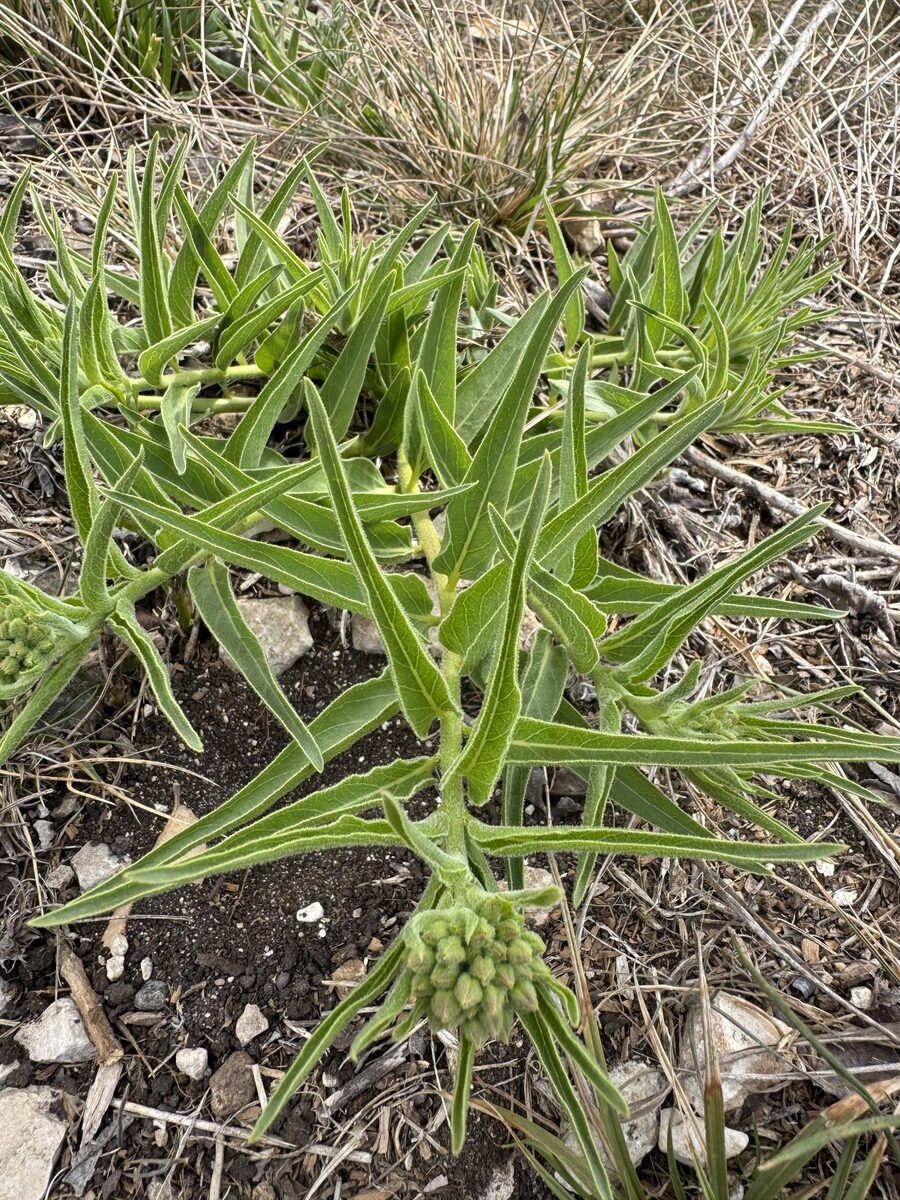
iNaturalist· cc-by-nc
(c) Alex Dreyer, some rights reserved (CC BY-NC), uploaded by Alex Dreyer
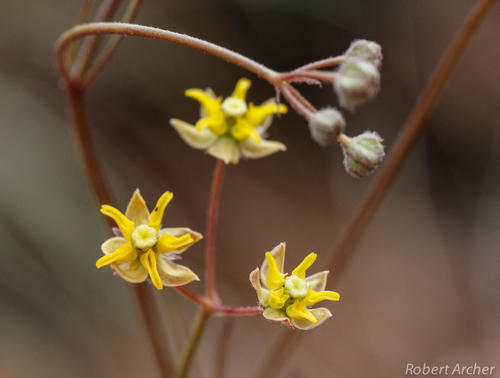
iNaturalist· cc-by-nc
(c) pietermier, some rights reserved (CC BY-NC)
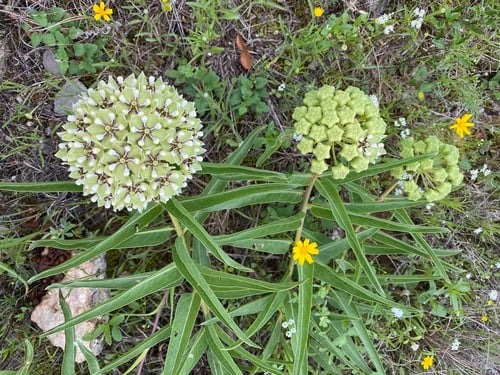
iNaturalist· cc-by-nc
(c) Alex Dreyer, some rights reserved (CC BY-NC), uploaded by Alex Dreyer
Description
A herb or small shrub. It is succulent and has an unpleasant smell. It can grow to 1 m high. The stems are pale grey and without hairs. The leaves are narrow. They can be 50 mm long by 1-2 mm wide. They are often reduced to scales or absent at flowering time. The flower tubes are grey on the outside and green inside. They are in groups halfway up the slender stalks.
Edible Uses
The flowers are eaten raw. Young fruit are eaten whole, while mature fruit are eaten with the flesh separated from the skin and seeds. Roots are used for flavouring.
Traditional Uses
The flowers are eaten raw. The fruit are eaten raw. With young fruit, the entire fruit are eaten but with mature fruit the flesh is eaten and the skin and seeds removed.
Medicinal Uses
A decoction of the crushed seeds is taken to treat kidney diseases and backache. A decoction of the stems or roots. or chewing the stems or roots. relieves stomach-ache.
Distribution
It is a tropical plant. It grows in sandy and rocky soils. In Namibia it grows between 300-800 m above sea level. It grows in areas with a rainfall under 400 mm per year. It can grow in arid places.
Where It Grows
Africa, Namibia, Southern Africa,
Cultivation
A plant of very dry areas in the tropics, growing in areas with a mean annual rainfall up to 400mm.
Other Uses
The stems are chewed in order to clean the teeth and maintain oral hygiene.
Other Information
The fruit are eaten especially by children.
Also Known As
Arib, Dai, Larib, Orunavi
References (6)
- Royal Botanic Gardens, Kew (1999). Survey of Economic Plants for Arid and Semi-Arid Lands (SEPASAL) database. Published on the Internet; http://www.rbgkew.org.uk/ceb/sepasal/internet [Accessed 4th April 2011]
- Ruiters-Welcome, A. K., 2019, Food plants of southern Africa. Ph.D. thesis. Univ. of Johannesburg p 26
- Sullivan, S., 1998, People plants and practice in drylands: Socio-political and ecological dimensions of resource-use by Damara farmers in north-west Namibia. Ph.D. Univ. College London.
- Van Damme, P et al, 1922, Plant Uses by the Topnaar of the Kuiseb Valley Namib Desert. Afrika Focus Vol. 8(3-4):223-252
- Welcome, A. K. & Van Wyk, B.-E., 2019, An inventory and analysis of the food plants of southern Africa. South African Journal of Botany 122 (2019) 136–179
Show all 6 references Hide references
- World Checklist of Useful Plant Species 2020. Royal Botanic Gardens, Kew