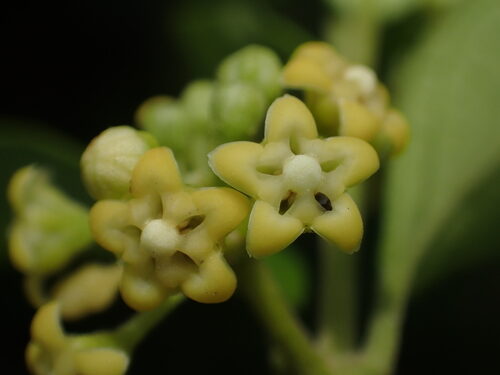
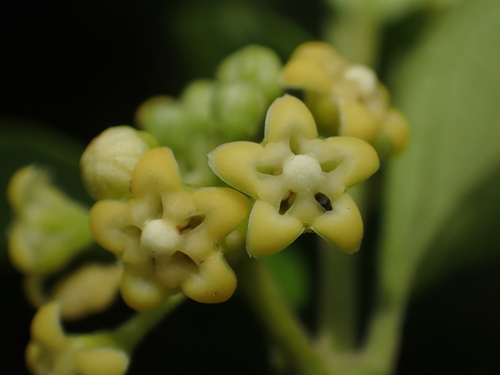
Orthanthera viminea
Wight
Mahur, Khip, Chapkia
wikimedia· cc-by-sa
Wikimedia Commons - A. J. T. Johnsingh, WWF-India and NCF
Description
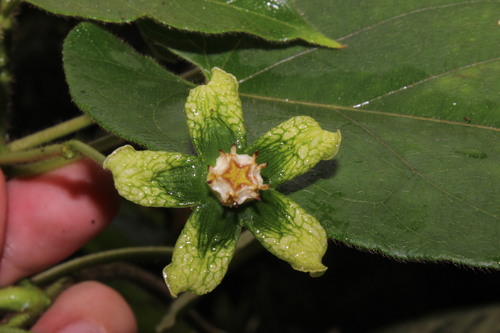
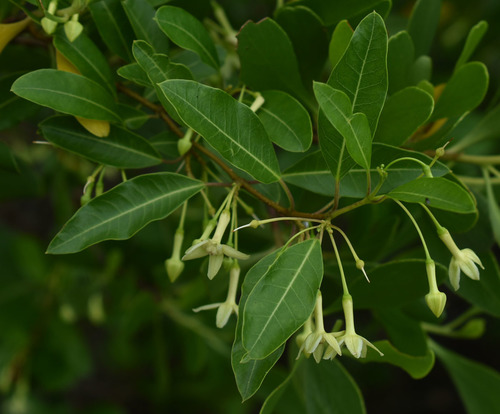
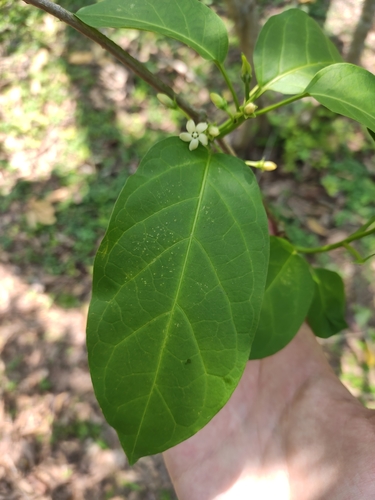
A shrub. It grows up to 2.5 m high. The young shoots are softly hairy. It often does not have leaves. The leaves are 5 cm long by 4 mm wide. The flowers are in woolly stalked clusters. The fruit are follicles 8-12 cm long by 5 mm wide. They are straight and smooth. The seeds are 3-4 mm long and dark brown and flat.
Edible Uses
The flower buds are eaten as a vegetable.
Traditional Uses
The flower buds are eaten as a vegetable.
This uses section is brief — help expand it
Distribution
It is a subtropical plant. It grows in Kashmir in India and Pakistan. It grows up to 1,000 m above sea level.
Where It Grows
Asia, Himalayas, India, Nepal, Pakistan,
Other Uses
The fibres of the stem are used for rope making. The long, slender, leafless, wand-like stems, 3 metres or more in length, furnish a bast fibre of remarkable tenacity, suitable for rope making. The unsteeped stalks are made into ropes for Persian wheels, a purpose for which they are admirably adapted, as they do not rot readily from moisture. It is often used in conjunction with the fibre obtained from Leptadenia spartium. The white wood is soft with faint, light, concentric bands. A conspicuous leafless plant of the 'rau' beds of the Siwaliks and sub-Himalayan tract; useful in helping to check the torrents.
References (3)
- Ambasta, S.P. (Ed.), 2000, The Useful Plants of India. CSIR India. p 413
- Flora of Pakistan.
- Hedrick, U.P., 1919, (Ed.), Sturtevant's edible plants of the world. p 453