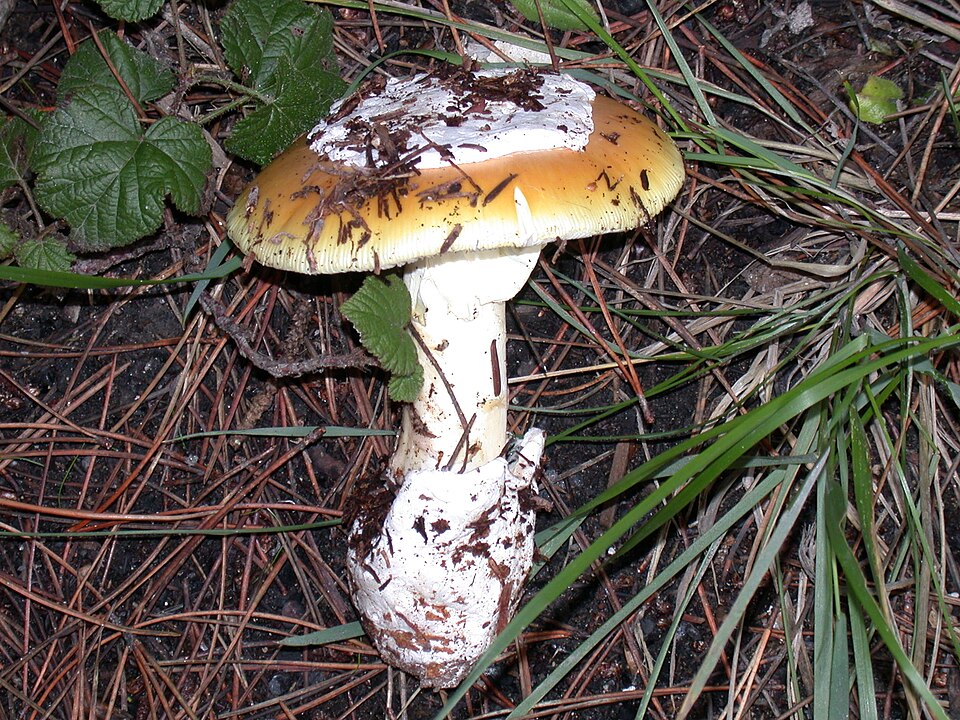
Amanita chepangiana
Tulloss & Bhandary
iNaturalist· cc-by-nc
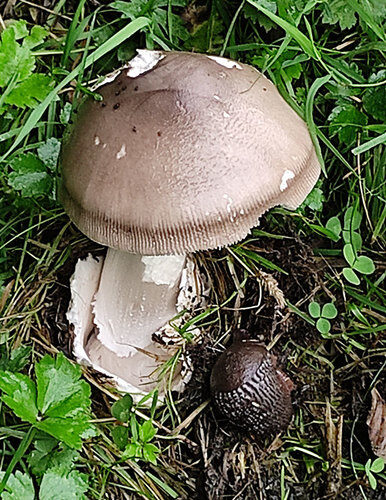
(c) emanon, some rights reserved (CC BY-NC), uploaded by emanon
iNaturalist· cc-by-nc
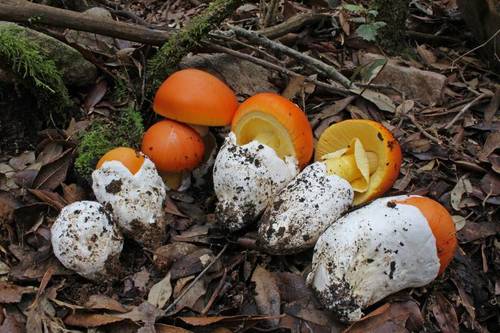
(c) emanon, some rights reserved (CC BY-NC)
Summary
Source: WikipediaAmanita chepangiana, commonly known as the Chepang slender Caesar, is a species of agaric fungus in the family Amanitaceae native to China and southern Asia. In parts of Yunnan, China, the species is traditionally consumed. However, toxicity analysis found out at least one type of amatoxin and phallotoxin each within the species. Since it is difficult to distinguish from other lethal species, human consumption is generally not recommended.
Description
A temperate mushroom in the family Amanitaceae with a cap 10–26 cm wide, found in Himalayan forests between 600–2,200 m elevation.
This description is brief — help expand it
Edible Uses
The mushroom is eaten in curries and is sold in markets.
Traditional Uses
The mushroom is eaten in curries.
This uses section is brief — help expand it
Distribution
It is a temperate plant. It grows between 600-2,200 m above sea level in the Himalayas. It grows in forests.
Where It Grows
Asia, Himalayas, India, Nepal,
Other Information
It is sold in markets.
Also Known As
Jamane
References (5)
- Adhikari, M. K., 2014, Addition and correction to the knowledge on edibility of wild mushrooms in Nepal: a discussion. Bul. Dept. Pl. Res. N. 36, Nepal p 1
- Boa, E. R., 2004, Wild edible fungi and their importance to people. FAO Non Wood Forest Products Booklet 17
- Christensen, M., et al, 2008, Collection and Use of Wild Edible Fungi in Nepal. Economic Botany, 62(1), 2008, pp. 12–23
- Semwal, K. C., et al, 2014, Edible mushrooms of the Northwestern Himalaya, India: a study of indigenous knowledge, distribution and diversity. Mycosphere 5(3): 440–461
- Rijal, A., 2011, Surviving on Knowledge: Ethnobotany of Chepang community from mid-hills of Nepal. Ethnobotany Research & Applications 9:181-215