Acronychia imperforata
F. Muell
Beach acronychia, Coastal acronychia
iNaturalist· cc-by-sa
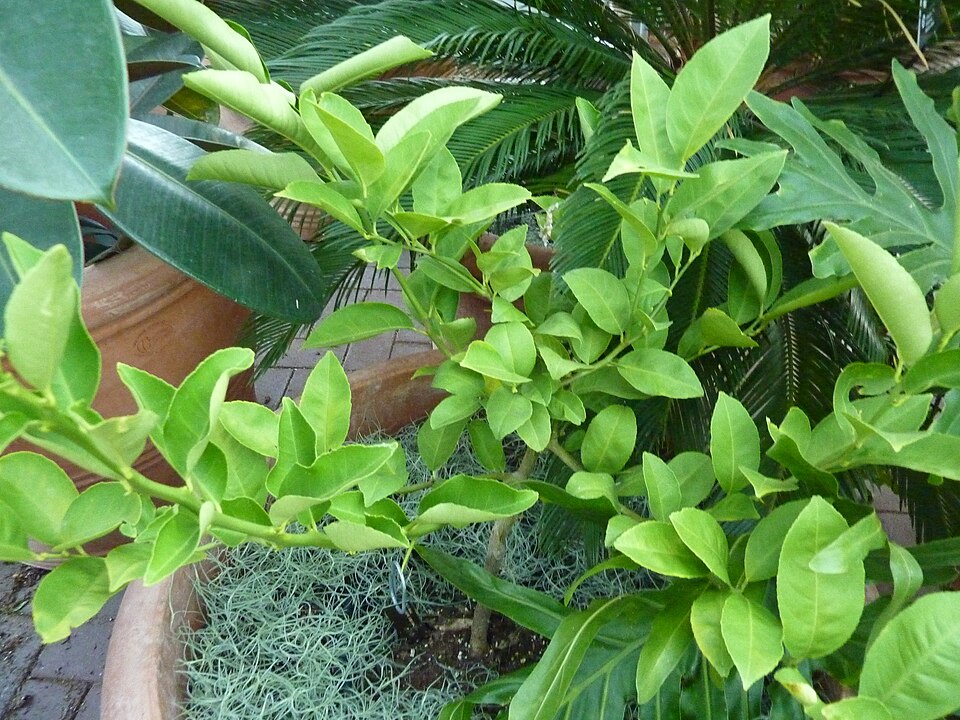
(c) Greg Tasney, some rights reserved (CC BY-SA), uploaded by Greg Tasney
iNaturalist· cc-by-sa
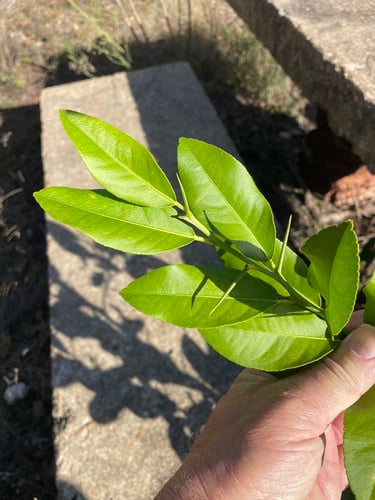
(c) Greg Tasney, some rights reserved (CC BY-SA), uploaded by Greg Tasney
iNaturalist· cc-by-nc
(c) Pam Day, some rights reserved (CC BY-NC), uploaded by Pam Day
Summary
Source: WikipediaAcronychia imperforata, commonly known as Logan apple, Fraser Island apple, or green tree, is a species of rainforest shrub or small tree that is endemic to north-eastern Australia. It has simple, elliptical to egg-shaped leaves, small groups of yellowish or creamy white flowers and fleshy spherical to oval fruit.
Description
A shrub or small tree. It grows 5 m tall. There are prickles along the stem. The leaves are twice divided and there are 8-18 pairs of pinnae. There are up to 50 pairs of pinnules on each pinnae. The flowers are yellow. They are in large clusters at the ends of branches. The pods are flattened.
Edible Uses
The acid, refreshing fruit is eaten fresh or used to make jam.
Traditional Uses
The fruit are eaten. They are acid and refreshing. The fruit is used for jam.
This uses section is brief — help expand it
Distribution
They are found naturally in Northeast Australia in New South Wales and Queensland. It suits subtropical conditions. It grows well on the coast and can withstand salt spray and wind. It needs a well drained soil. It can grow in full sun or part shade. It is sensitive to cold.
Where It Grows
Australia*,
Cultivation
Plants can be grown from seed or cuttings.
Production
Fruit mature October to December. (September to December) (August to December)
Notes
There are 42-50 Acronychia species.
Synonyms
Also Known As
Coast aspen, Fraser Island apple, Lemon aspen, Logan apple
References (12)
- Cherikoff V. & Isaacs, J., The Bush Food Handbook. How to gather, grow, process and cook Australian Wild Foods. Ti Tree Press, Australia p 198
- Cooper W & Cooper W T, 1994, Fruits of the Rain Forest. RD Press p 18
- Cooper, W. and Cooper, W., 2004, Fruits of the Australian Tropical Rainforest. Nokomis Editions, Victoria, Australia. p 457
- Cribb, A.B. & J.W., 1976, Wild Food in Australia, Fontana. p 21 (As Acronychia scortechinii)
- Cronin, L., 1989, The Concise Australian Flora. Reed. p 155
Show all 12 references Hide references
- Elliot, W.R., & Jones, D.L., 1982, Encyclopedia of Australian Plants suitable for cultivation. Vol 2. Lothian. p 142
- Haslam, S., 2004, Noosa's Native Plants. Noosa Integrated Catchment Assn. Inc. p 16
- Jones D, L, 1986, Ornamental Rainforest Plants in Australia, Reed Books, p 103, 340 (As Acronychia scortechinii)
- Low, T., 1991, Wild Food Plants of Australia. Australian Nature FieldGuide, Angus & Robertson. p 72
- Melzer, R. & Plumb, J., 2011, Plants of Capricornia. Belgamba, Rockhampton. p 304
- Nicholson, N & H., 1996, Australian Rainforest Plants 3, Terania Rainforest Publishing. NSW. p 6
- Williams, J.B., Harden, G.J., and McDonald, W.J.F., 1984, Trees and shrubs in rainforests of New South Wales and Southern Queensland. Univ. of New England, Armidale. p 106