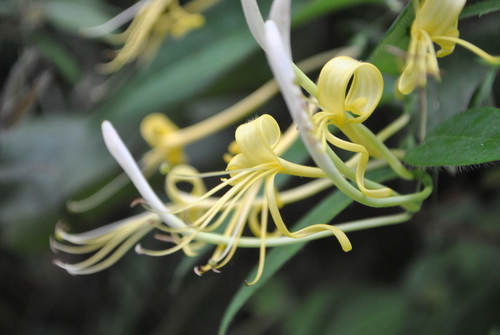
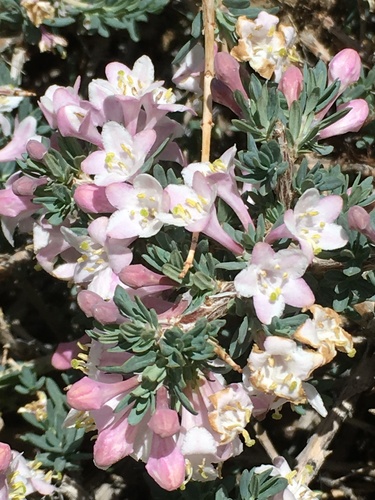
Centranthus macrosiphon
Boiss.
Pretty Betsy, Long-spurred valerian
iNaturalist· cc-by-nc
(c) Dean Beaver, some rights reserved (CC BY-NC), uploaded by Dean Beaver
iNaturalist· cc-by-nc
(c) Valentino Traversa, some rights reserved (CC BY-NC)
iNaturalist· cc-by-nc
(c) Valentino Traversa, some rights reserved (CC BY-NC)
Summary
Source: WikipediaAn annual growing to 0.6 m tall. Flowers in July with seeds ripening in August. Hermaphroditic, pollinated by bees and lepidopterans (moths and butterflies). Notable for attracting wildlife. Tolerates light sandy, medium loamy, and heavy clay soils with good drainage, growing in mildly acid to basic pH. Requires full sun, adapting to dry or moist soil and tolerating drought.
Description
An annual plant. It is a short herb. It grows 10-40 cm high. The stems can be simple or branched. The leaves are pale green and oval. The upper leaves are small, do not have stalks and often have lobes. The flowers are rose coloured. They are 7-9 mm long and have spurs. They are pink with a red mouth.
Edible Uses
The leaves are eaten raw and added to salads, where they have a similar taste to corn salad (Valerianella locusta) but with a slight bitterness that gives them a more distinct and agreeable flavour. The flowers are also eaten raw.
Traditional Uses
The leaves are used in salads. The flowers are eaten raw.
This uses section is brief — help expand it
Medicinal Uses
No medicinal uses are known for this plant.
Distribution
It grows in rocky and waste places. It is a temperate plant.
Where It Grows
Australia, Europe, France, Mediterranean, Spain,
Cultivation
Grows well in ordinary garden soil and on dry walls. A very ornamental plant, it attracts moths and butterflies.
Propagation
Sow seed in March in situ. An autumn sowing in situ may also be successful.
Other Uses
No other uses are known for this plant.
Notes
There are about 10-12 Centranthus species. Also put in the family family Valerianaceae.
References (8)
- Blamey, M and Grey-Wilson, C., 2005, Wild flowers of the Mediterranean. A & C Black London. p 425
- Dashorst, G.R.M., and Jessop, J.P., 1998, Plants of the Adelaide Plains & Hills. Botanic Gardens of Adelaide and State Herbarium. p 132
- Diagn. pl. orient. ser. 1, 3:57. 1843
- Facciola, S., 1998, Cornucopia 2: a Source Book of Edible Plants. Kampong Publications, p 243
- Hedrick, U.P., 1919, (Ed.), Sturtevant's edible plants of the world. p 179
Show all 8 references Hide references
- Hussey, B.M.J., Keighery, G.J., Cousens, R.D., Dodd, J., Lloyd, S.G., 1997, Western Weeds. A guide to the weeds of Western Australia. Plant Protection Society of Western Australia. p 228
- Paczkowska, G . & Chapman, A.R., 2000, The Western Australian Flora. A Descriptive Catalogue. Western Australian Herbarium. p 566
- Plants for a Future database, The Field, Penpol, Lostwithiel, Cornwall, PL22 0NG, UK. http://www.pfaf.org