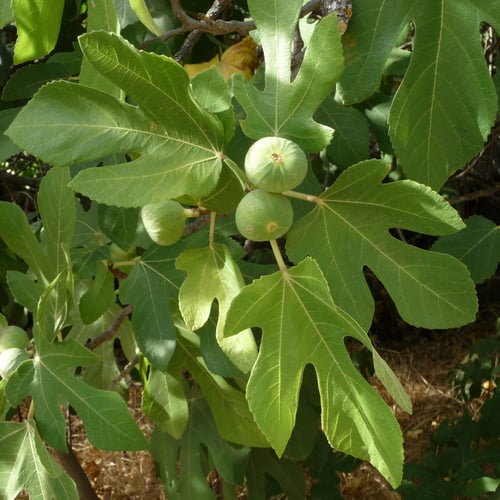
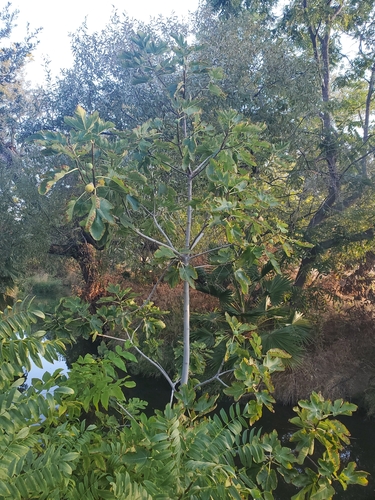
Streblus taxoides
(Roth) Kurz
Fig-lime
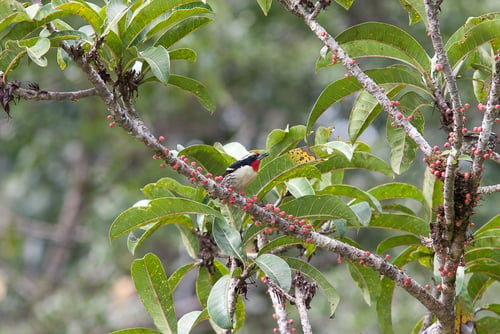
iNaturalist· cc-by
(c) Ian Cowie, some rights reserved (CC BY)
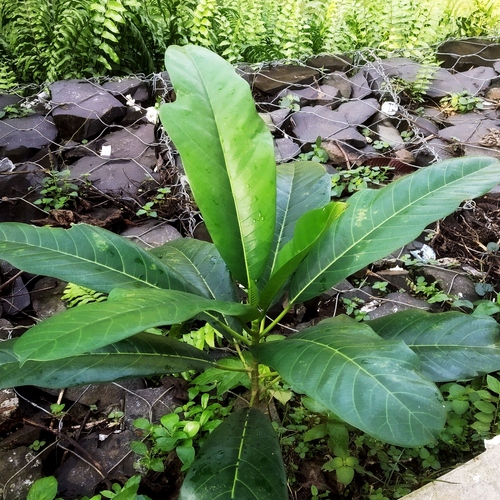
iNaturalist· cc-by-nc
(c) Piti Somrak, some rights reserved (CC BY-NC)
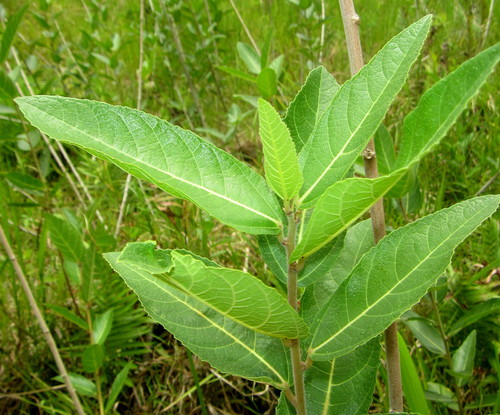
iNaturalist· cc-by-nc
(c) Ratchada Yuenyongkeereemat, some rights reserved (CC BY-NC)
Description
A shrub. It grows 2-3 m tall. The small branches are curved. There are hairs on one side. There are spines 1-2 cm long. The leaves are oblong or sword shaped and 2-8 cm long by 1-4 cm wide. The flowering shoots are in the axils of leaves. Male flowers are in groups and female flowers occur singly. The fruit is round and 4-5 mm across.
Edible Uses
The round fruit are eaten as a vegetable.
Traditional Uses
The fruit are eaten as a vegetable.
This uses section is brief — help expand it
Medicinal Uses
The smoke of the burned bark is inhaled to cure a cold. The boiled bark is applied as a poultice to ulcers. The powdered wood or bark is rubbed on the jaw to soothe toothache. The root, wood, stem or leaf is used as a diuretic and antipyretic.
Distribution
It is a tropical plant. It grows in scrub and on sunny mountain slopes at low elevations. It grows up to 300 m above sea level.
Where It Grows
Asia, China, India, Indochina, Indonesia, Malaysia, Myanmar, Philippines, SE Asia, Sri Lanka, Thailand, Vietnam,
Cultivation
Plants can be grown from seeds.
Production
In southern China plants flower in April to May. In India fruit are available March to June.
Nutrition
| Part | Moisture | kJ | kcal | Protein | Vit A | Vit C | Iron | Zinc |
|---|---|---|---|---|---|---|---|---|
| Fruit | 84.6 | — | — | 0.7 | — | 19.3 | — | — |
Synonyms
Also Known As
Jhumpuri, Merlimau, Phutkuli
References (6)
- Ambasta, S.P. (Ed.), 2000, The Useful Plants of India. CSIR India. p 451 (As Phyllochlamys taxoides)
- Burkill, I.H., 1966, A Dictionary of the Economic Products of the Malay Peninsula. Ministry of Agriculture and Cooperatives, Kuala Lumpur, Malaysia. Vol 2 (I-Z) p 1749 (As Phyllochlamys taxoides)
- Flora of China @ efloras.org Volume 5
- Mahapatra, A. K., et al, 2012, Nutrient Analysis of some selected wild edible fruits of deciduous forests of India. Advance Journal of Food Science and Technology 4(1):15-21
- Misra S. & Misra M., 2016, Ethnobotanical and Nutritional Evaluation of Some Edible Fruit Plants of Southern Odisha, India. International Journal of Advances in Agricultural Science and Technology, Vol.3 Issue.1, March- 2016, pg. 1-30
Show all 6 references Hide references
- Sukarya, D. G., (Ed.) 2013, 3,500 Plant Species of the Botanic Gardens of Indonesia. LIPI p 719