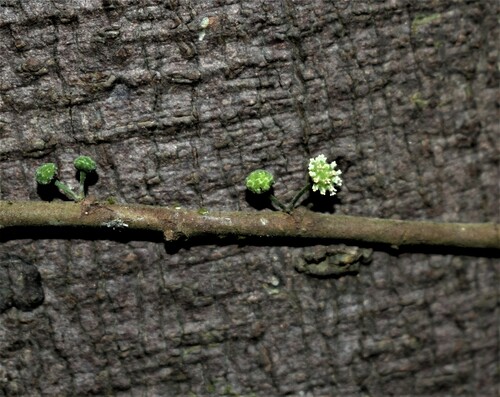
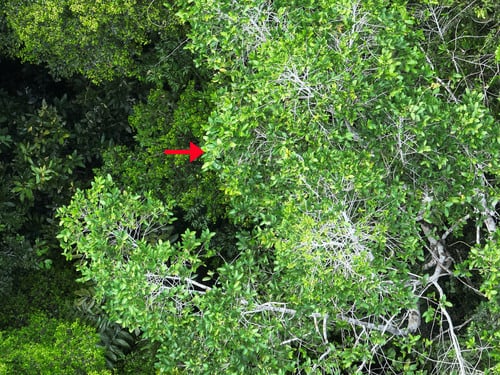
Ficus sur
Forssk.
Cape fig, Brown cluster fig, Broom cluster fig
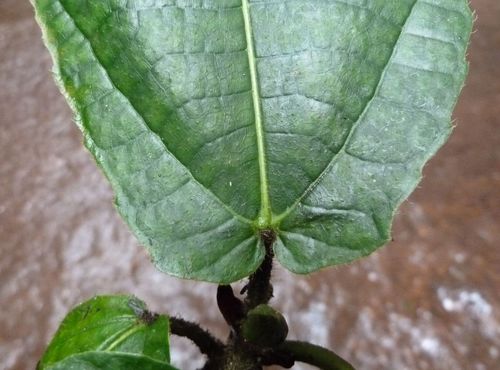
iNaturalist· cc-by-sa
(c) Nicola van Berkel, some rights reserved (CC BY-SA), uploaded by Nicola van Berkel
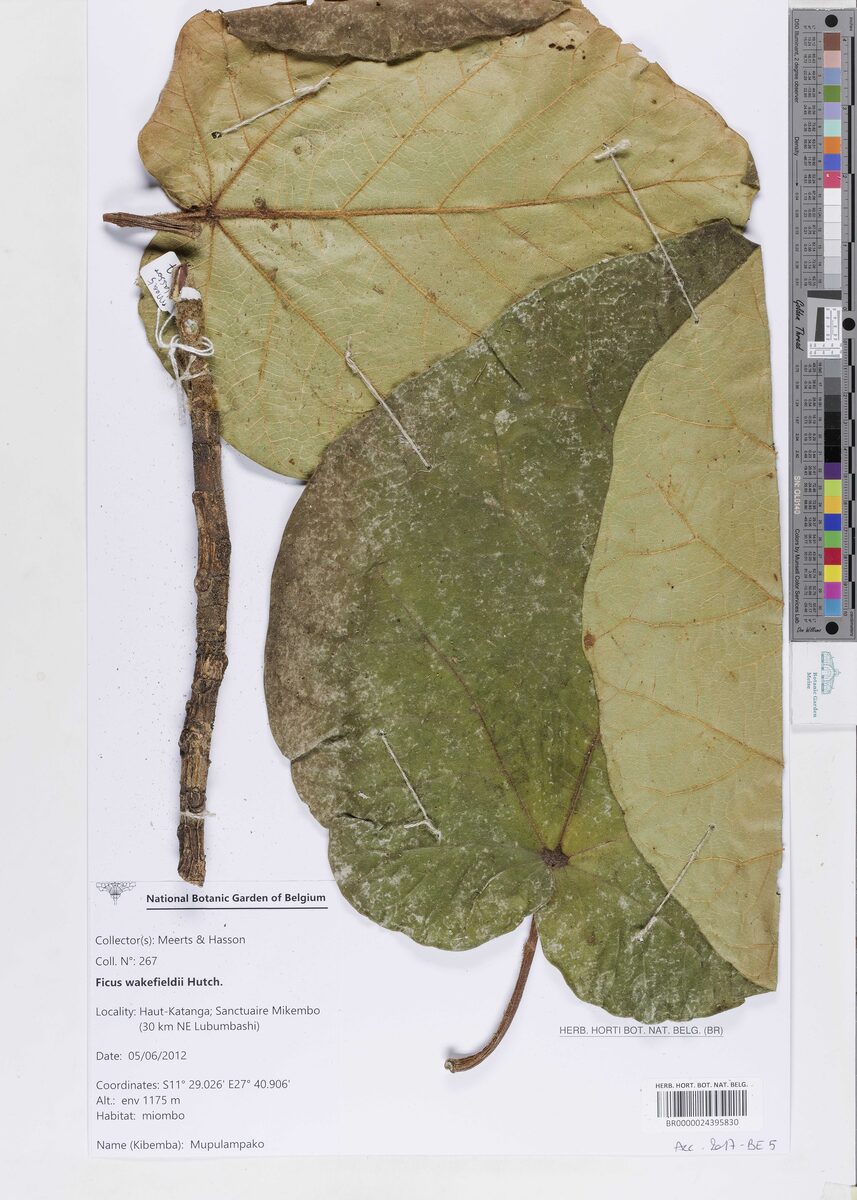
iNaturalist· cc-by-sa
(c) Tony Rebelo, some rights reserved (CC BY-SA), uploaded by Tony Rebelo
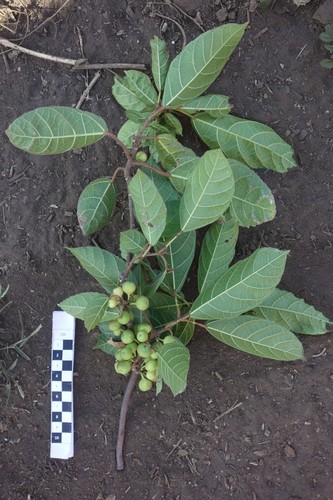
iNaturalist· cc-by-nc
(c) Richard McKibbin, some rights reserved (CC BY-NC), uploaded by Richard McKibbin
Summary
Source: WikipediaFicus sur, with the common names Cape fig and broom cluster fig, is a widespread Afrotropical species of cauliflorous fig.
Description
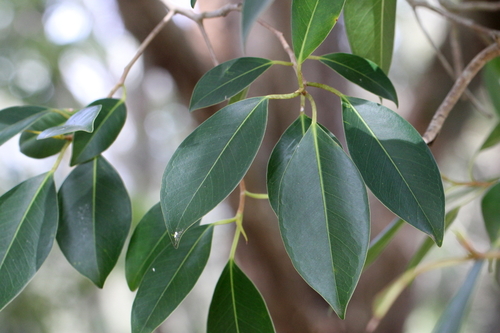
A fig. This tree varies in form. It can be a small tree up to 6 m tall in dry places or a large spreading tree up to 12-24 m tall in forest. It normally loses its leaves for a short period. The bark is smooth and brownish grey. It has a thick trunk and shallow spreading roots. The leaves are alternate and leathery. They are oval with a pointed tip. The leaves are 10 cm long by 3 cm wide. They can be 23 cm long by 13 cm wide. They are red when young becoming green when mature. They are smooth and sometimes slightly hairy underneath. The leaf stalks are long and with a furrow on the upper surface. Twigs and leaves have milky juice. There are only a few small male flower near the opening of the fig and many female flowers. The fig is pollinated by a small wasp. The figs are roughly round and about 2-4 cm across. They have a prominent opening at the end. They are reddish-yellow when ripe. They hang from the trunk and old main branches. The pulp is sweet. Many figs form one long bunch.
Edible Uses
The figs are edible and utilized in fresh or dried form by native people in many regions. They are also suited to preparation of fig preserve, if other suitable fruit are added. The heavily clustered figs suggest fecundity, and some trees in East Africa have been venerated as sacred shrines in animist practices. The wood is light and soft, and is not much used commercially.
Traditional Uses
The ripe figs are edible but often infected with insects. They can be eaten raw. The seeds are removed. The fruit are eaten in porridge. They can be used for jam or preserves. They can be dried. The young leaves are cooked and eaten. The roots above the ground are eaten when young. The bark is chewed with cola nuts to reduce thirst.
Medicinal Uses
All parts may exude a latex, which has some traditional medicinal plant uses. The latex has been shown to contain ursene and oleanane triterpenoids, of which the latter may be effective in cancer treatment, while a methanolic extract from the roots is potentially effective against chloroquine-resistant malaria.
Known Hazards
Although used medicinally, the plant contains toxic substances - both root and bark decoctions are recorded to have caused death. The latex and decoctions of the twig and leaf are recorded as being used for arrow poison, and the plant has been used for criminal poisoning. The wood is recorded as causing dermatitis in workers handling it.
Distribution
A tropical plant. It occurs from sea level to 1600 m altitude. It can be up to 2,100 m. It occurs in areas where the rainfall is 700-1200 mm. It grows in the Sahel. It grows in wet soils. It usually grows near streams. It cannot tolerate cold. It can be grown in sun but is best in shade. It can grow in arid places. It grows in Miombo woodland in Africa. It suits hardiness zones 10-12.
Where It Grows
Africa, Angola, Benin, Botswana, Burkina Faso, Burundi, Cameroon, Cape Verde, Central Africa, Central African Republic, CAR, Congo DR, Côte d'Ivoire, Cuba, East Africa, Eritrea, Eswatini, Ethiopia, Gabon, Gambia, Ghana, Guinea, Guinée, Guinea-Bissau, Ivory Coast, Kenya, Liberia, Madagascar, Malawi, Mali, Middle East, Mozambique, Niger, Nigeria, Rwanda, Sahel, Sao Tome and Principe, Senegal, Sierra Leone, Somalia, South Africa, Southern Africa, South Sudan, Sudan, Swaziland, Tanzania, Togo, Uganda, West Africa, West Indies, Yemen, Zambia, Zimbabwe,
Cultivation
Plants normally grow naturally from seed. The seeds are very fine. They can be grown from cuttings. Stem cuttings can be treated with rooting hormone. It can be cut back and will re-grow. The pollinator wasps are Ceratosolen capensis, Ceratosolen flabellatus and Ceratosolen silvestrianus.
Propagation
Seed - germinates best at a temperature around 20°c. The seed should be sown on a fine medium and remain uncovered. They germinate in 15 - 20 days. Seedlings are ready for planting out in the open when they are 1 metre tall. Air layering. Tip cuttings around 4 - 12cm long, taken from lateral branches. Plant in moist sand.
Other Uses
A latex obtained from the plant is used to make balls. The rough-textured leaves are used as a sandpaper. The inner bark is used to make rope and cloth. The bark contains tannins and yields a brown dye. Small pieces of wood are used as firesticks to ignite fire by friction. The heartwood is white or yellow and not clearly demarcated from the sapwood. The wood is not durable, it is porous and lightweight, soft, brittle and not strong. The grain is straight or interlocked, texture moderately coarse to coarse. The wood has a sweet smell when green. It is slightly sticky when freshly sawn due to the latex. The wood is easy to saw, although the presence of the latex may cause clogging of saw blades. Nailing and screwing usually do not cause problems, although the nail and screw holding capacity may be poor. Gluing, painting and varnishing give good results. The peeling characteristics are good. It is used locally for construction, furniture, mortars for grinding flour, kitchen utensils, pots, boxes, beer troughs, drums and beehives. It is also suitable for sporting goods, agricultural implements, hardboard and particle board. It was formerly used for making brake blocks and bed boards for ox wagons. Wood from the branches is made into knife-handles. The wood is also used as fuel wood. The tree is used in hedges. Grown as a shade tree for coffee. The tree is considered to trap moisture, and other moisture-demanding plants are often found regenerating in its shade. It does not compete with agricultural crops.
Production
Trees are quick growing. Fruit are usually collected at the end of the rainy season. They are harvested by climbing the trees. A fruit weighs about 12 g.
Other Information
The fruit are eaten especially by children. It is a commonly used food in West Africa.
Notes
There are about 800-1000 Ficus species. They are mostly in the tropics. There are 120 Ficus species in tropical America.
Nutrition
| Part | Moisture | kJ | kcal | Protein | Vit A | Vit C | Iron | Zinc |
|---|---|---|---|---|---|---|---|---|
| Fruit | 87 | 129 | 31 | 1.1 | — | 12 | 0.7 | 0.4 |
| Fruit | 85 | — | — | — | — | — | — | — |
Synonyms
Also Known As
Anaque, Besemtrosvy, Blata, Boboch, Bucune, Buncuncul, Bush fig, Canhama, Catchocodo, Charo, Culucumbua, Cuncre, Cungre, Defay, Dullu, Eboborei, Edulo, Edurokai, Elisho, Emidit, Essa, Figueira, Gangnihamalim, Harbu, Heleta, Ikubila, Ikuwu, Inkwane, Intonkindja, Kabalira, Kabalira, Kibuu, Kode, Likwani, Makovo, Mbolo, Misombe, Mkuu, Mkuyu, Mkwane, Mogo, Mouwane, Mphai, Mtundu, Muchowana, Mugalangafhasi, Muhuyulukuse, Mukankanwamimu, Mukiwa, Mukowana, Mukugu, mu-Kuyu, Mukuyu, Muonde, Muvonde, Muwande, N'cungre, Nkuwa, N'tankindja, Nwadua, Oda, Odakko, Oduru, Okpoto, Ol-ngaboli, Omulelehe, Opoto, Sema, Semo, Sere toro, Shola, Tcheque, Tchequedje, Tonkin-ia, Tonquinha, Tumbli, Tur, Turo, Umkhiwane, Umkhwane, Umkiwa, Umkiwane, Uncugne, Uncungre, Uwar yara, Womseega
References (113)
- Abbiw, D.K., 1990, Useful Plants of Ghana. West African uses of wild and cultivated plants. Intermediate Technology Publications and the Royal Botanic Gardens, Kew. p 47 (As Ficus capensis)
- Achigan-Dako, E, et al (Eds), 2009, Catalogue of Traditional Vegetables in Benin. International Foundation for Science.
- Acipa, A. et al, 2013, Nutritional Profile of some Selected Food Plants of Otwal and Ngai Counties, Oyam District, Northern Uganda. African Journal or Food, Agriculture, Nutrition and Development. 13(2)
- Addis, G., et al, 2005, Ethnobotanical Study of Edible Wild Plants in Some Selected Districts of Ethiopia. Human Ecology, Vol. 33, No. 1, pp. 83-118
- Addis, G., Asfaw, Z & Woldu, Z., 2013, Ethnobotany of Wild and Semi-wild Edible Plants of Konso Ethnic Community, South Ethiopia. Ethnobotany Research and Applications. 11:121-141
Show all 113 references Hide references
- Addis, G., et al, 2013, The Role of Wild and Semi-wild Edible Plants in Household Food Sovereignty in Hamer and Konso Communities, South Ethiopia. Ethnobotany Research & Applications. 11:251-271
- Agbahoungba, S., et al, 2016, Ecological diversity and conservation of wild edible fruit trees species in the Lama Forest Reserve in Benin. Bois et Forets des Tropiques 2016, No. 329(3) (As Ficus capensis)
- Agea, J. G., et al 2011, Wild and Semi-wild Food Plants of Bunyoro-Kitara Kingdom of Uganda: etc. Environmental Research Journal 5(2) 74-86
- Alemneh, D., 2020, Ethnobotany of wild edible plants in Yilmana Densa and Quarit Districts of West Gojjam Zone, Amhara Region, Ethiopia. Ethnobotany Research & Applications. 20:47
- Alyegba, S. S. et al, 2013, Ethnobotanical Survey of Edible Wild Plants in Tiv Communities of Benue State, Nigeria. Journal of Natural Sciences Research. Vol.3, No.7
- Ambe, G., 2001, Les fruits sauvages comestibles des savanes guinéennes de Côte-d’Ivoire : état de la connaissance par une population locale, les Malinké. Biotechnol. Agron. Soc. Environ. 5(1), 43-48 (As Ficus capensis)
- Ashagre, M., et al, 2016, Ethnobotanical study of wild edible plants in Burji District, Segan Area Zone of Southern Nations, Nationalities and Peoples Region (SNNPR), Ethiopia. Journal of Ethnobiology and Ethnomedicine (2016) 12:32
- Assefa, A. & Abebe, T., 2010, Wild Edible Trees and Shrubs in the Semi-arid Lowlands of Southern Ethiopia. Journal of Science and Development 1 (1) 2010
- Batawila, K., et al, 2007, Diversite et gestion des legumes de cueillete au Togo. African Journal of Food, Agriculture, Nutrition and Development 7( 3& 4): 66
- Belem, B., et al, 2007, Use of Non Wood Forest Products by local people bordering the “Parc National Kaboré Tambi”, Burkina Faso. The Journal of Transdisciplinary Environmental Studies vol. 6, no. 1 p 9
- Belem, M., et al, 2017, Strategy of Conservation and Protection of Wild Edible Plants Diversity in Burkina Faso. ANADOLU 27 (2) 2017, 82- 90 (As Ficus capensis)
- Berihun, T. & Molla, E., 2017, Study on the Diversity and Use of Wild Edible Plants in Bullen District Northwest Ethiopia. Hindawi Journal of Botany. Article ID 8383468
- Boedecker, J., et al, 2014, Dietary contribution of Wild Edible Plants to women’s diets in the buffer zone around the Lama forest, Benin – an underutilized potential. Food Sec. 6:833–849
- Bonou, A., et al, 2013, Valeur economique des Produits Forestiers Non Ligneux (PFNL) au Benin. Editions Universitaires Europeennes p 95
- Bunderson, W. T. et al, 2002, Common Agroforestry Species in Malawi. Malawi Agroforestry Extension Project, Pubication No. 46, Lilongwe. p 39 (As Ficus capensis)
- Burkill, H. M., 1985, The useful plants of west tropical Africa, Vol. 4. Kew.
- Bussman, R. W., et al, 2011, Plant Use in Odo-Bulu and Demaro, Bale region, Ethiopia. Journal of Ethnobiology and Ethnomedicine. 2011, 7:28
- Catarino, L., et al, 2016, Ecological data in support of an analysis of Guinea-Bissau's medicinal flora. Data in Brief 7 (2016):1078-1097
- Codjia, J. T. C., et al, 2003, Diversity and local valorisation of vegetal edible products in Benin. Cahiers Agricultures 12:1-12 (As Ficus capensis)
- Cunningham, A. B., 1996, People, park and plant use. Division of Ecological Sciences, UNESCO. p 55
- Dale, I. R. and Greenway, P. J., 1961, Kenya Trees and Shrubs. Nairobi. p 315 (As Ficus capensis)
- Dalziel, J. M., 1937, The Useful plants of west tropical Africa. Crown Agents for the Colonies London.
- Demise, S. & Asfaw, Z., 2020, Ethno Botanical Study of Wild Edible Plants in Adola District, Southern, Ethiopia. International Journal of Research and Analytical Reviews (IJRAR) 7(2).
- Dharani, N., 2002, Field Guide to common Trees & Shrubs of East Africa. Struik. p 111
- Diarra, N. et al, 2016, Etude ethnobotanique des plantes alimentaires utilisées en période de soudure dans les régions Sud du Mali. Int. J. Biol. Chem. Sci. 10(1): 184-197 (As Ficus capensis)
- Djihounouck, Y., et al, 2018, Diversité Et Importance Socio-Economique Des Espèces Fruitières Sauvages Comestibles En Zone Kasa (Sud-Ouest Du Sénégal). European Scientific Journal December 2018 edition Vol.14, No.36 ISSN: 1857 – 7881 (As Ficus capensis)
- Drummond, R. B., 1981, Common Trees of the Central Watershed Woodlands of Zimbabwe, National Herbarium Salisbury. p 17 (As Ficus capensis)
- Duarte, M. C., et al, 2022, Diversity of Useful Plants in Cabo Verde Islands: A Biogeographic and Conservation Perspective. Plants 2022, 11, 1313 p 6
- Duguma, H. T., 2020, Wild Edible Plant Nutritional Contribution and Consumer Perception in Ethiopia. Hindawi International Journal of Food Science Volume 2020, Article ID 2958623, 16 pages
- Emire, A., et al, 2021, Ethnobotanical Study of Wild Edible Fruit Tree and Shrub Species in Adola Rede and Odo Shakiso Midland Districts of Guji Zone, Southern Ethiopia. Int. J. Adv. Res. Biol. Sci. (2021). 8(12): 96-109
- Etherington, K., & Imwold, D., (Eds), 2001, Botanica's Trees & Shrubs. The illustrated A-Z of over 8500 trees and shrubs. Random House, Australia. p 329
- Facciola, S., 1998, Cornucopia 2: a Source Book of Edible Plants. Kampong Publications, p 155 (As Ficus capensis)
- FAO, 1988, Traditional Food Plants, FAO Food and Nutrition Paper 42. FAO Rome p 285
- Fl. aegypt.-arab. cxxiv, 180. 1775
- Food Composition Tables for use in Africa FAO http://www.fao.org/infoods/directory No. 916 (As Ficus capensis)
- Fowler, D. G., 2007, Zambian Plants: Their Vernacular Names and Uses. Kew. p 49
- Fox, F. W. & Young, M. E. N., 1982, Food from the Veld. Delta Books. p 268 (As Ficus capensis)
- Gallagher, D. E., 2010, Farming beyond the escarpment: Society, Environment, and Mobility in Precolonial Southeastern Burkina Faso. PhD University of Michigan.
- Godfrey, J. et al, 2013, Harvesting, preparationand preservation of commonly consumed wild and semi-wild food plants in Bunyoro-Kitara Kingdom, Uganda. Int. J. Med. Arom. Plants. Vol.3 No.2 pp 262-282
- Goode, P., 1989, Edible Plants of Uganda. FAO p 37 (As Ficus capensis)
- Grivetti, L. E., 1980, Agricultural development: present and potential role of edible wild plants. Part 2: Sub-Saharan Africa, Report to the Department of State Agency for International Development. p 43 (As Ficus capensis)
- Grubben, G. J. H. and Denton, O. A. (eds), 2004, Plant Resources of Tropical Africa 2. Vegetables. PROTA, Wageningen, Netherlands. p 562
- Gueye, M., et al, 2014, Wild Fruits Traditionally Gathered by the Malinke Ethnic Group in the Edge of Niokolo Koba Park (Senegal). American Journal of Plant Sciences 5, 1306-1317
- Hedrick, U.P., 1919, (Ed.), Sturtevant's edible plants of the world. p 309 and p 307 (As Ficus brassii)
- Ibrahim, H. A., et al, 2012, Ethnobotanical Survey of the Wild Edible Food Plants Consumption among Local Communities in Kano State, North-Western, Nigeria, International Journal of Science and Technology. Vol. 2. No. 10 p 716
- Ichikawa, M., 1980, The Utilization of Wild Food Plants by the Suiei Dorobo in Northern Kenya. J. Anthrop. Soc. Nippon. 88(1): 25-48 (As Ficus capensis)
- Jardin, C., 1970, List of Foods Used In Africa, FAO Nutrition Information Document Series No 2.p 78, 136 (As Ficus capensis)
- Johns, T., and Kokwaro, J.O., 1991, Food Plants of the Luo of Siayo District, Kenya. Economic Botany 45(1), pp 103-113 (As Ficus capensis)
- Katende, A.B., Birnie, A & Tengnas B., 1995, Useful Trees and Shrubs for Uganda. Identification, Propagation and Management for Agricultural and Pastoral Communities. Technical handbook No 10. Regional Soil Conservation Unit, Nairobi, Kenya. p 322
- Kebebew, M. & Leta, G., 2016, Wild Edible Plant Bio-diversity and Utilization System in Nech Sar National Park, Ethiopia. International Journal of Bio-resource and Stress Management 2016, 7(4):885-896
- Kidane, B., et al, 2014, Ethnobotany of Wild and Semi-wild Edible Fruit Species used by Maale and Ari Ethnic Communities in South Ethiopia. Ethnobotany Research and Applications. Vol. 12, 1546-3465-12-455
- Le Houerou, H. N., (Ed.), 1980, Browse in Africa. The current state of knowledge. International Livestock Centre for Africa, Ethiopia. p 163 (As Ficus capensis)
- Long, C., 2005, Swaziland's Flora - siSwati names and Uses http://www.sntc.org.sz/flora/
- Lovett, J. C. et al, Field Guide to the Moist Forest Trees of Tanzania. p 109
- Luizza, M. W., et al., 2013, Local Knowledge of Plants and their uses among Women in the Bale Mountains, Ethiopia. Ethnobotany Research & Applications 11:315-339
- Lulekal, E., et al, 2011, Wild edible plants in Ethiopia: a review on their potential to combat food insecurity. Afrika Focus - Vol. 24, No 2. pp 71-121
- Lumbile, A.U. & Mogotsi, K.K., 2008. Ficus sur Forssk. [Internet] Record from Protabase. Louppe, D., Oteng-Amoako, A.A. & Brink, M. (Editors). PROTA (Plant Resources of Tropical Africa), Wageningen, Netherlands. < http://database.prota.org/search.htm>. Accessed 16 October 2009.
- Magwede, K., van Wyk, B.-E., & van Wyk, A. E., 2019, An inventory of Vhavenḓa useful plants. South African Journal of Botany 122 (2019) 57–89
- Maroyi, A., 2011, The Gathering and Consumption of Wild Edible Plants in Nhema Communal Area, Midlands Province, Zimbabwe. Ecology of Food and Nutrition 50:6, 506-525
- Maroyi, A. & Cheikhyoussef, A., 2017, Traditional knowledge of wild edible fruit in southern Africa: A comparative use patterns in Namibia and Zimbabwe. Indian Journal of Traditional Knowledge. 16(3): 385-392
- Martin, F.W. & Ruberte, R.M., 1979, Edible Leaves of the Tropics. Antillian College Press, Mayaguez, Puerto Rico. p 206 (As Ficus capensis)
- Mashile, S. P., et al, 2019, Indigenous fruit plants species of the Mapulana of Ehlanzeni district in Mpumalanga province, South Africa. South African Journal of Botany 122 (2019) 180–183
- Masters, T., 2021, Traditional food plants of the upper Aswa River catchment of northern Uganda—a cultural crossroads. Journal of Ethnobiology and Ethnomedicine (2021) 17:24
- Maydell, H. von, 1990, Trees and shrubs of the Sahel: their characteristics and uses. Margraf. p 271 (As Ficus capensis)
- Mengistu, F. & Hager, H., 2008, Wild Edible Fruit Species Cultural Domain, Informant Species Competence and Preference in Three Districts of Amhara Region, Ethiopia. Ethnobotany Research & Applications 6:487-502
- Miguel, E., et al, 1989, A checklist of the cultivated plants of Cuba. Kulturpflanze 37. 1989, 211-357 (As Ficus capensis)
- Moksia, F., et al, 2019, Diversity and Socio-Economic Value of Wild Edible Plants in the Mounts Mandara Region, Cameroon. International Journal of Sciences. Vol. 8:10
- MORTIMORE, (As Ficus capensis)
- Msola, D. K., 2007, The role of Wild Foods in Household Income and Food Security in Mufundi District, Tanzania. Morogoro, Tanzania. p 44
- Mutie, F. G., 2020, Conservation of Wild Food Plants and Their Potential for Combatting Food Insecurity in Kenya as Exemplified by the Drylands of Kitui County. Plants 2020, 9, 1017
- Mutie, F. M., et al, 2023, Important Medicinal and Food Taxa (Orders and Families) in Kenya, Based on Three Quantitative Approaches. Plants 2023, 12, 1145
- N'Danikou, S. et al, 2010, Eliciting Local Values of Wild Edible Plants in Southern Bénin to Identify Priority Species for Conservation. Economic Botany, 20(10), 2011, pp. 1–15.
- Ojelel, S. & Kakudidi, E. K., 2015, Wild edible plant species utilized by a subsistence farming community in the Obalanga sub-county, Amuria district, Uganda. Journal of Ethnobiology and Ethnomedicine. 11:7
- Oryema, C., et al, 2013, Edible wild fruit species of Gulu District, Uganda. International Journal of Biology and Biological Sciences Vol 2(4) pp 068-082
- Palgrave, K.C., 1996, Trees of Southern Africa. Struik Publishers. p 105 (As Ficus capensis)
- Palmer, E and Pitman, N., 1972, Trees of Southern Africa. Vol. 1. A.A. Balkema, Cape Town p 447 (As Ficus capensis)
- Peters, C. R., O'Brien, E. M., and Drummond, R.B., 1992, Edible Wild plants of Sub-saharan Africa. Kew. p 151
- Plowes, N. J. & Taylor, F. W., 1997, The Processing of Indigenous Fruits and other Wildfoods of Southern Africa. in Smartt, L. & Haq. (Eds) Domestication, Production and Utilization of New Crops. ICUC p 191 (As Ficus capensis)
- Regassa, T., et al, 2014, Ethnobotany of Wild and Semi-Wild Edible Plants of Chelia District, West-Central Ethiopia. Science, Technology and Arts Research Journal. 3(4): 122-134
- RILEY & BROKENSHA, (As Ficus capensis)
- Royal Botanic Gardens, Kew (1999). Survey of Economic Plants for Arid and Semi-Arid Lands (SEPASAL) database. Published on the Internet; http://www.rbgkew.org.uk/ceb/sepasal/internet [Accessed 4th May 2011]
- Ruffo, C. K., Birnie, A. & Tengnas, B., 2002, Edible Wild Plants of Tanzania. RELMA p 324
- Ruiters-Welcome, A. K., 2019, Food plants of southern Africa. Ph.D. thesis. Univ. of Johannesburg p 80
- Schmidt, E., Lotter, M., & McCleland, W., 2007, Trees and shrubs of Mpumalanga and Kruger National Park. Jacana Media p 82
- Segnon, A. C. & Achigan-Dako, E. G., 2014, Comparative analysis of diversity and utilization of edible plants in arid and semi-arid areas in Benin. Journal of Ethnobiology and Ethnomedicine 2014, 10:80
- Senbeta, F., et al, 2013, Diversity of Useful Plants in the Coffee Forests of Ethiopia. Ethnobotany Research & Applications 11:049-069
- Shava, S., 2000, The Use of Indigenous Plants as Food by a Rural Community in the Eastern Cape: an Educational Exploration. Masters Thesis Rhodes University. p 65 (As Ficus capensis)
- Shumsky, S., et al, 2014, Institutional factors affecting wild edible plant (WEP) harvest and consumption in semi-arid Kenya. Land Use Policy 38(2014) 48-69
- Sina, B. & Degu, H. D., 2015, Knowledge and use of Wild Edible Plants in the Hula District of the Sidama Zone. International Journal of Bio-resource and Stress Management 6(3):352-365
- Tebkew, M., et al, 2018, Uses of wild edible plants in Quara district, northwest Ethiopia: implication for forest management. Agriculture and Food Security (2018) 7:12
- Terashima, H., et al, 1992, Ethnobotany of the Lega in the Tropical Rainforest of Eastern Zaire (Congo): Part Two, Zone de Walikale, African Study Monographs, Suppl. 19:1-60 (As Ficus capensis)
- Terra, G.J.A., 1973, Tropical Vegetables. Communication 54e Royal Tropical Institute, Amsterdam, p 46 (As Ficus capensis)
- Tredgold, M.H., 1986, Food Plants of Zimbabwe. Mambo Press. p 100
- van Wyk, Be., & Gericke, N., 2007, People's plants. A Guide to Useful Plants of Southern Africa. Briza. p 42
- van Wyk, B, van Wyk, P, and van Wyk B., 2000, Photographic guide to Trees of Southern Africa. Briza. p 157
- Van Wyk, Br. and van Wyk P., 2009, Field Guide to Trees of Southern Africa. Struik Nature. p 80
- van Wyk, B-E., 2011, The potential of South African plants in the development of new food and beverage products. South African Journal of Botany 77 (2011) 857–868
- Venter, F & J., 2009, Making the most of Indigenous Trees. Briza. p 170
- Vivien, J., & Faure, J.J., 1996, Fruitiers Sauvages d'Afrique. Especes du Cameroun. CTA p 219
- von Katja Rembold, 2011, Conservation status of the vascular plants in East African rain forests. Dissertation Universitat Koblenz-Landau p 167
- Wehmeyer, A. S, 1986, Edible Wild Plants of Southern Africa. Data on the Nutrient Contents of over 300 species
- Welcome, A. K. & Van Wyk, B.-E., 2019, An inventory and analysis of the food plants of southern Africa. South African Journal of Botany 122 (2019) 136–179
- White, F., Dowsett-Lemaire, F. and Chapman, J. D., 2001, Evergreen Forest Flora of Malawi. Kew. p 389
- Williamson, J., 2005, Useful Plants of Malawi. 3rd. Edition. Mdadzi Book Trust. p 117 (As Ficus capensis)
- Wilson, A. L. & Downs, C. T., 2012, Fruit nutritional composition and non-nutritive traits of indigenous South African tree species. South African Journal of Botany. 78:30-36
- World Checklist of Useful Plant Species 2020. Royal Botanic Gardens, Kew
- www.figweb.org
- Yimer, A., et al, 2021, Ethnobotanical study of wild edible plants used by Meinit Ethnic Community at Bench-Maji Zone, Southwest Ethiopia. Research Square. p 6