Satyrium neglectum
Schltr.
Pink-candle orchid
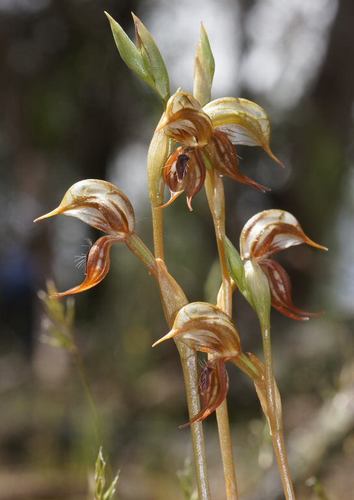
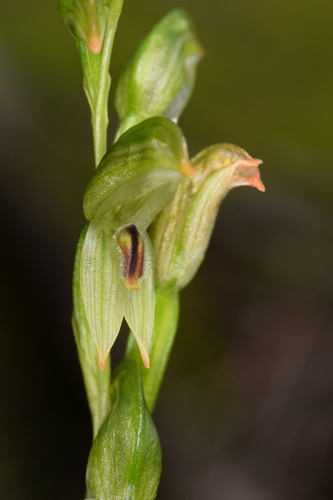
iNaturalist· cc-by-nc
(c) Kate Braun, some rights reserved (CC BY-NC), uploaded by Kate Braun
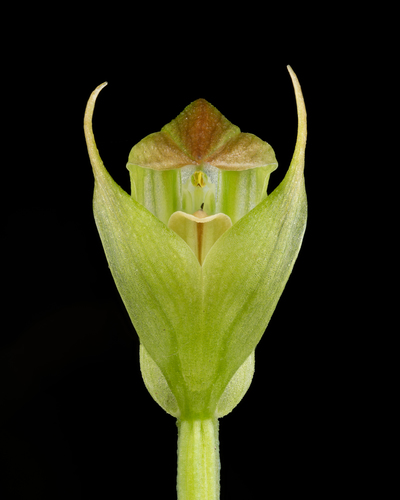
iNaturalist· cc-by-nc
(c) Kate Braun, some rights reserved (CC BY-NC), uploaded by Kate Braun
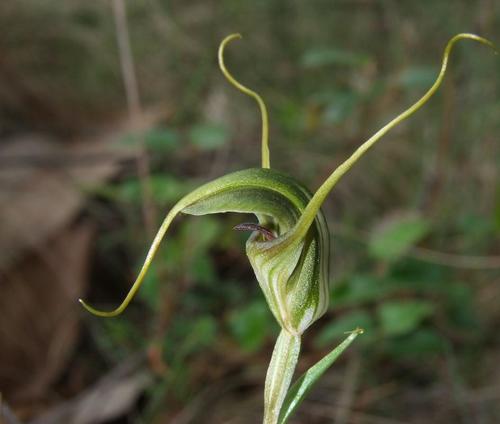
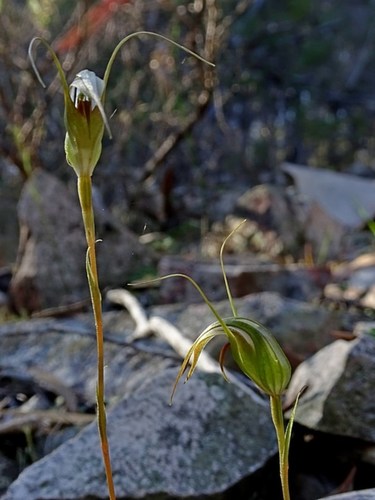
iNaturalist· cc-by
(c) Robert Taylor, some rights reserved (CC BY), uploaded by Robert Taylor
Description
An orchid. It grows in the soil. It grows 1 m tall. The tubers are hairy and produce slender or stout stems. The tubers are 1.5-3 cm long and 1 cm wide. The roots are hairy and wiry. There are separate leafy stems next to the flowering stems. There are 2-5 leaves on the sterile stems. The lowest one or two surround the stem. The upper leaves are long and narrow and 27 cm long by 6.5 cm wide. The flowering stalk is 4-35 cm long. It has 6-12 leaves that form a sheath around it. These leaves are 13 cm long. They are narrow and pointed. The flower head is 5-25 cm long. There are many small pink to yellow flowers. They have a sweet scent. The fruit is a narrowly oval capsule. It opens by slits to release the very small seeds.
Edible Uses
The tubers are peeled and cooked like potatoes, or pounded into flour to make cakes. Tubers and cakes are sold in local markets.
Traditional Uses
The tubers are peeled, cooked and eaten like potatoes. They are also pound into flour and used to make cakes.
This uses section is brief — help expand it
Medicinal Uses
The tubers are eaten as a staple food preparation.
Distribution
It is a tropical plant. In Tanzania it grows in grassland between 1,800-2,700 m above sea level.
Where It Grows
Africa, East Africa, South Africa, Southern Africa, Tanzania,
Cultivation
Plants can be grown from tubers.
Propagation
Seed - Division of tubers.
Production
Tubers are harvested during and shortly after the rainy season. Tubers can be stored for several months if kept cool and dry.
Other Information
Tubers and cakes are sold in local markets.
Synonyms
Also Known As
Chikande, Kikande, Limwapembe, Nyamahebele
References (2)
- Msuya, T. S., et al, 2010, Availability, Preference and Consumption of Indigenous Foods in the Eastern Arc Mountains, Tanzania, Ecology of Food and Nutrition, 49:3, 208-227
- Ruffo, C. K., Birnie, A. & Tengnas, B., 2002, Edible Wild Plants of Tanzania. RELMA p 590